


Adapting to Change: The Future of Simultaneous Interpretation
Simultaneous interpretation (SI) has long played a crucial role in facilitating communication across linguistic boundaries. Whether in diplomatic negotiations, international conferences, or business dealings, SI ensures that the flow of conversation between speakers of different languages remains smooth and uninterrupted. The globalized nature of today’s world demands real-time language translation, and with the rise of advanced technologies such as artificial intelligence (AI), cloud computing, and remote conferencing, the landscape of simultaneous interpretation is undergoing significant transformation.
In this article, we will explore the evolution of simultaneous interpretation, focusing on technological advances, emerging trends, the changing role of interpreters, and the challenges that lie ahead. We will also examine how these changes will affect the industry and shape its future.
Simultaneous interpretation refers to the process where interpreters listen to a speaker in one language and translate the speech into another language without pause. This form of interpretation requires high-level proficiency, as interpreters must maintain accuracy while keeping pace with the speaker. Unlike consecutive interpretation, where the interpreter waits for the speaker to pause before translating, simultaneous interpretation happens in real-time, making it especially useful in fast-paced settings such as conferences and international meetings.
This method ensures that the flow of conversation is not interrupted and allows participants to engage without delays. However, the demands of simultaneous interpretation are high, requiring simultaneous interpreters to possess excellent linguistic, cognitive, and multitasking skills, as they need to translate the spoken word while absorbing and processing new information instantly.
Key Features of Simultaneous Interpretation:
- Real-Time Translation: SI involves the live translation of spoken language, without pauses for the interpreter.
- Highly Skilled Interpreters: Interpreters need to have mastery of both the source and target languages and in-depth understanding of the subject matter.
- Specialized Equipment: The use of soundproof booths, headphones, microphones, and consoles ensures accurate and clear communication.
Technological Advancements Transforming Simultaneous Interpretation
While the art of simultaneous interpretation has remained largely unchanged in its core principles, recent technological advancements are significantly reshaping the field. Artificial intelligence (AI), machine learning, cloud computing, and mobile applications are transforming how interpreters work, offering new tools that improve the efficiency, scalability, and accessibility of interpretation services.
1. Artificial Intelligence and Machine Learning
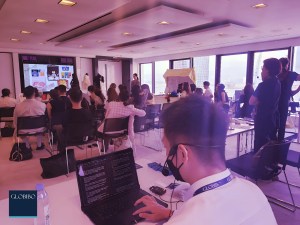 The use of artificial intelligence in language processing has seen significant developments in recent years. Machine learning models are now able to understand, analyze, and even translate languages with remarkable accuracy. These AI systems are not yet at a level to replace human interpreters, but they are increasingly becoming tools that interpreters can use to improve their performance, particularly in high-volume environments like conferences.
How AI Improves Simultaneous Interpretation:
- Speech Recognition: AI-powered speech recognition systems can instantly convert spoken words into text, enabling interpreters to receive transcriptions in real-time. This can help reduce cognitive load, allowing interpreters to focus on the nuances of language rather than simply trying to keep up with the speech.
- Contextual Understanding: Machine learning algorithms are becoming increasingly capable of understanding the context in which words are used, providing more accurate translations for idiomatic phrases and specialized terminology.
- Predictive Systems: AI can predict the next word or phrase based on context, helping interpreters prepare and respond more quickly. This is particularly useful in high-pressure environments where split-second decision-making is crucial.
While AI can significantly enhance the efficiency of simultaneous interpretation, it still has limitations in understanding complex nuances, cultural context, and industry-specific terminology. Therefore, human interpreters continue to play an essential role in ensuring that these subtleties are accurately conveyed.
2. Cloud-Based Interpretation Platforms
Cloud-based interpretation platforms have transformed the way simultaneous interpretation services are delivered. These platforms enable interpreters to work remotely, eliminating the need for them to be physically present at the event. Through the use of cloud technologies, interpretation can be provided in real time to a global audience, regardless of location.
Benefits of Cloud-Based Simultaneous Interpretation:
| Benefit | Description |
| Global Accessibility | Cloud platforms allow interpreters to work from any location, enabling access to multilingual services from anywhere. |
| Cost Efficiency | By eliminating the need for interpreters to travel to physical locations, cloud solutions can help reduce costs. |
| Scalability | These platforms support a larger audience and multiple languages simultaneously, making it easier to scale for large events. |
| Real-Time Collaboration | Cloud-based tools allow interpreters to collaborate and make adjustments in real time, improving overall service quality. |
Cloud-based platforms are particularly useful for virtual events such as online conferences, webinars, and international business meetings, where participants from different parts of the world need access to interpretation services. These platforms can also integrate seamlessly with video conferencing software, further enhancing the reach and efficiency of interpretation services.
3. Remote Simultaneous Interpretation (RSI)
Remote Simultaneous Interpretation (RSI) has become one of the most significant trends in the interpretation industry. RSI technology enables interpreters to work remotely, allowing businesses and organizations to provide multilingual support for international events and meetings without the need for on-site interpreters.
Key Advantages of RSI:
- Flexibility: RSI platforms enable interpreters to work from anywhere, reducing the logistical complexities of on-site interpretation.
- Cost Savings: Organizations can save on travel, accommodation, and venue setup costs by using remote interpreters.
- Environmental Benefits: By reducing the need for travel, RSI contributes to sustainability goals by cutting down on carbon emissions.
- Access to a Global Talent Pool: Remote work allows organizations to hire interpreters from around the world, increasing the availability of specialized language skills.
Despite its many benefits, RSI presents its own set of challenges, such as the potential for technical glitches, internet connectivity issues, and the need for interpreters to adjust to working in virtual environments rather than traditional booths.
The Role of Human Interpreters in the Digital Age
While technology is enhancing the field of simultaneous interpretation, human interpreters remain essential to maintaining quality and accuracy. The digital age has altered the skills required of interpreters, and their role has evolved accordingly. In this section, we will explore how the responsibilities of interpreters are changing, and how they can adapt to new technologies while preserving the quality of their work.
1. Skill Development in the Age of AI and Automation
As AI and other technologies evolve, interpreters need to continually update their skill sets to stay competitive in the industry. While technology can help interpreters work more efficiently, it is essential that interpreters retain their deep linguistic knowledge, cultural understanding, and ability to provide context-specific translations.
New Skills for Modern Interpreters:
- Technology Proficiency: Interpreters must be comfortable using advanced tools such as AI-powered translation systems, cloud platforms, and RSI technologies.
- Specialization: As demand grows for specialized interpreters in fields such as legal, medical, and technical sectors, interpreters need to acquire subject-matter expertise in these areas.
- Multitasking and Cognitive Flexibility: The ability to work with multiple technologies while maintaining the quality of interpretation will be crucial.
- Cultural Awareness: While AI systems can translate words, they often miss cultural nuances. Interpreters will continue to be needed to ensure that cultural subtleties and local idioms are properly conveyed.
2. Hybrid Models of Interpretation
The future of simultaneous interpretation will likely involve a hybrid model, in which human interpreters work alongside AI tools and remote platforms to enhance efficiency and quality. In this model, AI may handle routine tasks such as speech recognition or predictive translation, while human interpreters focus on the more nuanced aspects of language, ensuring accuracy and cultural relevance.
Advantages of the Hybrid Model:
- Speed and Efficiency: AI can assist with faster translations, while human interpreters focus on more complex and context-dependent language.
- Increased Accuracy: Interpreters can verify machine-generated translations, ensuring higher accuracy and consistency.
- Scalability: Hybrid systems can handle large-scale events with multiple languages, reducing the need for large interpreter teams.
Emerging Trends in Simultaneous Interpretation
As the field of simultaneous interpretation continues to evolve, several key trends are beginning to emerge. These trends reflect the broader technological, cultural, and economic shifts taking place across the globe.
1. Virtual and Hybrid Events
The shift towards virtual and hybrid events has been accelerated by the COVID-19 pandemic and is expected to continue post-pandemic. In these settings, simultaneous interpretation is becoming an integral part of ensuring global participation. Virtual conferences and hybrid events, which combine in-person and online elements, require sophisticated interpretation technology to cater to multilingual audiences.
Benefits of Virtual Events for Simultaneous Interpretation:
- Wider Audience Reach: Virtual events can attract participants from around the world, requiring interpretation services in a variety of languages.
- Lower Costs: Virtual platforms reduce the need for physical venues, travel expenses, and accommodation for both event organizers and interpreters.
- Convenience: Participants can join from anywhere, and interpreters can work remotely, making events more accessible.
2. On-Demand Interpretation
As globalization increases, the demand for on-demand interpretation services is also rising. Businesses and individuals need the flexibility to access interpretation services instantly, whether for meetings, conferences, or travel.
On-demand interpretation platforms are expected to grow, offering users quick access to language services at any time. These platforms, often powered by AI, will provide real-time translation through mobile apps, websites, or smart devices.
3. Specialized Interpretation
While the demand for general language interpreters remains high, specialized interpreters will become even more important in the future. Industries such as healthcare, law, and technology require interpreters who understand industry-specific jargon and terminology.
Fields Requiring Specialized Interpreters:
- Legal: Interpreters must understand legal terminology and procedures to provide accurate translations in courts and legal proceedings.
- Medical: Medical interpreters need to be knowledgeable about medical terminology and patient care protocols.
- Technical and Scientific: Translating highly technical content requires a deep understanding of the specific field.
Challenges Facing the Future of Simultaneous Interpretation
Despite the rapid technological advancements and emerging trends, the field of effective simultaneous interpretation faces several challenges that must be addressed.
1. The Limitations of AI
Although AI is improving rapidly, it still has several limitations. Current AI systems are not yet capable of understanding context, tone, and cultural nuances with the precision that human interpreters provide. AI can help with simple translations but is less effective when it comes to specialized knowledge or sensitive issues that require human empathy and understanding.
2. Data Privacy and Security
As remote interpretation and cloud-based platforms become more prevalent, issues surrounding data privacy and security will become more critical. Organizations must ensure that sensitive information shared during interpretation sessions is protected and handled in compliance with data protection regulations.
3. Training and Skill Development
As the industry evolves, interpreters must continuously update their skills to stay relevant. Interpreters need to master new technologies, keep pace with developments in AI, and stay informed about the growing demand for specialized knowledge in various industries.
Summary of Simultaneous Interpretation
Simultaneous interpretation is undergoing a profound transformation, driven by advances in technology, globalization, and the shifting demands of the global market. While AI, cloud platforms, and remote interpretation tools are reshaping the industry, the role of human interpreters remains essential to ensure accuracy, cultural sensitivity, and the overall quality of interpretation services.
The future of simultaneous interpretation will likely involve a hybrid model, where interpreters work alongside AI-powered tools to enhance speed, accuracy, and scalability. With the increasing demand for multilingual services in virtual and hybrid events, and the need for specialized interpreters in industries such as law, healthcare, and technology, the field of simultaneous interpretation is set to evolve in exciting and innovative ways.

Susan has extensive experience in conference interpretation, simultaneous interpretation services, document localization for governmental and legal needs. Her work with embassies and government agencies ensures that documents meet specific regional requirements, making her expertise invaluable for international clients.
YouTube Videos on Simultaneous Interpretation
Academic References for Simultaneous Interpretation
- Simultaneous interpreting: Cognitive potential and limitations
- Adapting Training to the Changing Professional Landscape: The example of video conferencing
- Interpreting in small-group bilingual videoconferences: Challenges and adaptation processes
- … for the translation and cultural adaptation process for patient-reported outcomes (PRO) measures: report of the ISPOR task force for translation and cultural adaptation
- Organizational adaptation to performance downturns: An interpretation-based perspective
- Personal meaning in life and psychosocial adaptation in the later years
- Adjustment to threatening events: A theory of cognitive adaptation
- [BOOK] Directionality in Chinese/English simultaneous interpreting: Impact on performance and strategy use
- [HTML] Adapting internal statistical models for interpreting visual cues to depth
- [PDF] Structural crises of adjustment: business cycles
Key Articles
Simultaneous Interpretation in Different Contexts: From Conferences to Legal Settings
The Art of Listening: Enhancing Accuracy in Simultaneous Interpretation
Technological Innovations in Simultaneous Interpretation: Trends and Future Prospects
Bridging Cultures: The Role of Simultaneous Interpretation in Global Communication
Evolution of Simultaneous Interpretation: From Early Beginnings to Modern Practices
Simultaneous Interpretation in the Legal Sector: Ensuring Justice Across Languages
Mental and Cognitive Challenges in Simultaneous Interpretation: Insights and Strategies
The Role of AI in Enhancing Simultaneous Interpretation Accuracy
Simultaneous Interpretation for Multilingual Business Meetings: Key Considerations
How to Prepare for Multilingual Panels with Simultaneous Interpretation
Training and Certification Pathways for Aspiring Simultaneous Interpreters
Handling High-Pressure Situations as a Simultaneous Interpreter
Simultaneous Interpreters and the Shift to Remote Interpretation Platforms
Hybrid Events and Simultaneous Interpretation: The Tech Advantage
Powering Simultaneous Interpretation with a Comprehensive Linguist Network
The Role of Quality Control in Simultaneous Interpretation Success
Simultaneous Interpretation: Key Skills for Real-Time Precision
Mastering Multilingual Events with Simultaneous Interpretation


