Integration of Interpretation Equipment with AV Systems
The integration of interpretation equipment with audio-visual (AV) systems is a critical aspect of modern conference and event management. This integration ensures seamless communication across multiple languages, enhances audience engagement, and optimizes the overall event experience. As the demand for multilingual communication grows in globalized environments, understanding how to effectively integrate interpretation equipment with AV systems is essential for achieving high-quality audio, reliable, and efficient interpretation services.
This article explores the key components involved in integrating interpretation equipment with AV systems, outlines the technical considerations and best practices, and provides structured lists and a table for clarity.
Key Components of Interpretation Equipment
Interpretation equipment typically includes the following components:
- Interpreter Consoles: Interpreter consoles are the primary devices used by interpreters to receive the source language and deliver the target language. They often come with features such as volume control, channel selection, and audio routing capabilities.
- Transmitters and Receivers: Transmitters and receivers handle the wireless transmission of interpretation audio to the listeners. They include transmitters (for sending the interpreted audio) and receivers (for receiving and decoding the audio).
- Headsets and Microphones: High-quality headsets are used by interpreters to ensure clear audio reception. Similarly, microphones capture the speaker’s voice and transmit it to the interpretation system.
- Control Systems: These systems manage the overall operation of the interpretation setup, including audio routing, volume adjustments, interpretation booths, and channel management.
- Audio Processing Units: These units are responsible for processing the audio signals to ensure clear and accurate interpretation. They may include components such as equalizers, compressors, and signal processors.
- Integration Interface: This is the hardware or software that connects the interpretation equipment with AV systems, ensuring compatibility and seamless operation.
Technical Considerations for Integration
When integrating interpretation equipment with AV systems, several technical factors must be considered to ensure optimal performance:
- Signal Compatibility: Ensure that the audio signals from the interpretation equipment are compatible with the AV system’s input and output requirements. This may involve matching signal types (e.g., analog vs. digital) and adjusting signal levels. Evaluate digital vs. analog interpretation equipment for compatibility and explore the benefits of portable interpretation equipment.
- Latency Management: Minimize latency to avoid delays between the source language and the interpreted output. Proper synchronization is crucial for maintaining the coherence of the interpretation.
- Frequency Management: In wireless systems, manage frequencies to avoid interference between the interpretation equipment and other wireless devices. Use frequency coordination tools to allocate and manage frequencies effectively.
- Audio Quality: Ensure high audio quality by using high-fidelity equipment and minimizing audio distortion. This includes selecting appropriate microphones, headsets, and audio processing units.
- System Scalability: Design the system to be scalable to accommodate varying numbers of interpreters and listeners. This may involve modular components that can be added or removed as needed.
- User Interface and Control: Provide an intuitive user interface for managing the interpretation system. This includes easy-to-use controls for interpreters and event organizers to adjust settings and monitor system performance.

Best Practices for Integration
To achieve seamless integration of interpretation equipment with AV systems, follow these best practices:
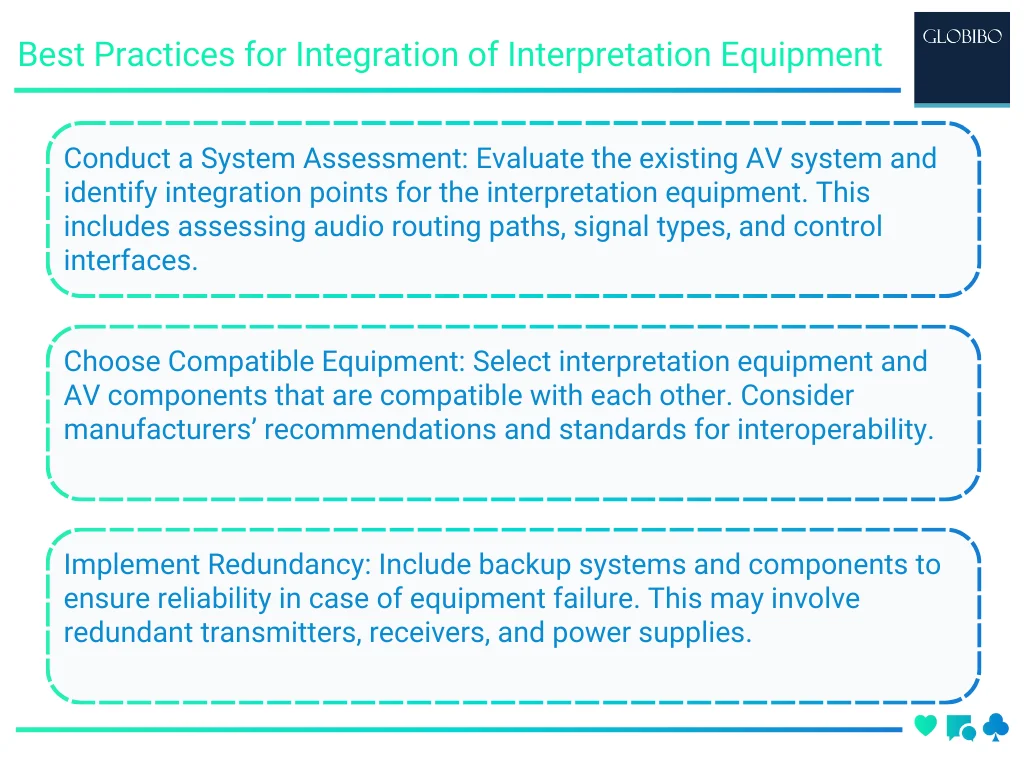
- Conduct a System Assessment: Evaluate the existing AV system and identify integration points for the interpretation equipment. This includes assessing audio routing paths, signal types, and control interfaces.
- Choose Compatible Equipment: Select interpretation equipment and AV components that are compatible with each other. Consider manufacturers’ recommendations and standards for interoperability.
- Implement Redundancy: Include backup systems and components to ensure reliability in case of equipment failure. This may involve redundant transmitters, receivers, and power supplies.
- Test the System: Perform thorough testing of the integrated system before the event. This includes checking audio quality, synchronization, and frequency management to identify and resolve any issues.
- Train Users: Provide training for interpreters and event staff on the operation of the integrated system. This ensures that all users are familiar with the equipment and can troubleshoot basic issues.
- Monitor and Adjust: Continuously monitor the system during the event and make real-time adjustments as needed. This includes checking audio levels, managing interference, and addressing any technical problems.
Key Steps for Integration
- Planning and Assessment:
- Evaluate existing AV systems
- Identify integration points
- Choose compatible interpretation equipment
- Implementation:
- Install and connect interpretation equipment
- Configure audio routing and signal processing
- Test the integrated system for performance
- Training and Support:
- Provide training for interpreters and staff
- Establish support channels for technical issues
- Implement redundancy and backup systems
- Monitoring and Maintenance:
- Monitor system performance during events
- Adjust settings as needed
- Perform regular maintenance and updates

Common Challenges and Solutions
- Latency Issues:
- Challenge: Delays between source and interpreted audio
- Solution: Use low-latency equipment and synchronize audio signals
- Frequency Interference:
- Challenge: Interference from other wireless devices
- Solution: Perform frequency coordination and use interference-resistant equipment
- Audio Quality Problems:
- Challenge: Distortion or low audio quality
- Solution: Use high-quality microphones and audio processing units
- System Compatibility:
- Challenge: Incompatibility between interpretation equipment and AV systems
- Solution: Choose equipment that meets industry standards and compatibility requirements
Comparison of Interpretation Equipment and AV Systems
| Feature | Interpretation Equipment | AV Systems |
|---|---|---|
| Signal Type | Analog/Digital | Analog/Digital |
| Frequency Range | UHF/VHF (Wireless) | Varies (Audio, Video) |
| Audio Processing | Equalizers, Compressors | Mixers, Amplifiers |
| Latency | Low Latency | Low Latency |
| Scalability | Modular Components | Modular Components |
| Control Interface | Console/Software | Control Panels/Software |
Integration of Interpretation Equipment with AV Systems Summary
Integration of interpretation equipment with AV systems requires careful planning, technical expertise, and attention to detail. By understanding the key components, technical considerations, and best practices, event organizers can achieve a high-quality interpretation experience that enhances communication and engagement. Whether for conferences, international meetings, or other multilingual events, effective integration ensures that all participants can contribute and benefit from the event’s proceedings.
This comprehensive approach to integration ensures that interpretation equipment and AV systems work harmoniously, providing clear, reliable, and professional multilingual communication for any event. A comprehensive hybrid setup should include simultaneous interpreting equipment and consider wired-in built-in interpretation systems.
Academic References On Integration of Interpretation Equipment with AV Systems
-
[PDF] Using Modern Simultaneous Interpretation Tools in the Training of Interpreters at Universities.
-
The economics of systems integration: towards an evolutionary interpretation
-
Data acquisition-interpretation-aggregation for dynamic design of rock tunnel support
-
Conceptual aspects of interpreter training using modern simultaneous interpretation technologies
YouTube Video on Integration of Interpretation Equipment with AV Systems

Susan Tan
Leadership Development Trainer
Susan has extensive experience in document localization for governmental and legal needs. Her work with embassies and government agencies ensures that documents meet specific regional requirements, making her expertise invaluable for international clients.