Digital vs. Analog Interpretation Equipment
In the realm of simultaneous interpretation, the choice between digital and analog interpretation equipment plays a pivotal role in the efficacy and clarity of multilingual communication.
This article delves into the technical aspects of both digital and analog systems, exploring their advantages, limitations, and application contexts. By comparing these technologies, stakeholders can make informed decisions about which interpretation equipment best suits their needs.
Interpretation equipment is essential for facilitating real-time communication in multilingual settings. The primary functions of this equipment include:
- Audio Transmission: Ensuring that the speaker’s voice is transmitted clearly to interpreters and listeners.
- Signal Processing: Managing and converting audio signals for accurate interpretation.
- User Interface: Providing control mechanisms for interpreters and listeners to manage their audio experience.
Digital Interpretation Equipment
Technical Characteristics
Digital interpretation systems have become increasingly popular due to their advanced features and versatility. Key characteristics include:
- Signal Processing: Digital systems use advanced algorithms to process and enhance audio signals. This includes noise reduction, echo cancellation, and signal compression, which contribute to superior audio clarity.
- Integration: These systems often integrate with other digital platforms and software, such as video conferencing tools and real-time translation services.
- Flexibility: Digital equipment allows for scalable and customizable solutions, making it adaptable to various event sizes and types.
- Reliability: High-quality digital systems offer robust performance with minimal signal degradation over long distances.

Advantages
- Superior Audio Quality: Digital systems deliver higher fidelity audio with clearer sound, reducing miscommunication and improving the overall experience.
- Enhanced Features: Features such as real-time audio adjustments, remote control, and integration with other digital tools enhance functionality.
- Scalability: Easily scalable for small to large events, making it suitable for a wide range of applications from corporate meetings to international conferences.
- Data Security: Digital systems can include encryption and secure protocols to protect sensitive information.
Limitations
- Cost: Digital systems are typically more expensive due to advanced technology and additional features.
- Complexity: Installation and operation may require specialized knowledge or technical support.
- Dependency on Power and Connectivity: Digital equipment relies on stable power sources and network connectivity, which can be a limitation in some settings.
Analog Interpretation Equipment
Technical Characteristics
Analog interpretation systems are traditional and rely on basic electronic principles. Key characteristics include:
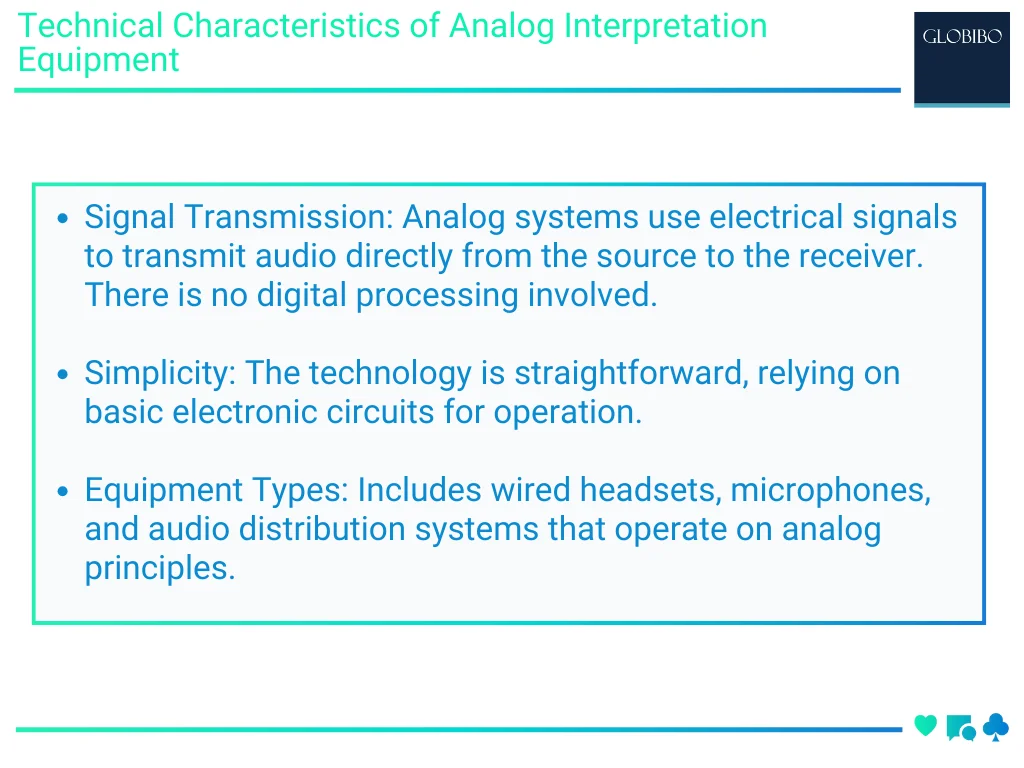
- Signal Transmission: Analog systems use electrical signals to transmit audio directly from the source to the receiver. There is no digital processing involved.
- Simplicity: The technology is straightforward, relying on basic electronic circuits for operation.
- Equipment Types: Includes wired headsets, microphones, and audio distribution systems that operate on analog principles.
Advantages
- Cost-Effectiveness: Generally less expensive than digital systems due to simpler technology and fewer features.
- Simplicity: Easier to set up and operate with minimal technical support required.
- Reliability: Fewer components and less dependency on external factors like power outages or network issues.
Limitations
- Audio Quality: Analog systems may suffer from signal degradation and lower audio quality compared to digital systems. Analog setups often utilize Wired In-Built Interpretation Systems.
- Limited Features: Lack of advanced features such as real-time adjustments or integration with other digital tools.
- Scalability: Less flexible in terms of scalability and customization for larger or more complex events.
Comparative Analysis Digital Vs. Analog Interpretation Equipment
The choice between digital and analog interpretation equipment depends on various factors including budget, event size, and specific requirements. Below is a comparative analysis based on key criteria:
| Criteria | Digital Interpretation Equipment | Analog Interpretation Equipment |
|---|---|---|
| Audio Quality | High fidelity with noise reduction | Potential signal degradation |
| Cost | Higher cost due to advanced features | Generally more cost-effective |
| Complexity | Requires technical knowledge and setup | Simpler to set up and operate |
| Features | Advanced features like real-time adjustments | Basic features, limited functionality |
| Scalability | Highly scalable and customizable | Less flexible in scaling |
| Dependency | Relies on power and connectivity | Less dependent on external factors |
Key Factors for Choosing Digital Interpretation Equipment
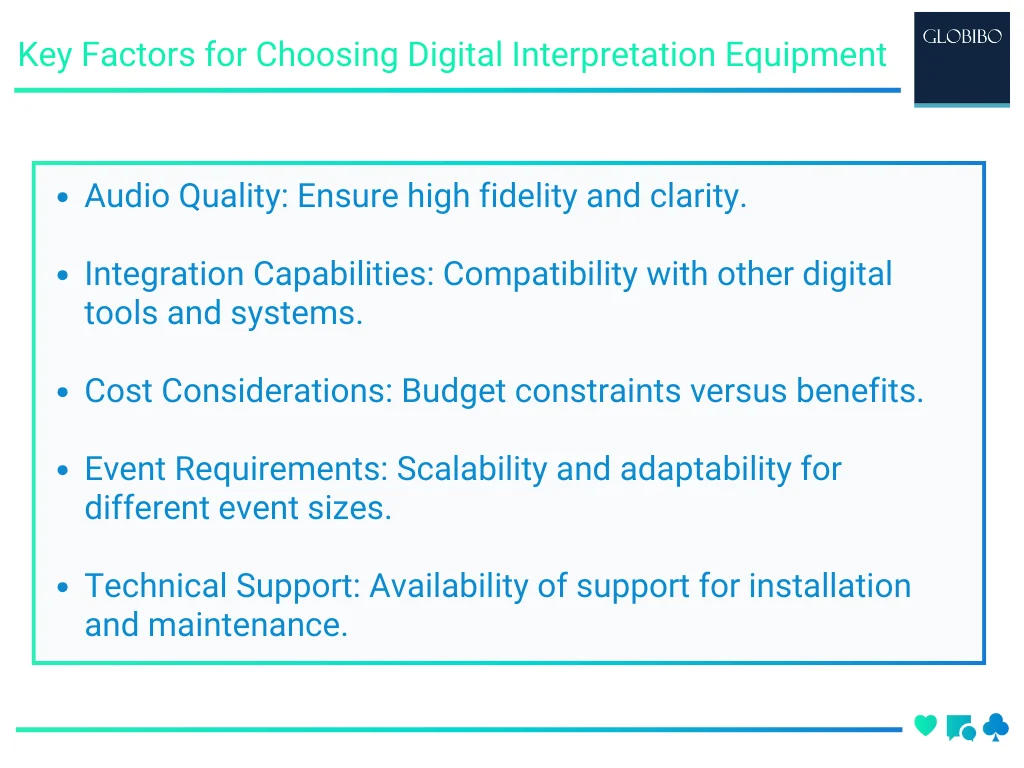
- Audio Quality: Ensure high fidelity and clarity.
- Integration Capabilities: Compatibility with other digital tools and systems.
- Cost Considerations: Budget constraints versus benefits.
- Event Requirements: Scalability and adaptability for different event sizes.
- Technical Support: Availability of support for installation and maintenance.
Key Factors for Choosing Analog Interpretation Equipment
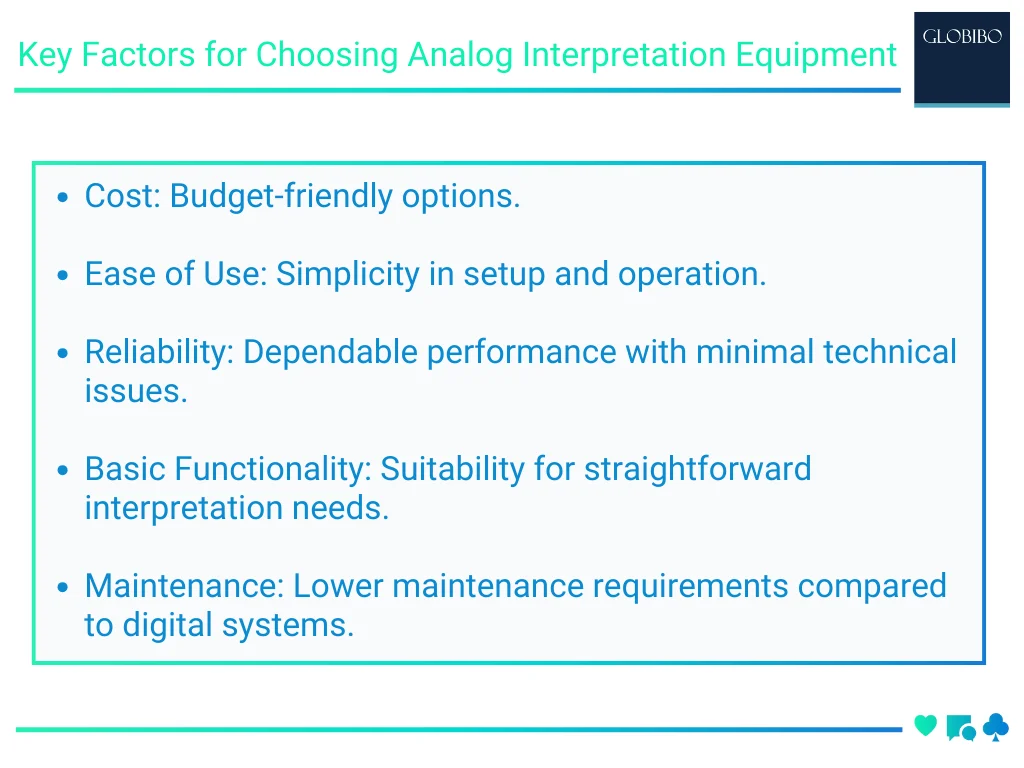
- Cost: Budget-friendly options.
- Ease of Use: Simplicity in setup and operation.
- Reliability: Dependable performance with minimal technical issues.
- Basic Functionality: Suitability for straightforward interpretation needs.
- Maintenance: Lower maintenance requirements compared to digital systems.
Digital vs. Analog Interpretation Equipment Summary
Digital vs. analog interpretation equipment offers distinct advantages and limitations. Digital systems are preferred for their superior audio quality, advanced features, and scalability, making them suitable for complex and large-scale events. Conversely, analog systems provide a cost-effective and straightforward solution for smaller or simpler events. Transmission quality differs between digital and analog. A solid hybrid setup often includes both types. Ensure integration with simultaneous interpreting equipment and AV systems.
Selecting the appropriate interpretation equipment depends on the specific needs of the event, budget considerations, and the desired level of functionality. Choosing between digital vs. analog interpretation equipment depends on your event’s needs. Compare these options with interpretation consoles, booths, transmitters, and receivers for the best fit. A solid hybrid setup often includes both types. Understanding the technical differences between digital and analog systems will enable stakeholders to make informed decisions and ensure effective multilingual communication.
Academic References On Digital vs. Analog Interpretation Equipment
-
[HTML] Comparisons of human reliability data between analog and digital environments
-
[PDF] A system for general-purpose analog–digital computation
YouTube video on Digital vs. Analog Interpretation Equipment

Susan Tan
Leadership Development Trainer
Susan has extensive experience in document localization for governmental and legal needs. Her work with embassies and government agencies ensures that documents meet specific regional requirements, making her expertise invaluable for international clients.