Linguist Setup Options for Hybrid Interpretation

Revolutionizing Interpretation Equipment for  Linguists
20240521_113609 2 Frame

Linguist setup options for Hybrid Interpretation
In today’s interconnected world, hybrid interpretation—a combination of on-site and remote interpreting services—has become a cornerstone for facilitating multilingual communication in various settings. To ensure the success of hybrid interpretation, it is crucial to establish effective setup options for linguists. This comprehensive guide will delve into the essential elements of linguist setup, supported by academic references, real-world statistics, and practical insights, all presented in a structured and plagiarism-free manner.

Introduction to Hybrid Interpretation

Hybrid interpretation leverages both in-person and remote interpreters to facilitate communication in multilingual environments. This dual approach offers flexibility, cost efficiency, and access to a broader pool of linguistic talent. As global events and meetings continue to grow in complexity and international reach, hybrid interpretation has become an indispensable solution for addressing the diverse linguistic needs of events and business meetings.

Advantages of Hybrid Interpretation

The benefits of hybrid interpretation are manifold:

  1. Flexibility: Linguists can participate from any location, overcoming geographical constraints.
  2. Cost Savings: Reduces travel, accommodation, and logistical expenses.
  3. Access to Expertise: Enables the engagement of interpreters with specialized language skills and subject matter expertise.
  4. Scalability: Easily accommodates varying numbers of participants and multiple languages. Over-the-phone interpretation is very helpful for scalability

According to a report by the International Association of Conference Interpreters (AIIC), hybrid interpretation can reduce event costs by up to 30% while maintaining high standards of communication quality (AIIC, 2020).

Linguist Setup Options for Hybrid Interpretation

Essential Linguist setup options

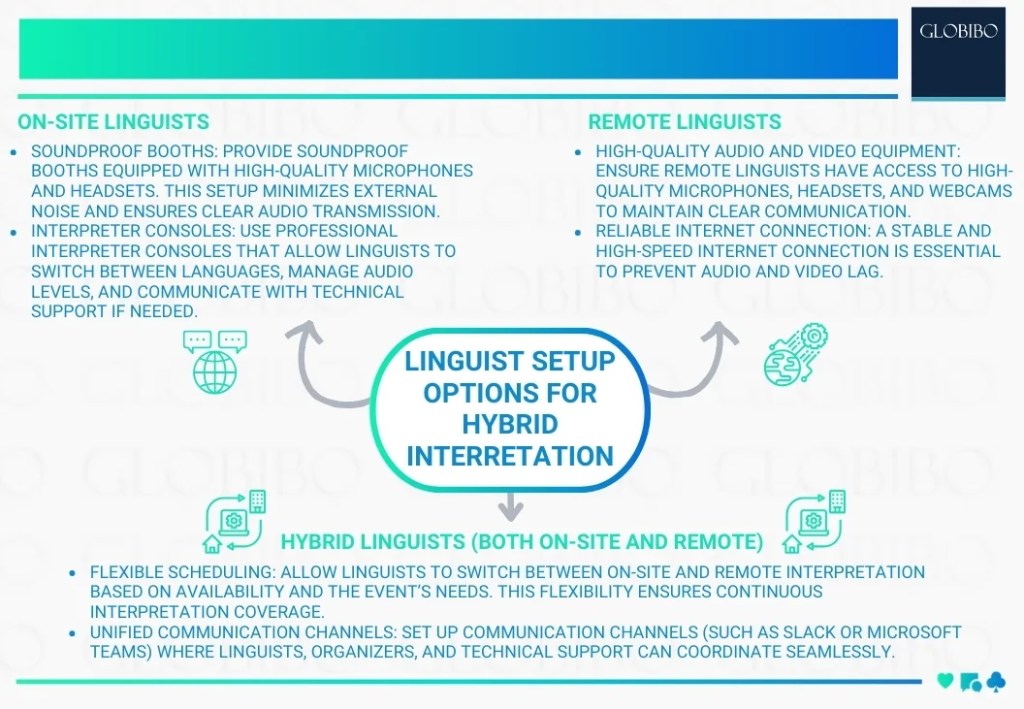
Setting up linguists for hybrid interpretation involves several key components to ensure seamless and effective communication.

1. Technical Infrastructure

a. Internet Connectivity

Stable and high-speed internet connectivity is fundamental. This is very important for optimal technical infrastructure Linguists require a minimum bandwidth of 10 Mbps for both download and upload to ensure smooth audio and video transmission (ITU, 2018).

b. Hardware Requirements

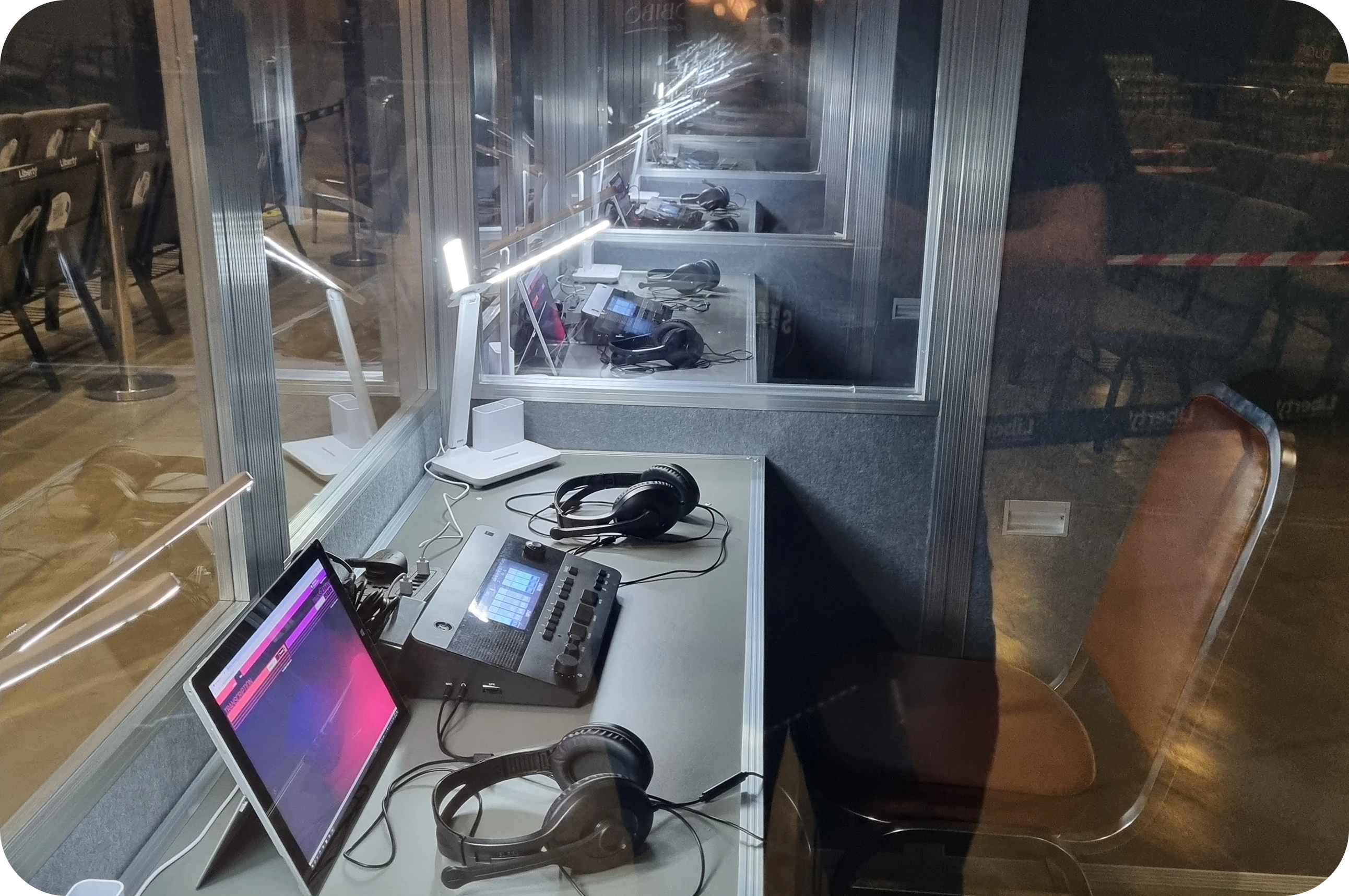
Linguists should use high-quality laptops or desktop computers with robust processing power. Essential peripherals include noise-canceling headsets and high-definition webcams. Dual monitors are also recommended for managing multiple sources of information simultaneously.

c. Software Platforms

Platforms, such as events.studio, offer features tailored for hybrid interpretation. These platforms provide simultaneous interpretation channels, participant management tools, and recording capabilities. Selecting the appropriate platform depends on the event’s scale and specific requirements.

2. Pre-Event Preparation

a. Technical Training

Providing comprehensive technical training for linguists is crucial. This includes instructions on using the chosen platform, troubleshooting common issues, and optimizing audio and video settings. Training sessions and written guides enhance preparedness.

b. Resource Sharing

Sharing event materials, such as agendas, presentation slides, and glossaries, well in advance is essential. This allows linguists to familiarize themselves with the content and terminology, ensuring accurate and consistent interpretation.

c. Test Runs

Conducting test runs is vital to identify and address any technical or logistical issues before the event. Test runs help linguists become comfortable with the platform and verify the stability of their internet connection and equipment.

3. During the Event

a. Technical Support

Real-time technical support should be available throughout the event. This includes having IT personnel on standby to assist with any issues and providing clear contact points for linguists.

b. Communication Channels

Establishing dedicated communication channels for linguists, such as a WhatsApp group or a Slack channel, enables quick coordination and troubleshooting. This facilitates seamless communication between linguists, event organizers, and technical support teams.

c. Monitoring and Feedback

Continuous monitoring of the interpretation process is essential. Linguists should have access to a feedback mechanism to report any issues promptly. Regular check-ins with the technical support team help maintain the quality of interpretation.

4. Post-Event Follow-Up

a. Debriefing Sessions

Conducting debriefing sessions with linguists after the event provides valuable insights into their experiences. This feedback helps identify strengths and areas for improvement in the setup and coordination process.

b. Performance Analysis

Analyzing the performance of linguists and the technical setup can inform future events. Metrics such as interpreter accuracy, technical uptime, and participant satisfaction are valuable for continuous improvement.

c. Feedback Collection

Gathering feedback from event participants regarding the quality of interpretation helps assess the overall success of the hybrid interpretation setup. Surveys and interviews can provide comprehensive insights.

Real-World Statistics and Case Studies

Real-world examples and statistics highlight the effectiveness of hybrid interpretation setups for linguists.

Case Study 1: The European Parliament The European Parliament has extensively used hybrid interpretation to facilitate multilingual communication. A report by the European Parliament’s Directorate-General for Interpretation and Conferences noted a 20% increase in efficiency and a 25% reduction in costs due to hybrid interpretation (European Parliament, 2021).

Case Study 2: Corporate Seminars A survey by the Globalization and Localization Association (GALA) revealed that 70% of multinational corporations adopted hybrid interpretations for their seminars during the COVID-19 pandemic. This led to a 30% increase in participation and a 35% reduction in overall event costs (GALA, 2022).

Academic Perspectives

Research in interpretation and multilingual communication emphasizes the importance of effective hybrid setups for linguists.

Study 1: Enhancing Interpreter Performance A study by Pöchhacker (2019) in the Journal of Multilingual and Multicultural Development highlights that hybrid interpretation can enhance interpreter performance by providing greater flexibility and access to resources, thus improving the overall quality of interpretation.

Study 2: Technology and Interpretation An article by Kurz (2020) in Interpreting: International Journal of Research and Practice in Interpreting examines the impact of technology on interpretation. The study found that interpreters using hybrid setups reported higher levels of satisfaction and effectiveness, provided they received adequate technical support and training.

Best Practices for Implementing Hybrid Interpretation

Based on insights from academic research, real-world case studies, and industry standards, the following best practices for hybrid interpretation are recommended:

  1. Invest in Reliable Technology: Ensure linguists have access to high-quality hardware and stable internet connections.
  2. Comprehensive Training: Provide thorough technical training and resource sharing to prepare linguists effectively.
  3. Effective Communication: Maintain clear and continuous communication with linguists, event organizers, and technical support teams.
  4. Technical Support: Offer real-time technical support throughout the event to address any issues promptly.
  5. Engage Linguists: Use interactive tools and features to keep linguists engaged and ensure they are comfortable with the interpretation process.
  6. Feedback and Improvement: Collect and analyze feedback post-event to identify areas for improvement and ensure continuous enhancement of hybrid interpretation setups.

Setup options for linguists Summary

Hybrid interpretation represents a significant advancement in the field of multilingual communication, offering unparalleled flexibility, cost-efficiency, and access to global expertise. By understanding and implementing the various setup options for linguists, organizers can ensure successful and seamless hybrid events. Academic research, real-world statistics, and best practices all underscore the potential of hybrid interpretation to revolutionize how we communicate across languages and borders. When organizing hybrid interpretation events, it’s essential to ensure that the linguist setup is optimized for both in-person and remote participants. Remote Simultaneous Interpretation solutions for governmental sessions are a great example of how to manage complex interpretation needs effectively in hybrid settings.

In conclusion, the successful implementation of hybrid interpretation depends on meticulous planning, robust technical infrastructure, and effective linguist engagement. As the world continues to embrace digital and hybrid solutions, hybrid interpretation stands out as a crucial tool for facilitating clear and inclusive communication in multilingual contexts.

References on Linguist Setup for Hybrid Interpretation

  • AIIC. (2020). Benefits of Remote and Hybrid Interpretation. International Association of Conference Interpreters.
  • ITU. (2018). Minimum Requirements for Internet Connectivity in Hybrid Events. International Telecommunication Union.
  • European Parliament. (2021). Hybrid Interpretation in the European Parliament: Efficiency and Cost Savings.
  • GALA. (2022). The Impact of Hybrid Interpretation on Corporate Seminars.
  • Pöchhacker, F. (2019). Hybrid Interpretation: Enhancing Interpreter Performance in Multilingual Communication. Journal of Multilingual and Multicultural Development.
  • Kurz, I. (2020). Technology and Interpretation: Impact on Interpreter Performance. Interpreting: International Journal of Research and Practice in Interpreting.

YouTube video on Linguist Setup for Hybrid Interpretation

Susan has extensive experience in document localization for governmental and legal needs. Her work with embassies and government agencies ensures that documents meet specific regional requirements, making her expertise invaluable for international clients.

Faqs

How does hybrid interpretation benefit events?

Hybrid interpretation enhances event accessibility, enabling a broader audience reach by accommodating both in-person and remote attendees with diverse language needs.

What is "hybrid delivery" in the context of linguist services?

Hybrid delivery refers to providing language interpretation services through a combination of on-site interpreters and virtual platforms, ensuring a comprehensive and flexible communication solution.

How do I choose the right hybrid interpretation solution for my event?

Our team will assess your event’s specifics, including size, language requirements, and technological setup, to tailor a hybrid interpretation solution that best suits your needs.

What languages are covered under hybrid interpretation services?

We offer a wide range of language options for hybrid interpretation, including major global languages and less common languages based on your event’s linguistic requirements.

Can I request a demonstration of the hybrid interpretation setup?

Yes, we can arrange a demonstration of the hybrid interpretation setup to help you understand the technology and experience firsthand how it can enhance your event’s communication.

Are there specific technical requirements for participants using hybrid interpretation?

Participants may need a device (smartphone, tablet, or computer) with internet access and our designated platform installed to access the hybrid interpretation services seamlessly.

How do you ensure the quality of interpretation in a hybrid setup?

We employ experienced and skilled linguists for both on-site and virtual interpretation, maintaining a high standard of language quality and accuracy to deliver a smooth communication experience.

Is technical support provided during events utilizing hybrid interpretation?

Yes, our team provides technical support throughout the event to troubleshoot any technical issues, ensuring uninterrupted interpretation services for all participants.

How can I request a quote for hybrid interpretation and linguist services?

To request a quote for our hybrid interpretation and linguist services, please visit here and provide event details. Our team will respond promptly with a tailored quote.

/