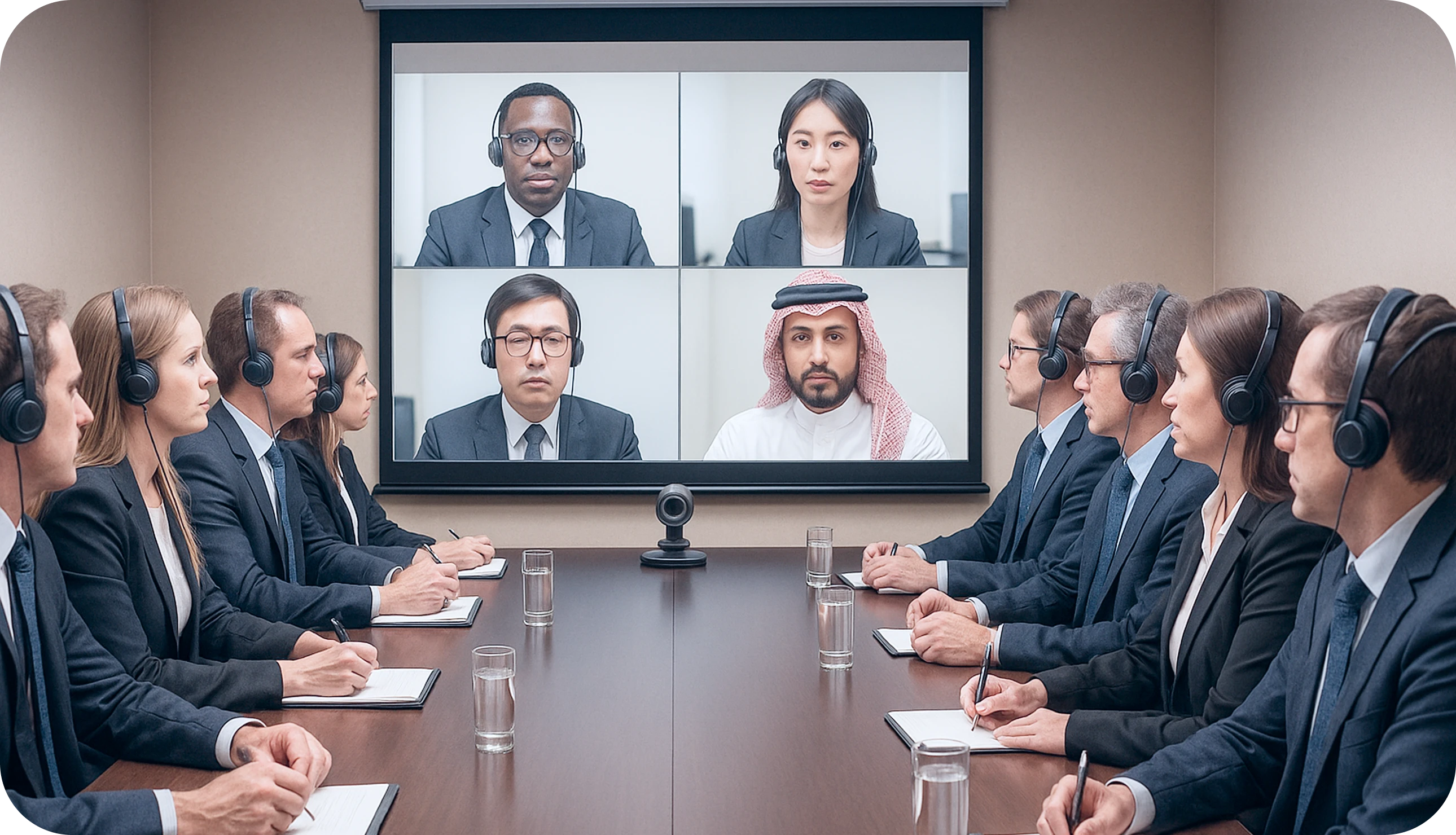
The success of hybrid interpretation heavily relies on the quality and reliability of technical infrastructure and equipment. Proper linguist & participant setup ensures clear, uninterrupted communication, which is critical for effectively delivering interpretation services. Technical infrastructure encompasses internet connectivity, hardware, software, and support systems, all of which must work seamlessly together.

Key Components of Technical Infrastructure
1. Internet Connectivity
a. Bandwidth Requirements
Stable and high-speed internet connectivity is the foundation of hybrid interpretation. Interpreters and participants need a minimum bandwidth of 10 Mbps for both download and upload to ensure smooth audio and video transmission (ITU, 2018). This minimizes latency and prevents disruptions during the interpretation process.
b. Redundancy and Backup
Having backup internet connections is crucial to mitigate the risk of connectivity failures. Using multiple internet service providers (ISPs) or mobile data hotspots as a fail-safe can ensure continuous connectivity.
2. Hardware Requirements
a. Computers and Peripherals
Interpreters should use high-performance laptops or desktop computers with adequate processing power. Essential peripherals include noise-canceling headsets, high-definition webcams, and dual monitors. Noise-canceling headsets improve audio clarity by reducing background noise, while dual monitors allow interpreters to manage multiple information sources simultaneously.
b. Audio and Video Equipment
High-quality microphones and cameras are essential for clear communication. USB microphones are preferred for their superior audio quality. HD webcams ensure clear video feeds, which is important for interpreters to see and respond to visual cues from speakers and participants.
3. Software Platforms
a. Interpretation Platforms
Platforms offer features like simultaneous interpretation channels, participant management, and recording capabilities. Choosing the right platform depends on the event’s size, complexity, and specific requirements.
b. Support Software
Additional software for monitoring, troubleshooting, and providing technical support is necessary. Tools allow remote support teams to quickly access interpreters’ devices to resolve issues.
4. Network Configuration
a. Local Area Network (LAN)
A robust LAN setup ensures that all devices within a venue are connected efficiently. Wired connections are preferred over wireless to reduce latency and increase reliability.
b. Virtual Private Network (VPN)
Using a VPN enhances security by encrypting data transmitted over the internet. This is particularly important for protecting sensitive information during high-stakes international events.
5. Security Measures
a. Encryption
All communication channels should be encrypted to protect against eavesdropping and data breaches. End-to-end encryption is ideal for ensuring that data remains secure throughout transmission.
b. Access Control
Implementing strict access control measures ensures that only authorized individuals can access interpretation channels and sensitive information. This includes using secure passwords and two-factor authentication.
Pre-Event Setup and Testing
Proper preparation is essential for the successful implementation of hybrid interpretation. This includes rigorous testing of all technical components and thorough training for interpreters and participants.
1. Technical Training
a. Interpreter Training
Interpreters should receive comprehensive training on the use of interpretation platforms, troubleshooting common issues, and optimizing audio and video settings. Training sessions and written guides can enhance their preparedness. Check out the guide or linguist setup options for hybrid interpretation
b. Participant Training
Participants should be familiarized with the platform’s features, including how to select interpretation channels and engage with interpreters. Providing step-by-step guides and conducting practice sessions can improve participant readiness.
2. Resource Sharing
Sharing event materials such as agendas, presentation slides, and glossaries with interpreters well in advance is crucial. This allows interpreters to familiarize themselves with the content and terminology, ensuring accurate and consistent interpretation.
3. Test Runs
Conducting test runs is vital to identify and address any technical or logistical issues before the event. Test runs help verify the stability of internet connections, the functionality of hardware and software, and the effectiveness of communication channels.
During the Event
Maintaining a seamless interpretation process during the event requires real-time technical support and effective communication channels. Events often require remote simultaneous interpretation solutions for events to ensure that all attendees, regardless of location, can participate fully.
1. Technical Support
Real-time technical support should be available throughout the event. This includes having IT personnel on standby to assist with any issues and providing clear contact points for interpreters and participants experiencing difficulties.
2. Communication Channels
Establishing dedicated communication channels for interpreters, such as a WhatsApp group or a Slack channel, enables quick coordination and troubleshooting. This facilitates seamless communication between interpreters, event organizers, and technical support teams.
3. Monitoring and Feedback
Continuous monitoring of the interpretation process is essential. Interpreters should have access to a feedback mechanism to report any issues promptly. Regular check-ins with the technical support team help maintain the quality of interpretation.
Post-Event Follow-Up
Post-event activities focus on evaluating the performance of the technical infrastructure and gathering feedback for future improvements.
1. Debriefing Sessions
Conducting debriefing sessions with interpreters and technical support teams after the event provides valuable insights into their experiences. This feedback helps identify strengths and areas for improvement in the setup and coordination process.
2. Performance Analysis
Analyzing the performance of the technical infrastructure can inform future events. Metrics such as interpreter accuracy, technical uptime, and participant satisfaction are valuable for continuous improvement.
3. Feedback Collection
Gathering feedback from event participants regarding the quality of interpretation helps assess the overall success of the hybrid interpretation setup. Surveys and interviews can provide comprehensive insights.
Real-World Statistics and Case Studies
Real-world examples and statistics highlight the importance of robust technical infrastructure and equipment for hybrid interpretation.
Case Study 1: United Nations Conferences The United Nations extensively uses hybrid interpretation for its multilingual conferences. A report by the UN Department for General Assembly and Conference Management (DGACM) noted a 25% increase in participant satisfaction due to the flexibility and accessibility offered by hybrid interpretation (UN DGACM, 2021).
Case Study 2: Corporate Events A global survey by EventMB found that 65% of corporate events adopted hybrid interpretation during the COVID-19 pandemic, leading to a 40% increase in event attendance and a 35% reduction in costs associated with travel and accommodation (EventMB, 2022).
Academic Perspectives
Academic research underscores the significance of technical infrastructure and equipment in the success of hybrid interpretation.
Study 1: Enhancing Interpreter Performance A study by Pöchhacker (2019) in the Journal of Multilingual and Multicultural Development highlights that hybrid interpretation can enhance interpreter performance by providing greater flexibility and access to resources, thus improving the overall quality of interpretation.
Study 2: Technology and Interpretation An article by Kurz (2020) in Interpreting: International Journal of Research and Practice in Interpreting examines the impact of technology on interpretation. The study found that interpreters using hybrid setups reported higher levels of satisfaction and effectiveness, provided they received adequate technical support and training.
Best Practices for Technical Infrastructure and Equipment
Based on insights from academic research, real-world case studies, and industry standards, the following best practices for hybrid interpretation are recommended:
- Invest in Reliable Technology: Ensure interpreters have access to high-quality hardware and stable internet connections.
- Comprehensive Training: Provide thorough technical training and resource sharing to prepare interpreters and participants effectively.
- Effective Communication: Maintain clear and continuous communication with interpreters, event organizers, and technical support teams.
- Technical Support: Offer real-time technical support throughout the event to address any issues promptly.
- Feedback and Improvement: Collect and analyze feedback post-event to identify areas for improvement and ensure continuous enhancement of hybrid interpretation setups.