


Consecutive Interpreters
Our Bridge to Multilingual Success
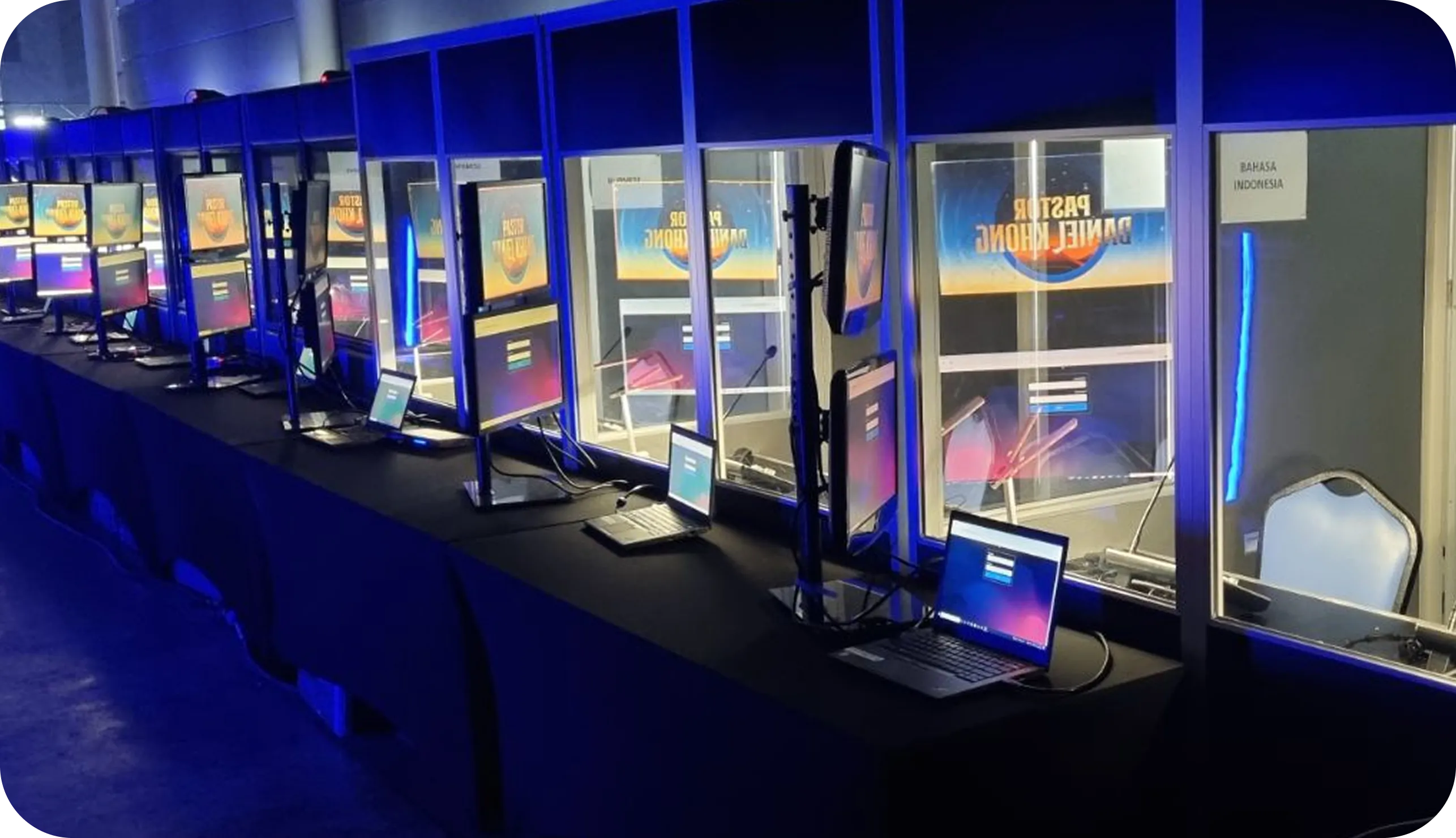
 Consecutive Interpreters
 Consecutive Interpreters
Consecutive interpreters are highly skilled professionals who specialize in sequential language translation. With their expertise in accurately conveying messages from one language to another, these language experts play a vital role in facilitating effective communication in various settings. In this article, we will delve into the technical aspects of consecutive interpreting, highlighting the significance of these language professionals and their invaluable contribution to multilingual communication.
Globibo’s Language Services approach combines technology-driven processes and certified quality — only organization in Asia with ISO 17100 (Translation), ISO 18841 (Interpreting), and ISO 27001 (Information Security). This framework supports structured language-service delivery across interpreting assignments, with processes designed around quality, information security, and professional service requirements.
Consecutive Interpretation Solution
A consecutive interpreter listens to a segment of source speech, retains or records the relevant information, and delivers the message in the target language after the speaker pauses. This format allows participants to hear both the original and interpreted communication during the same exchange.
Consecutive interpretation can support business meetings, bilateral discussions, government programs, medical consultations, training sessions, interviews, site visits, smaller conferences, and selected conference sessions where turn-by-turn communication is appropriate.
Interpreter Selection
Interpreter selection should consider the language combination, subject matter, communication setting, session duration, participant requirements, and expected terminology.
Specialized assignments may require interpreters familiar with medical, legal, financial, technical, governmental, scientific, or corporate terminology. Language direction and interpreter availability should be established before the event schedule is finalized.
Language Planning
Language planning establishes the source and target languages, direction of interpretation, number of participants, session format, and expected communication flow.
For meetings involving several participants or languages, the plan should also identify when interpretation is required, which participants need language support, and whether equipment or additional technical coordination is necessary.
Conference Preparation
Preparation materials can include agendas, presentation decks, terminology lists, speaker information, previous event content, and other relevant reference documents.
Consecutive interpreters may use structured note-taking to retain key information from longer speech segments. Academic research has specifically examined the relationship between note-taking, memory, cognitive load, and consecutive interpreting performance.
Facilitating effective Communication through sequential Language Translation
This section Includes:











Role
01
A consecutive interpreter can perform several communication roles during an assignment:
- Message Facilitator: Transfers the speaker’s intended meaning into the target language.
- Language Mediator: Enables communication between participants using different languages.
- Terminology Manager: Applies appropriate terminology for the subject and communication setting.
- Context Monitor: Considers context, references, and communication intent when reformulating the message.
- Turn-taking Support: Works with speakers and participants as communication moves between languages.
- Preparation Contributor: Reviews relevant material before the assignment to improve terminology familiarity and subject understanding.
The interpreter facilitates communication without replacing the original speaker or independently changing the substance of the message.
Consecutive Interpreters

Skills
02
Consecutive interpreting requires a combination of linguistic, cognitive, communication, and subject-matter skills:
- Language Proficiency: Strong command of the source and target languages.
- Listening: Accurate comprehension of spoken information.
- Memory: Retention of information between the source speech and interpreted delivery.
- Note-taking: Structured recording of key information when longer speech segments require it.
- Reformulation: Clear conversion of meaning into the target language.
- Terminology: Familiarity with specialized vocabulary.
- Concentration: Sustained attention during extended communication.
- Communication: Clear and appropriately paced delivery.
- Cultural Awareness: Recognition of relevant cultural and contextual differences.
Research indicates that cognitive demand is an important factor in consecutive interpreting, while studies of professional interpreters have examined note-taking, recall, fluency, and information completeness.
Learn about Role of Consecutive Interpretation in Legal Settings.
Consecutive Interpreters

Challenges
03
- Consecutive interpreting presents unique challenges that require adept problem-solving skills from interpreters. The nature of the sequential process necessitates longer speaking and interpretation times, potentially affecting the flow and pace of the event.
- To overcome these challenges in consecutive interpreters employ various strategies. Actively listening and comprehending the speaker’s message allows interpreters to mentally organize and structure their notes effectively. Consecutive interpreters are entrusted with the task of bridging language barriers in a sequential manner.
Consecutive Interpreters

Benefits
04
Consecutive interpretation provides several operational benefits when the communication format requires turn-by-turn language support:
- Direct Interaction: Participants can communicate through interpreted exchanges.
- Flexible Deployment: Interpretation can be used in meetings, discussions, site visits, and selected conference sessions.
- Subject-matter Support: Specialized interpreters can prepare terminology relevant to the assignment.
- Low Infrastructure Requirement: Many face-to-face assignments can operate without interpretation booths.
- Participant Engagement: Speakers and participants can maintain direct visual interaction.
- Adaptable Communication: The format can accommodate questions, discussions, negotiations, and changing conversation flow.
Consecutive Interpreters

Impact
05
The primary communication impact is the ability to maintain meaningful interaction between participants using different languages.
Unlike a format where interpretation is delivered continuously alongside the speaker, consecutive interpretation creates an intentional turn between source speech and interpreted speech. This can be useful when participants need direct interaction, discussion, clarification, negotiation, or relationship-building.
The practical outcome depends on interpreter expertise, language proficiency, subject preparation, speech complexity, participant behavior, audio conditions, and assignment planning.
Consecutive Interpreters
Interpretation Delivery
Consecutive interpretation can be delivered through different operational configurations. The appropriate model depends on participant location, meeting format, language requirements, speech duration, venue, connectivity, and the need for technical support.
On-Site Interpretation
On-site consecutive interpreters work in the same physical environment as the participants. This format supports direct interaction and is suitable for meetings, negotiations, government programs, medical communication, site visits, and selected conference sessions.
The technical setup can be minimal for small meetings, while larger environments may require microphones, portable audio systems, headsets, or other participant-access equipment.
Remote Interpretation
Remote consecutive interpreters work from another location using communication technology. This configuration can support meetings where participants and interpreters are distributed across locations.
Network quality, microphone performance, participant positioning, platform configuration, and remote technical support become important operational considerations.
Hybrid Interpretation
Hybrid consecutive interpretation combines participants and interpreters across physical and remote environments.
The configuration requires coordination between the physical meeting room, remote participants, audio channels, cameras, microphones, and communication platform.
AI-assisted Interpretation
AI can support selected interpretation workflows through speech recognition, transcription, language identification, terminology support, speaker identification, or AI-generated interpretation.
For assignments involving specialized, sensitive, or high-consequence communication, the appropriate level of human involvement should be determined by the language pair, subject matter, communication risk, and required quality controls.
Globibo’s Vietnam medical project demonstrates a human-and-AI interpretation deployment in which human interpreters supported Vietnamese-English communication while AI interpretation provided additional language access.
Technical Options
| Configuration | Interpreter Environment | Technical Components | Operational Considerations | Suitable Context |
|---|---|---|---|---|
| Face-to-Face Interpretation | Interpreter with participants | Usually minimal equipment; microphones may be added | Supports direct interaction and flexible turn-taking | Meetings, discussions, negotiations |
| Audio-assisted Interpretation | Interpreter with participants | Microphones, portable audio, headsets or receivers where required | Useful when participant numbers or room acoustics make direct delivery difficult | Larger meetings and conference rooms |
| Remote Interpretation | Interpreter away from participants | Remote communication platform, microphones, cameras, connectivity | Depends on network quality and audio performance | Distributed meetings |
| Hybrid Interpretation | Interpreter and participants across locations | Physical and remote communication infrastructure | Requires coordination between room and remote participants | Hybrid meetings |
| Human-led AI Support | Human interpreter supported by AI tools | Speech recognition, transcription, terminology or language-support technology | Human involvement and quality controls depend on subject and communication requirements | Selected multilingual workflows |
Consecutive interpretation does not automatically require interpretation booths or conference receivers. Equipment should be selected according to participant numbers, venue acoustics, speech format, communication distance, and the required delivery model.
Image intent 1: Face-to-face consecutive interpreter seated with participants around a boardroom table.
Title tag: Face-to-face consecutive interpretation
Alt tag: Consecutive interpreter working with participants in a boardroom
Image intent 2: Portable audio setup with microphones and headsets supporting a larger multilingual meeting.
Title tag: Portable audio for consecutive interpretation
Alt tag: Portable audio equipment supporting consecutive interpretation at a meeting
Image intent 3: Remote interpreter working from a professional workstation while communicating with participants through a video platform.
Title tag: Remote consecutive interpretation
Alt tag: Remote consecutive interpreter supporting an international meeting online
Standards & Quality
Globibo’s Language Services approach is based on technology-driven processes and certified quality — only organization in Asia with ISO 17100 (Translation), ISO 18841 (Interpreting), and ISO 27001 (Information Security).
For consecutive interpretation, ISO 18841:2018 is particularly relevant because it specifies basic requirements and recommendations for the provision of interpreting services. ISO currently lists the 2018 edition as published while ISO/FDIS 18841, the second edition, is under development and will replace ISO 18841:2018 when published.
ISO 23155:2022 is also relevant when consecutive interpretation is delivered as part of conference interpreting services. It specifies requirements and recommendations for the provision of conference interpreting services and is addressed to interpreters, service providers, and users of conference interpreting services.
Interpreting Standards
| Standard | Relevance |
|---|---|
| ISO 18841:2018 | General requirements and recommendations for interpreting services |
| ISO 23155:2022 | Requirements and recommendations for conference interpreting services |
| ISO 20228:2019 | Legal interpreting requirements |
| ISO 21998:2020 | Healthcare interpreting requirements and recommendations |
| ISO/FDIS 18841 | Second edition of the general interpreting standard currently under development |
ISO 20228:2019 can be relevant when consecutive interpretation is used in legal settings, while ISO 21998:2020 addresses healthcare interpreting. Their applicability depends on the assignment and operating environment.
Quality & Information Security
Consecutive interpretation may involve confidential corporate discussions, government communication, medical information, legal matters, financial information, or other sensitive content.
Information-security requirements should therefore be incorporated into the broader Language Services workflow. ISO 27001 provides a framework for information-security management, while interpreting-specific requirements are addressed through relevant interpreting standards.
Case Studies
Globibo’s project experience includes multilingual media programs, large-scale interpretation deployments, and specialized medical events.

Korea Media Gathering
Scope: 150 participants, including 120 media professionals and 30 staff, over 2 days.
Challenge: The global media program required multiple language directions and interpretation infrastructure.
Solution: Globibo provided 7 conference interpretation booths, 7 digital interpreter consoles, a central control unit, audio mixer, 5 FM transmitters, 150 FM receivers, and 4 on-site engineers. Interpretation covered English, Korean, Mandarin, Cantonese, and Thai across 7 language pairs.
Result: The configuration supported multilingual briefings and discussions for the participating media professionals.

Singapore Multilingual Event
Scope: 2,800 participants over 6 days with 28 linguists.
Challenge: The program required large-scale interpretation infrastructure and distribution to thousands of participants.
Solution: The setup included 14 conference interpretation booths, 28 interpreter consoles, 14 interpreter transmitters, 8 mobile interpretation transmitters, 2,800 receivers, audio recording infrastructure, and AI interpreter assistance.
Result: The interpretation infrastructure was tested before each event day, with dedicated teams supporting AV operations, receivers, and AI technology throughout the program.

Vietnam Medical Event
Scope: 50 participants over 2.5 days for an ophthalmology lecture.
Challenge: The program required specialized Vietnamese-English communication while providing additional language access for Southeast Asian participants.
Solution: Globibo combined human interpreters for Vietnamese-English with AI interpretation for additional languages. The setup included interpretation booths, interpreter consoles, transmitters, receivers, speaker diarization, language detection, speaker tagging, and on-site technical support.
Result: The combined approach supported medical discussions and additional language access through participant devices. The case study reports 98% feedback.
Globibo provides Language Services solutions with unrivaled speed, cost-efficiency, and quality to empower & engage People in Communication. For interpreting assignments, this value is delivered through appropriate interpreter selection, language planning, subject-matter preparation, technology where required, and service coordination based on the communication environment.
Want to learn more? I ‘m looking forward to hearing from you!

Susan has extensive experience in conference interpretation, simultaneous interpretation services, document localization for governmental and legal needs. Her work with embassies and government agencies ensures that documents meet specific regional requirements, making her expertise invaluable for international clients.
Academic References
- Yan, H., et al. (2024). Assessing mental demand in consecutive interpreting: Insights from an fNIRS study. Acta Psychologica, 243, 104132. DOI: 10.1016/j.actpsy.2024.104132. The study examines mental workload and its relationship with consecutive interpretation performance.
- Chen, S. (2020). The process of note-taking in consecutive interpreting: A digital pen recording approach. Interpreting, 22(1), 117–139. DOI: 10.1075/intp.00036.che.
- Zhou, J., & Dong, Y. (2024). Effects of note-taking on the accuracy and fluency of consecutive interpreters’ immediate free recall of source texts: A three-stage developmental study. Acta Psychologica, 248, 104359. DOI: 10.1016/j.actpsy.2024.104359.
- Hiltunen, S., et al. (2025). Effect of cognitive load on working memory updating and prose recall skills of interpreters. International Journal of Bilingualism, 30(3). DOI: 10.1177/13670069241302407.
Faqs
What is an example of a consecutive interpreter?
What is an example of a consecutive interpreter?
An example of a consecutive interpreter is a professional who assists in communication between two or more individuals by listening to a speaker and then rendering the message into the target language during pauses or breaks in the speech. They take notes to aid memory and ensure accuracy when delivering the interpretation.
What is the difference between consecutive and simultaneous interpretation?
What is the difference between consecutive and simultaneous interpretation?
The main difference between consecutive and simultaneous interpretation lies in the way the interpretation is delivered:
Consecutive Interpretation: In consecutive interpretation, the interpreter listens to a segment of the speaker’s speech, takes notes, and then renders the interpretation while the speaker pauses. The interpreter and the speaker take turns, making the communication process slower but more precise.
Simultaneous Interpretation: Simultaneous interpretation, on the other hand, involves the interpreter delivering the interpretation in real time as the speaker speaks. This is done through specialized equipment, such as soundproof booths, headsets, and microphones. Simultaneous interpretation allows for a more seamless flow of communication but requires highly skilled interpreters and a technical setup.
What are consecutive interpreters also called?
What are consecutive interpreters also called?
Consecutive interpreters are often referred to as liaison interpreters or dialogue interpreters. This term emphasizes their role in facilitating communication between two or more parties, serving as a bridge for effective understanding.
Can Human Interpreters and AI Interpretation be used together?
Can Human Interpreters and AI Interpretation be used together?
Yes. Human interpreters can be combined with AI-supported workflows for selected language and communication requirements. The appropriate configuration depends on subject matter, language coverage, communication risk, and required quality controls.
Is Note-taking used in Consecutive Interpretation?
Is Note-taking used in Consecutive Interpretation?
Note-taking is commonly used when interpreters need to retain information from longer speech segments. Research has examined how note-taking interacts with recall, cognitive load, and interpreting performance.
How are Interpreters selected for Specialized Assignments?
How are Interpreters selected for Specialized Assignments?
Selection can consider language combination, subject-matter familiarity, relevant interpreting experience, terminology requirements, meeting format, and the expected communication environment.
How many Interpreters are needed for a Meeting?
How many Interpreters are needed for a Meeting?
The requirement depends on language combinations, meeting duration, subject matter, speech length, participant numbers, and the expected communication flow. Longer assignments may require additional interpreter planning and breaks.
What are the important qualities of a consecutive interpreter?
What are the important qualities of a consecutive interpreter?
Important qualities of a consecutive interpreter include:
- Strong language proficiency: An interpreter should have an exceptional command of both the source and target languages to accurately convey the meaning and nuances of the speaker.
- Excellent listening and memory skills: Consecutive interpreters need to have sharp listening skills to understand the speaker’s message and the ability to retain and recall important details while taking notes.
- Cultural knowledge and sensitivity: Understanding the cultural nuances and context of both the source and target languages is crucial for accurate interpretation and avoiding misunderstandings.
- Note-taking proficiency: Consecutive interpreters rely on their notes to deliver precise interpretations. They must have efficient note-taking techniques and the ability to quickly reference their notes during the interpretation.
- Professionalism and ethics: Interpreters should maintain confidentiality, neutrality, and impartiality throughout the interpretation process. They must adhere to a code of ethics and act in the best interest of all parties involved.
- Flexibility and adaptability: Interpreters often work in diverse settings and may encounter various topics and speakers. Being adaptable to different situations and quick to adjust their interpreting style is essential.
These qualities are crucial for consecutive interpreters to provide high-quality and accurate interpretations, ensuring effective communication between parties in multilingual environments.
Key Articles of Consecutive Interpreter
1. Key Skills Required to Become a Professional Consecutive Interpreter
Consecutive interpreting is a vital form of interpretation that facilitates communication between parties who speak different languages.
2. The Role of Consecutive Interpreters in International Meetings
International meetings serve as vital platforms for diplomacy, business negotiations, and cultural exchange among diverse language speakers.
3. Consecutive Interpretation vs. Simultaneous: Which is Best for Your Event?
In the globalized world, effective communication is crucial, especially during events that bring together diverse cultures and languages.
4. Effective Note-Taking Techniques for Consecutive Interpreters
Consecutive interpreting is a high-stakes activity requiring linguistic precision, strong cognitive skills, and excellent memory.
5. The Role of Consecutive Interpretation in Legal Settings
In the complex and highly structured world of legal settings, effective communication is essential for ensuring that justice is properly served.
6. Challenges Faced by Consecutive Interpreters and How to Overcome Them
Consecutive interpreting, a crucial service in multilingual communication, involves the interpreter listening to a speaker, then delivering the translation once the speaker pauses.
7. Essential Skills Every Consecutive Interpreter Should Master
Consecutive interpreting is a complex and nuanced form of language translation that requires a unique set of skills.
8. The Impact of Cultural Nuances on Consecutive Interpretation
Consecutive interpretation is a specialized skill requiring not only linguistic expertise but also a deep understanding of cultural nuances.
9. Best Practices for Training Aspiring Consecutive Interpreters
Training aspiring consecutive interpreters involves a systematic approach to developing both linguistic skills and cultural awareness.
10. What is Consecutive Interpretation? Best Use Cases and Benefits
Consecutive interpretation is a method of language interpretation where the interpreter conveys a spoken message in one language after the speaker has paused, typically after several sentences or a complete thought.
11. Choosing a Consecutive Interpreter for Meetings and Business
In the realm of international business and communication, effective interpretation is essential for smooth interactions.
12. Why Consecutive Interpreting is Ideal for Negotiations and Seminars
Consecutive interpreting plays a pivotal role in facilitating communication during negotiations and seminars.
13. How Consecutive Interpreters Bridge Language Gaps in Events
In the increasingly globalized world, language barriers can present significant challenges during conferences, meetings, diplomatic negotiations, and various other events.
14. Top Traits of a Skilled Consecutive Interpreter
Consecutive interpretation is a specialized skill that demands a unique combination of cognitive, linguistic, and interpersonal abilities.
15. Why Consecutive Interpreters are Vital for Global Businesses
In an increasingly interconnected world, global businesses must overcome linguistic and cultural barriers to expand their reach and ensure smooth communication with diverse stakeholders.
16. Expert Consecutive Interpreter Services for any event
In an interconnected world, seamless communication across languages is pivotal for successful events, meetings, and negotiations.
17. Why choose a Professional Consecutive Interpreter for your event?
In today’s globalized world, seamless communication is essential for businesses, legal proceedings, healthcare consultations, and diplomatic meetings.
18. Top-rated Consecutive Interpretation for seamless communication
Effective communication is at the heart of successful global interactions. Whether in international conferences, business meetings, or legal proceedings, the role of a consecutive interpreter is critical for bridging language barriers and ensuring mutual understanding.
19. Key Benefits of Hiring a Consecutive Interpreter
In an increasingly interconnected world, effective communication across language barriers has become critical. Businesses, organizations, and individuals often rely on professional interpreters to facilitate seamless interactions in multilingual contexts.
20. Consecutive Interpreter Techniques for Accurate Communication
Effective communication across languages is critical in a globally interconnected world.
21. Challenges for Consecutive Interpreters & Solutions
Consecutive interpreting, an intricate and demanding discipline within the broader field of language consecutive interpretation, involves converting spoken messages from one language to another in segments, typically after the speaker pauses.
22. Mastering Memory: Tips for Aspiring Consecutive Interpreters
In the world of interpretation, few skills are as vital as memory. A consecutive interpreter’s ability to retain and recall spoken content is crucial to delivering accurate and coherent translations.
23. How Consecutive Interpreters Simplify Complex Conversations
In an increasingly globalized world, the ability to communicate across language barriers is paramount. One of the key solutions to this challenge is the role of the consecutive interpreter.
24. Your Guide to Success as a Consecutive Interpreter
Consecutive interpretation is a highly specialized and essential skill within the field of language services.
25. Global Linguist Network for Superior Consecutive Interpretation
In today’s fast-paced, globalized world, the ability to communicate seamlessly across linguistic boundaries is a critical necessity for businesses, governments, and individuals.
26. Connecting you with Expert Consecutive Interpreters Worldwide
Effective communication is critical in the globalized world we live in today. Whether for business meetings, conferences, diplomatic dialogues, or legal proceedings, the ability to bridge language gaps is essential.
27. Enhancing Hybrid Consecutive Interpretation with Technology
In today’s globalized world, the demand for seamless communication across languages has increased exponentially.
28. Consecutive Interpreter Tips for Effective Communication
Effective communication is an essential element in today’s globalized world, and language barriers can significantly hinder communication between individuals, organizations, and nations.
29. Enhancing Business Outcomes with Consecutive Interpretation
In the era of globalization, the need for effective cross-cultural communication has never been more essential.
30. The Role of a Consecutive Interpreter in Multilingual Meetings
Effective communication is the cornerstone of any successful interaction, especially when participants speak different languages.
31. Advancing Your Career as a Consecutive Interpreter
In an increasingly interconnected world, the role of a consecutive interpreter is more important than ever. Interpreting, as a means of facilitating communication between individuals who speak different languages, is not just about translating words
32. Understanding the Art of Consecutive Interpretation
Consecutive interpretation is a complex and highly specialized skill crucial in various professional settings such as legal, medical, business, and diplomatic contexts.
33. The Crucial Role of Consecutive Interpreters in Multilingual Communication
In a world where global interactions are more common than ever before, the need for effective multilingual communication is paramount.
