Legal Interpreting for Civil Litigation
Legal interpreting is an essential component of civil litigation, particularly when parties involved do not share a common language. This specialized field ensures that all participants, regardless of their linguistic background, can fully understand and engage with legal proceedings.
This article delves into the intricacies of legal interpreting for civil litigation, detailing the standards, practices, and challenges involved. We will also examine relevant ISO standards and provide structured lists to facilitate a deeper understanding of the subject.
The Role of Legal Interpreting in Civil Litigation
Legal interpreting serves a critical function in civil litigation by bridging communication gaps between parties who speak different languages. The role of legal interpreting is vital for ensuring that justice is administered fairly and that all parties have an equal opportunity to present their case.
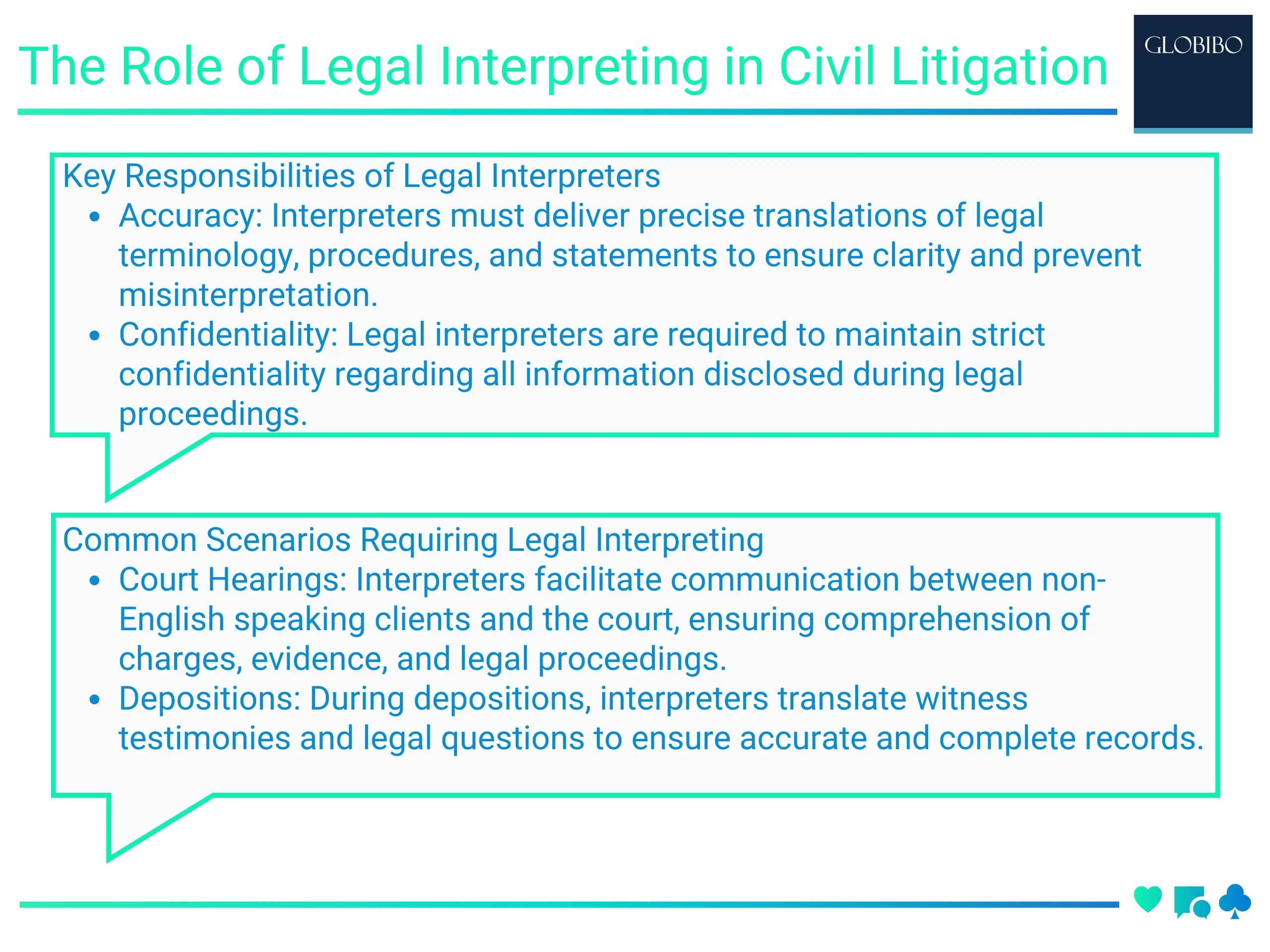
Key Responsibilities of Legal Interpreters
- Accuracy: Interpreters must deliver precise translations of legal terminology, procedures, and statements to ensure clarity and prevent misinterpretation.
- Confidentiality: Legal interpreters are required to maintain strict confidentiality regarding all information disclosed during legal proceedings.
- Impartiality: Interpreters must remain neutral, avoiding any actions or statements that could influence the outcome of the case.
Common Scenarios Requiring Legal Interpreting
- Court Hearings: Interpreters facilitate communication between non-English speaking clients and the court, ensuring comprehension of charges, evidence, and legal proceedings.
- Depositions: During depositions, interpreters translate witness testimonies and legal questions to ensure accurate and complete records.
- Mediations: Interpreters assist in settlement negotiations or mediation sessions, helping parties reach mutually acceptable agreements.
ISO Standards for Legal Interpreting
ISO standards establish guidelines for quality and consistency in legal interpreting services, ensuring that interpreters meet professional criteria and adhere to best practices.
Relevant ISO Standards
| ISO Standard | Description |
|---|---|
| ISO 13611:2014 | This standard provides principles and requirements for community interpreting, applicable to legal settings. |
| ISO 17100:2015 | Specifies requirements for translation services, including aspects relevant to legal interpreting. |
| ISO 9001:2015 | Focuses on quality management systems, applicable to maintaining high standards in legal interpreting services. |
Key Aspects of ISO Standards for Legal Interpreting
- Qualification Requirements: ISO standards require interpreters to have relevant qualifications and training, including a thorough understanding of legal terminology and procedures.
- Quality Assurance: Compliance with ISO standards involves regular assessments and audits to ensure that interpreting services meet established quality benchmarks.
Best Practices for Legal Interpreting in Civil Litigation
Implementing best practices is crucial for ensuring effective and accurate legal interpreting. These practices help maintain the integrity of legal proceedings and ensure fair access to justice.

Preparation and Research
- Pre-Trial Preparation: Interpreters should review case materials and legal documents beforehand to familiarize themselves with the specific terminology and context.
- Terminology Glossaries: Developing and using glossaries of legal terms helps interpreters provide consistent and accurate translations throughout the proceedings.
During the Proceeding
- Continuous Accuracy: Interpreters must maintain high levels of accuracy, paying close attention to both content and tone.
- Managing Interruptions: Effective strategies for handling interruptions or clarifications ensure that all parties understand the proceedings without unnecessary delays.
Post-Proceeding Responsibilities
- Documentation: Providing accurate records of interpreting work, including instances where clarification was needed or challenges encountered.
- Feedback and Improvement: Regular feedback from clients and legal professionals helps interpreters refine their skills and address any issues that arise.
Challenges in Legal Interpreting for Civil Litigation
Legal interpreting in civil litigation presents several unique challenges that require careful management to ensure fair and accurate representation.
Complex Legal Terminology
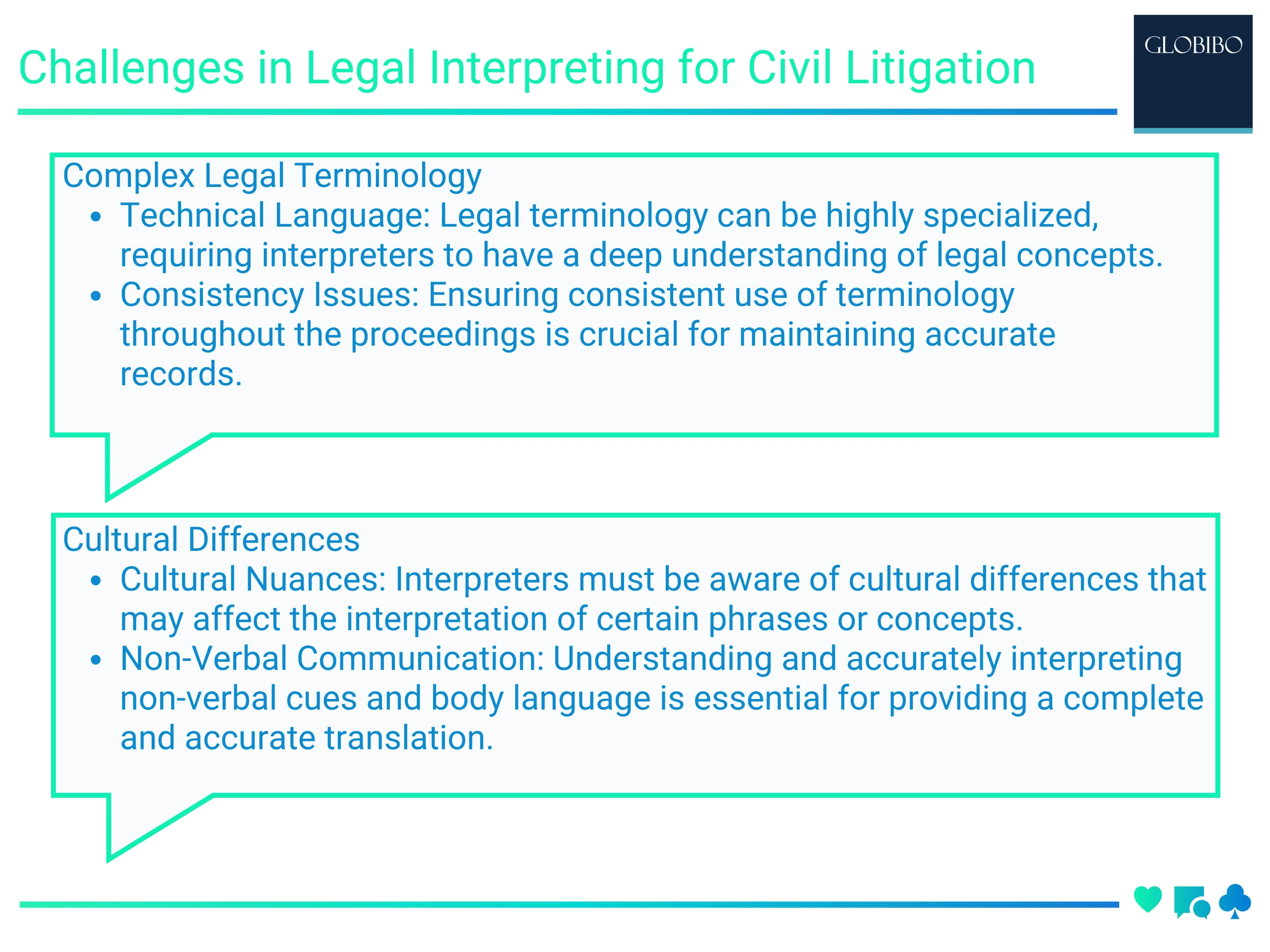
- Technical Language: Legal terminology can be highly specialized, requiring interpreters to have a deep understanding of legal concepts.
- Consistency Issues: Ensuring consistent use of terminology throughout the proceedings is crucial for maintaining accurate records.
Cultural Differences
- Cultural Nuances: Interpreters must be aware of cultural differences that may affect the interpretation of certain phrases or concepts.
- Non-Verbal Communication: Understanding and accurately interpreting non-verbal cues and body language is essential for providing a complete and accurate translation.
Maintaining Impartiality
- Avoiding Bias: Interpreters must remain neutral, avoiding any actions or statements that could be perceived as biased.
- Conflict of Interest: Interpreters need to disclose any potential conflicts of interest and recuse themselves from cases where impartiality might be compromised.
Lists of Key Considerations
Qualities of an Effective Legal Interpreter
- Expert Knowledge: Comprehensive understanding of legal systems, terminology, and procedures.
- Fluency in Languages: Proficiency in both source and target languages, including specialized legal vocabulary.
- Professionalism: Adherence to ethical standards, including confidentiality and impartiality.
Steps to Ensure Quality in Legal Interpreting Services
- Selection Process: Carefully vetting interpreters based on qualifications, experience, and adherence to ISO standards.
- Training and Certification: Providing ongoing training and certification to keep interpreters updated on legal developments and best practices.
- Quality Assurance Measures: Implementing regular assessments and feedback mechanisms to monitor and improve interpreting services.

Case Studies and Examples
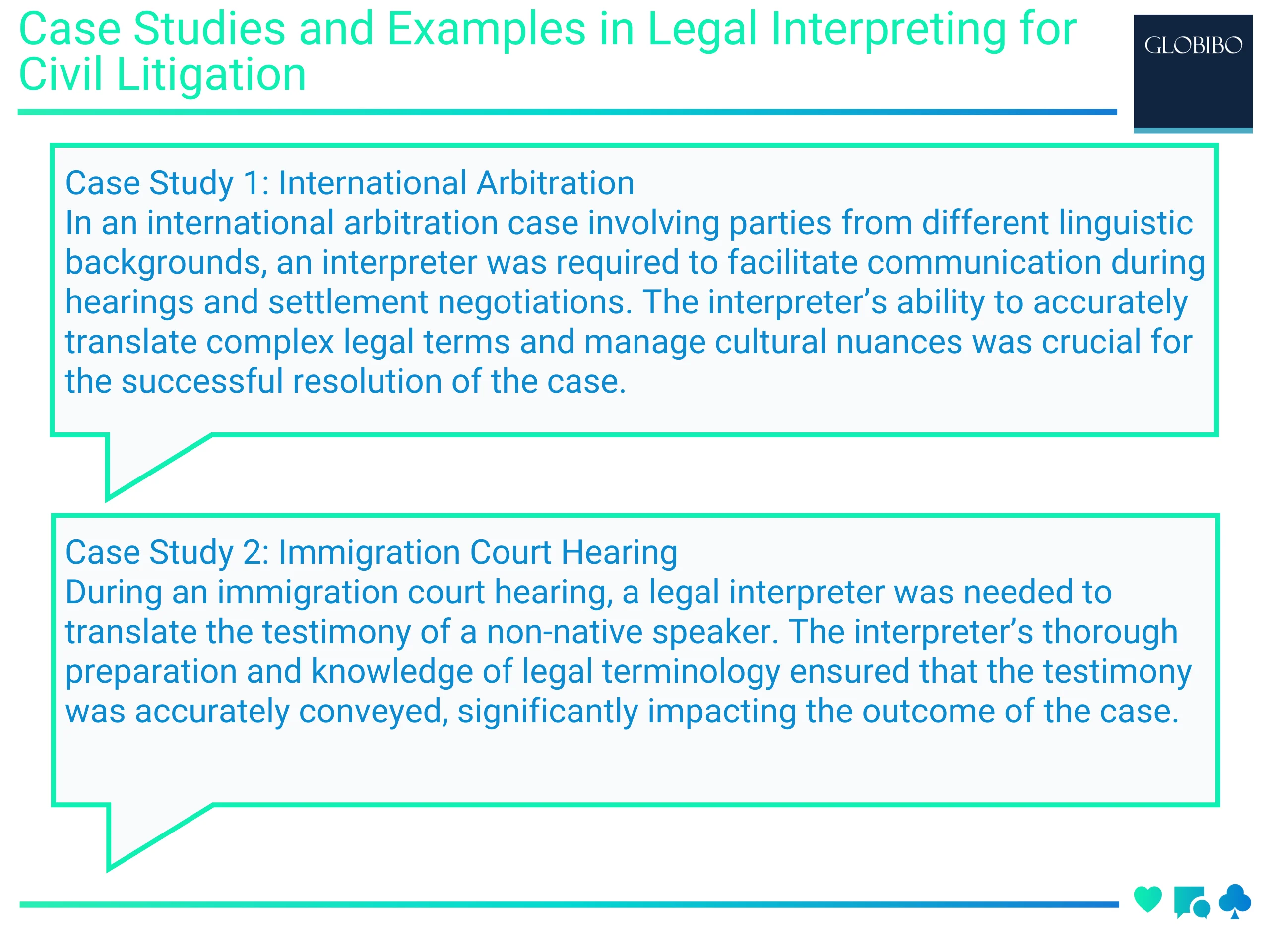
Case Study 1: International Arbitration
In an international arbitration case involving parties from different linguistic backgrounds, an interpreter was required to facilitate communication during hearings and settlement negotiations. The interpreter’s ability to accurately translate complex legal terms and manage cultural nuances was crucial for the successful resolution of the case.
Case Study 2: Immigration Court Hearing
During an immigration court hearing, a legal interpreter was needed to translate the testimony of a non-native speaker. The interpreter’s thorough preparation and knowledge of legal terminology ensured that the testimony was accurately conveyed, significantly impacting the outcome of the case.
Future Trends in Legal Interpreting
Technological Advancements
- Remote Interpreting: The rise of remote interpreting platforms has expanded access to legal interpreting services, allowing interpreters to participate in proceedings from different locations.
- AI and Machine Translation: While AI and machine translation technologies are improving, they still require human oversight to ensure accuracy and reliability in legal contexts.
Increased Demand for Specialized Interpreters
- Emerging Languages: The increasing diversity of legal cases is driving demand for interpreters fluent in less commonly spoken languages.
- Complex Cases: As legal cases become more complex, there is a growing need for interpreters with specialized knowledge in various legal fields.

Legal Interpreting for Civil Litigation Summary
Legal interpreting for civil litigation is a complex and essential field that requires a deep understanding of legal terminology, cultural nuances, and ethical standards. Adhering to ISO standards and implementing best practices ensures the accuracy, impartiality, and confidentiality of interpreting services.
By addressing the challenges and staying informed about future trends, legal interpreters can continue to play a vital role in ensuring fair and equitable legal proceedings for all parties involved.
References on Legal Interpreting for Civil Litigation
- ISO 13611:2014 – Community interpreting
- ISO 17100:2015 – Translation services
- ISO 9001:2015 – Quality management systems
YouTube video on Legal Interpreting for Civil Litigation

Susan Tan
Leadership Development Trainer
Susan has extensive experience in document localization for governmental and legal needs. Her work with embassies and government agencies ensures that documents meet specific regional requirements, making her expertise invaluable for international clients.