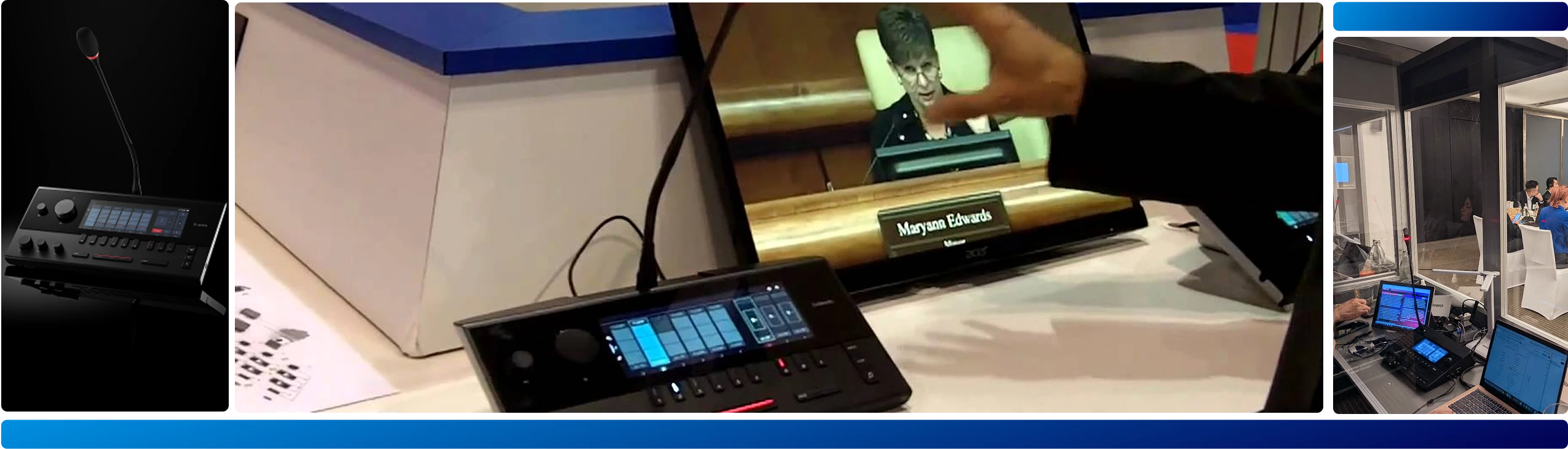
Wired In-Built Interpretation Systems
Wired in-built interpretation systems are essential components in the realm of simultaneous interpretation for various settings, including conferences, press briefings, and international events. These systems, designed for high fidelity and reliability, provide seamless language translation services by using wired connections to ensure minimal signal interference and optimal audio quality. This article delves into the technical aspects, advantages, and configurations of wired in-built interpretation systems, highlighting their role in modern interpretation equipment.
Technical Overview Of Wired In-Built Interpretation Systems
Wired in-built interpretation systems integrate hardware and software to facilitate real-time language translation. Unlike wireless systems, these setups utilize direct cabling to connect interpreters to the central control unit and audience receivers. This configuration minimizes the risk of signal loss and ensures consistent audio clarity, making it ideal for high-stakes events where precision is critical.

- Core Components
- Central Control Unit (CCU): The heart of the system, managing audio input, distribution, and signal routing.
- Interpreter Consoles: Stations equipped with microphones, headphones, and controls for interpreters to manage their feed.
- Delegate Units: Devices provided to the audience for receiving the translated audio, typically including headphones and volume controls.
- Cabling Infrastructure: High-quality cables are used to connect all components, ensuring reliable signal transmission.
- Operational Workflow
- Audio Input: Speakers or microphones pick up the original speech, which is then fed into the central control unit.
- Signal Processing: The CCU processes the audio signals, routing them to the appropriate interpreter consoles.
- Interpretation: Interpreters listen through their headphones and provide real-time translation via their microphones.
- Audio Distribution: Translated audio is sent from the CCU to delegate units, where it is delivered to the audience in their chosen language.
Advantages of Wired Systems
- Signal Stability
- Wired systems eliminate issues related to signal interference and dropout, which are common in wireless setups.
- Direct cabling ensures consistent audio quality without the fluctuations often experienced in wireless systems.
- High Fidelity Audio
- Provides superior sound quality due to dedicated audio channels and high-bandwidth cables.
- Essential for settings requiring precise and clear audio, such as legal proceedings or scientific conferences.
- Security and Reliability
- Wired connections are less susceptible to hacking or unauthorized access compared to wireless systems.
- Provides a dependable solution for events where technical failures could have significant consequences.

System Configurations and Components
Wired in-built interpretation systems are modular, allowing for various configurations based on the event’s scale and requirements. Below is a table illustrating common configurations and their components:
| Configuration | Components | Usage |
|---|---|---|
| Basic Configuration | 1 Central Control Unit 2 Interpreter Consoles 20 Delegate Units |
Small to medium events with a few languages |
| Advanced Configuration | 1 Central Control Unit 4 Interpreter Consoles 50 Delegate Units |
Large conferences with multiple languages |
| Professional Configuration | 1 Central Control Unit 8 Interpreter Consoles 100 Delegate Units |
Major international summits and events |
Installation and Setup
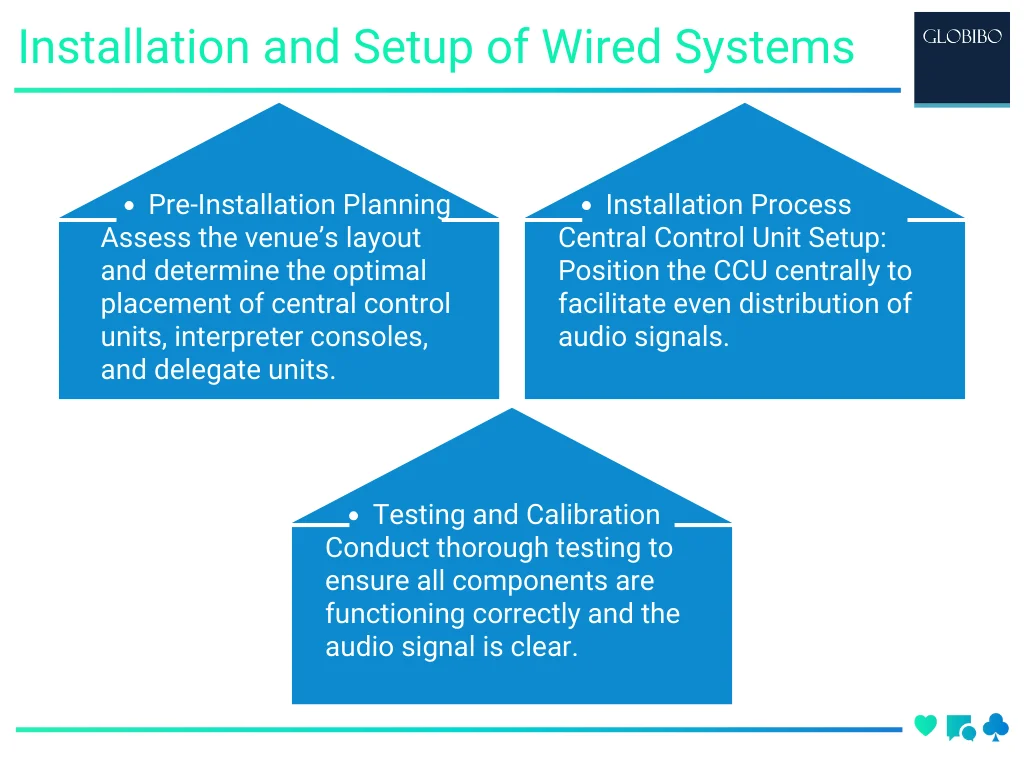
- Pre-Installation Planning
- Assess the venue’s layout and determine the optimal placement of central control units, interpreter consoles, and delegate units.
- Plan the cabling route to minimize interference and ensure ease of access for maintenance.
- Installation Process
- Central Control Unit Setup: Position the CCU centrally to facilitate even distribution of audio signals.
- Interpreter Console Arrangement: Place consoles in a dedicated area with sufficient acoustic isolation to ensure effective interpretation.
- Delegate Unit Distribution: Distribute delegate units evenly among the audience to provide uniform access to interpretation services.
- Testing and Calibration
- Conduct thorough testing to ensure all components are functioning correctly and the audio signal is clear.
- Calibrate the system to balance audio levels and eliminate any potential feedback or distortion issues.
Maintenance and Troubleshooting
- Routine Maintenance
- Regularly inspect and test cables for wear and tear to prevent signal degradation.
- Ensure that all components, including microphones and headphones, are in working condition, and replace any damaged parts promptly.
- Troubleshooting Common Issues
- Audio Distortion: Check cabling connections and replace any faulty cables.
- Signal Dropouts: Verify that all connections are secure and test the central control unit for any malfunctions.
- Feedback Issues: Adjust microphone levels and placement to reduce feedback and echo.
Future Trends and Innovations
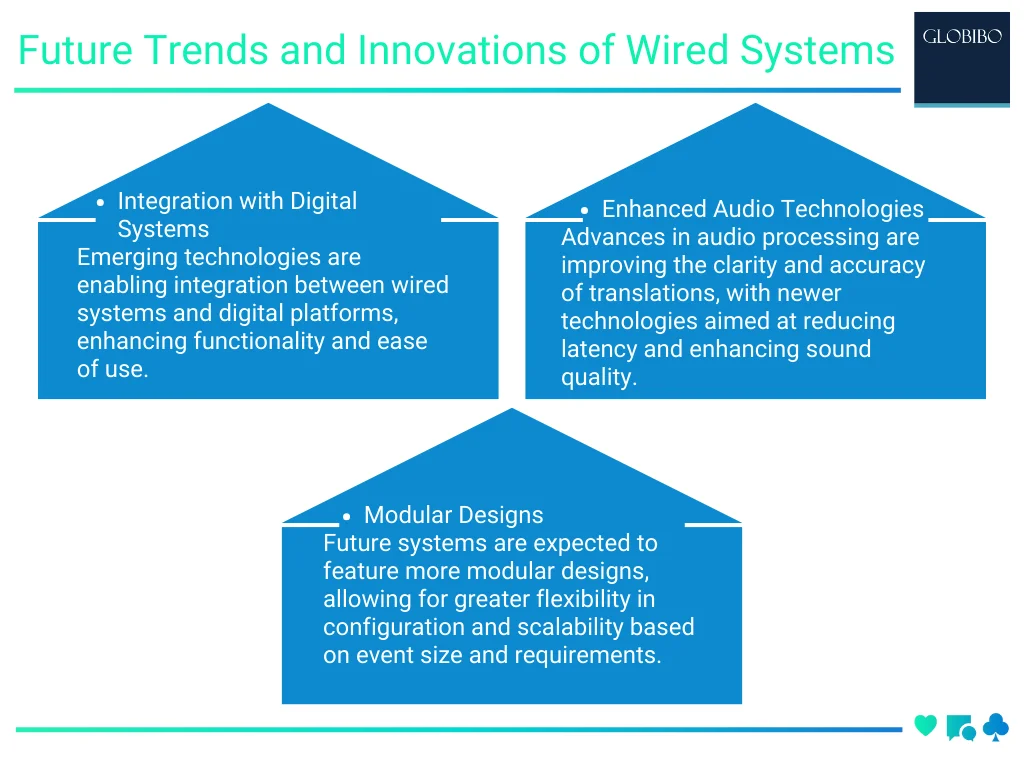
- Integration with Digital Systems
- Emerging technologies are enabling integration between wired systems and digital platforms, enhancing functionality and ease of use. Wired systems can easily integrate with AV setups. See how in Integration of Interpretation Equipment with AV Systems.
- Digital interfaces are being developed to provide additional features such as remote monitoring and control.
- Enhanced Audio Technologies
- Advances in audio processing are improving the clarity and accuracy of translations, with newer technologies aimed at reducing latency and enhancing sound quality.
- Modular Designs
- Future systems are expected to feature more modular designs, allowing for greater flexibility in configuration and scalability based on event size and requirements.
Wired In-Built Interpretation Systems Summary
Wired in-built interpretation systems represent a robust and reliable solution for simultaneous language translation in a variety of settings. By leveraging high-quality cabling and dedicated audio equipment, these systems ensure optimal performance and audio fidelity. As technology advances, the integration of digital features and enhanced audio technologies will continue to improve the efficiency and effectiveness of wired interpretation systems, solidifying their role as a cornerstone of professional interpretation equipment.
Understanding the technical intricacies and operational benefits of wired systems is crucial for selecting the right solution for any event. Wired systems are often preferred for Simultaneous Interpreting Equipment. Their reliability, signal stability, and superior audio quality make them a preferred choice for high-stakes environments where precision and clarity are paramount.
Wired-in built-in interpretation systems offer a permanent solution for consistent performance. Combine these with interpretation consoles, booths, transmitters, and receivers for a comprehensive setup. A well-executed hybrid setup will benefit from these systems. Ensure compatibility with simultaneous interpreting equipment and AV systems. Assess the differences between digital vs. analog interpretation equipment and consider portable interpretation equipment for additional flexibility.
Academic References on Wired In-Built Interpretation Systems
-
COMPARATIVE ANALYSIS OF WIRED AND WIRELESS SENSORS IN STRUCTURAL HEALTH MONITORING
-
Ordering in disguise: digital integration in built-environment practices
-
[BOOK] Built environments, constructed societies: inverting spatial analysis
-
A critical analysis of Building Information Modelling systems used in construction projects
-
Trends in built environment semantic Web applications: Where are we today?
YouTube video on Wired In-Built Interpretation Systems

Susan Tan
Leadership Development Trainer
Susan has extensive experience in document localization for governmental and legal needs. Her work with embassies and government agencies ensures that documents meet specific regional requirements, making her expertise invaluable for international clients.