Remote Simultaneous Interpretation Solution for Press Conferences
In today’s globalized world, press conferences are no longer limited to a single language or region. As organizations and governments reach international audiences, the need for effective communication across multiple languages has become paramount. Remote Simultaneous Interpretation (RSI) has emerged as a crucial solution to address these needs, particularly in hybrid environments where both in-person and remote participants are involved. The integration of advanced technology with interpretation services ensures that language barriers are overcome and that messages are conveyed accurately and efficiently.
This article delves into the technical aspects of Remote Simultaneous Interpretation solutions for press conferences, exploring the benefits, challenges, and key components of a robust RSI solution. We will also discuss the importance of hybrid interpretation in modern-day press conferences and how to ensure seamless communication across different platforms.

Understanding Remote Simultaneous Interpretation
Remote Simultaneous Interpretation (RSI) refers to the process where interpreters provide real-time translation of spoken language into another language from a remote location. The interpreters listen to the source language through a live audio feed and deliver the interpreted message to the audience simultaneously. This solution is increasingly being adopted for press conferences due to its flexibility, cost-effectiveness, and ability to cater to a global audience.
Key Components of RSI Systems
For RSI to function effectively, several components must work in harmony. These include:
- Interpreter’s Console: This is the primary interface for interpreters, allowing them to receive the source language audio, deliver the interpreted language, and manage various aspects of the interpretation process. The console is equipped with features like audio mixing, volume control, and language channel selection.
- Audio and Video Feed: The quality of audio and video feeds is crucial for accurate interpretation. High-definition audio ensures that interpreters can hear the speaker, while video feeds help interpreters understand non-verbal cues, such as body language and gestures.
- Cloud-Based Platform: The RSI platform typically operates on a cloud-based infrastructure, enabling interpreters and participants to connect from anywhere in the world. This platform facilitates the routing of audio and video feeds, manages multiple language channels, and ensures low-latency communication.
- Audience Interface: Participants in a press conference can access the interpreted audio through various devices, such as smartphones, tablets, or dedicated receivers with OPI. The interface should be user-friendly, allowing easy selection of language channels and volume control.
- Internet Connectivity: A stable and high-speed internet connection is essential for the smooth operation of RSI systems. Bandwidth requirements vary depending on the number of language channels and the quality of audio and video feeds.
Importance of Hybrid Interpretation in Press Conferences
Hybrid interpretation combines both on-site and remote interpretation services, making it an ideal solution for modern press conferences. As press conferences increasingly adopt a hybrid format, with participants joining from different locations, the need for flexible interpretation services becomes critical. Hybrid interpretation allows for the seamless integration of remote interpreters with on-site audio-visual systems, ensuring that all participants, regardless of their location, receive the same level of service.
Technical Requirements for Implementing RSI in Press Conferences
Implementing RSI in press conferences involves a detailed understanding of technical requirements to ensure flawless operation. The success of RSI hinges on the quality of the equipment, the reliability of the network infrastructure, and the proficiency of the interpreters. Below is a breakdown of the essential technical components and considerations:

1. Interpreter’s Console and Equipment
- Microphones: High-quality microphones with noise-canceling features are essential to ensure that the interpreter’s voice is clear and free from background noise.
- Headphones: Professional-grade headphones that offer excellent sound isolation and comfort during long sessions.
- Redundancy Systems: Backup systems such as duplicate consoles and microphones to ensure continuity in case of equipment failure.
2. Audio-Visual Integration
- Audio Mixer: This device manages multiple audio inputs and outputs, ensuring that the interpreter receives a clean audio feed and that the interpreted language is broadcast to the audience.
- Video Switching: Video feeds from multiple cameras are managed through a video switcher, ensuring that the interpreter receives the correct visual cues.
3. Network Infrastructure
- Bandwidth: The system must have sufficient bandwidth to handle multiple audio and video streams without latency.
- Latency: Low-latency network connections are essential to ensure that the interpreted language is delivered in real time, without noticeable delays.
- Redundancy: Network redundancy is crucial, with backup internet connections available in case of primary network failure.
4. Interpreter Management Software
- Scheduling and Assignment: Software tools that manage interpreter assignments based on language requirements and availability.
- Monitoring: Real-time monitoring tools that allow technicians to oversee the performance of the RSI system, including audio levels, network latency, and interpreter activity.
- Language Channels: Management of multiple language channels, allowing participants to select their preferred language during the press conference.
5. User Interface for Participants
- Device Compatibility: The RSI platform should be compatible with various devices, including smartphones, tablets, and laptops, ensuring accessibility for all participants.
- Language Selection: A simple interface that allows participants to select their preferred language with ease.
- Technical Support: On-hand technical support to assist participants with any issues related to the RSI platform.
Challenges and Solutions in RSI for Press Conferences
Implementing RSI in press conferences can present several challenges. Below is a structured list of common challenges and their corresponding solutions:
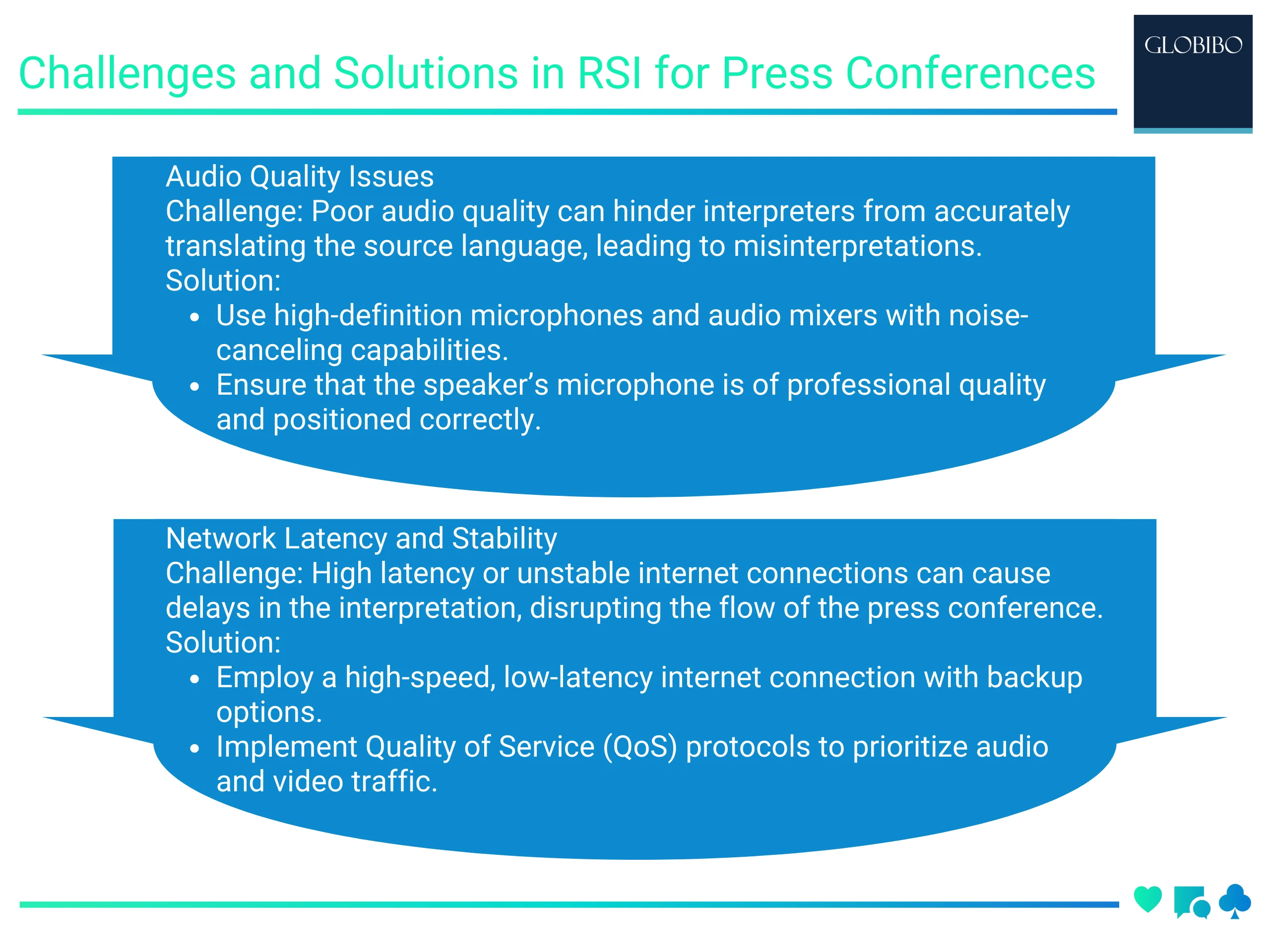
1. Audio Quality Issues
Challenge: Poor audio quality can hinder interpreters from accurately translating the source language, leading to misinterpretations.
Solution:
- Use high-definition microphones and audio mixers with noise-canceling capabilities.
- Ensure that the speaker’s microphone is of professional quality and positioned correctly.
2. Network Latency and Stability
Challenge: High latency or unstable internet connections can cause delays in the interpretation, disrupting the flow of the press conference.
Solution:
- Employ a high-speed, low-latency internet connection with backup options.
- Implement Quality of Service (QoS) protocols to prioritize audio and video traffic.
3. Technical Glitches in the Interpreter’s Console
Challenge: Malfunctioning equipment or software bugs in the interpreter’s console can lead to interruptions in the interpretation service.
Solution:
- Regularly maintain and update interpreter consoles and software.
- Have backup equipment readily available to switch in case of failure.
4. Coordination Between On-Site and Remote Teams
Challenge: Ensuring seamless coordination between on-site and remote teams can be difficult, leading to potential miscommunication.
Solution:
- Conduct regular briefings and tests before the event to align on procedures and expectations.
- Utilize collaboration tools and clear communication channels to facilitate real-time coordination.
5. Participant Accessibility
Challenge: Participants may experience difficulty accessing the RSI platform or selecting the correct language channel.
Solution:
- Provide clear instructions and technical support for participants before and during the event.
- Ensure the RSI platform is intuitive and compatible with a wide range of devices.
Hybrid Interpretation: A Modern-Day Necessity
Hybrid interpretation is increasingly becoming a necessity in press conferences, particularly in the current environment where physical attendance may be limited due to various factors such as travel restrictions or health concerns. The hybrid model combines both remote and on-site interpretation, offering flexibility and ensuring that all attendees, regardless of their location, can access the interpretation services.
Advantages of Hybrid Interpretation
- Scalability: Hybrid interpretation allows organizations to scale their interpretation services based on the size and scope of the press conference. Whether a small, localized event or a large international press conference, hybrid interpretation can be adapted to meet the needs of the audience.
- Cost-Effectiveness: By reducing the need for interpreters to be physically present at the venue, hybrid interpretation can significantly lower costs associated with travel, accommodation, and equipment rental.
- Accessibility: Hybrid interpretation ensures that all participants, whether on-site or remote, have equal access to interpretation services, promoting inclusivity and diversity in communication.
- Redundancy: Having both on-site and remote interpreters provides a level of redundancy that can help mitigate risks associated with technical failures or unforeseen circumstances.
Implementing Hybrid Interpretation in Press Conferences
To effectively implement hybrid interpretation in press conferences, several factors must be considered:
- Technical Integration: Ensure that the RSI platform is fully integrated with the on-site audio-visual systems. This includes syncing the audio feeds, managing language channels, and coordinating the timing of interpretations.
- Interpreter Coordination: Coordinate between on-site and remote interpreters to ensure consistent delivery of interpretation services. This may involve assigning specific languages to remote interpreters and others to on-site interpreters, depending on the conference setup.
- Participant Experience: Focus on delivering a seamless experience for participants, whether they are attending in person or remotely. This includes providing clear instructions on how to access the RSI platform, selecting the appropriate language channel, and troubleshooting common issues.

Key Considerations for Hybrid Interpretation
1. Event Size and Scope
- Small Events: Consider using a fully remote interpretation model to minimize costs and logistical challenges.
- Large Events: A hybrid model may be more appropriate, allowing for both on-site and remote interpreters to handle the increased demand for multiple languages.
2. Interpreter Availability
- On-Site Interpreters: Best suited for events where the majority of the audience is physically present and where immediate interaction is required.
- Remote Interpreters: Ideal for events with a dispersed audience, providing flexibility and reducing travel-related costs.
3. Technical Infrastructure
- On-Site Setup: Ensure that the venue has the necessary audio-visual equipment and network infrastructure to support both on-site and remote interpretation.
- Remote Setup: Ensure that remote interpreters have access to high-quality audio and video feeds and that their internet connection meets the required standards.
4. Audience Engagement
- On-Site Audience: Provide headsets and receivers for on-site participants to access the interpreted language channels.
- Remote Audience: Ensure that the RSI platform is accessible across different devices and that participants have the necessary technical support.
5. Risk Management
- Redundancy Planning: Implement backup systems for both on-site and remote setups to ensure continuity in case of technical failures.
- Training and Testing: Conduct thorough training for interpreters and technical staff, and perform multiple test runs to identify and resolve potential issues before the event.

Comparative Analysis of RSI Platforms for Press Conferences
The table below provides a comparative analysis of popular RSI platforms used in press conferences, highlighting key features, pros, and cons:
| RSI Platform | Key Features | Pros | Cons |
|---|---|---|---|
| Platform A | Cloud-based, multi-language support, real-time monitoring | Easy scalability, user-friendly interface | High bandwidth requirements |
| Platform B | Integrated with AV systems, supports hybrid events | Seamless AV integration, low-latency communication | Complex setup process |
| Platform C | AI-assisted interpretation, mobile-friendly | Cost-effective, supports multiple devices | Limited customization options |
| Platform D | End-to-end encryption, advanced analytics | High security, detailed performance tracking | Expensive for small events |
| Platform E | Customizable UI, API integration | Flexible, easy integration with existing systems | Requires technical expertise for setup and management |
Best Practices for a Successful RSI Implementation
Ensuring the success of RSI in press conferences requires adherence to best practices. Below are some key recommendations:
1. Early Planning and Coordination
Begin planning the RSI setup well in advance of the press conference. This includes coordinating with interpreters, technical teams, and venue management to ensure that all aspects of the RSI system are in place.
2. Thorough Testing
Conduct multiple test runs of the RSI system, including stress tests with full language channel loads. This helps identify potential issues and allows for adjustments to be made before the live event.
3. Interpreter Training
Ensure that interpreters are familiar with the RSI platform and the specific requirements of the press conference. Provide training on how to use the interpreter’s console, manage audio and video feeds, and troubleshoot common issues.
4. Real-Time Monitoring
Deploy a team to monitor the RSI system in real-time during the press conference. This includes tracking audio quality, network latency, and interpreter performance to ensure that any issues are promptly addressed.
5. Feedback and Improvement
After the press conference, gather feedback from participants, interpreters, and technical teams. Use this feedback to make improvements to the RSI system and processes for future events.
Remote Simultaneous Interpretation Solution for Press Conferences Summary
Remote Simultaneous Interpretation solution for press conferences is an indispensable tool in today’s press conferences, especially in a hybrid environment. The ability to provide real-time interpretation across multiple languages, regardless of location, ensures that press conferences can reach a global audience without language barriers. By understanding the technical requirements, addressing challenges, and following best practices, organizations can successfully implement RSI solutions that enhance communication in their events.
Hybrid interpretation, in particular, is a key component of modern press conferences, offering the flexibility and scalability needed to adapt to the evolving landscape of international communication. As technology continues to advance, the integration of RSI with hybrid models will play a pivotal role in shaping the future of press conferences and multilingual communication.
Academic References on Remote Simultaneous Interpretation Solution for Press Conferences
-
[PDF] Using Modern Simultaneous Interpretation Tools in the Training of Interpreters at Universities.
-
Remote Simultaneous Interpreting: perceptions, practices and developments
-
[PDF] Exploring the visual interface in Remote Simultaneous Interpreting
-
[PDF] Multimedia communication technologies and their impact on interpreting
YouTube Video on RSI Solution for Press Conferences

Susan Tan
Leadership Development Trainer
Susan has extensive experience in document localization for governmental and legal needs. Her work with embassies and government agencies ensures that documents meet specific regional requirements, making her expertise invaluable for international clients.