The Importance of Legal Interpreting in Criminal Cases
Legal interpreting in criminal cases is a cornerstone of the criminal justice system, essential for ensuring that non-English speaking individuals receive a fair trial. Accurate legal interpreting services bridge the language gap, enabling clear communication between the court and participants who do not speak the court’s primary language.
Detailed Overview of Legal Interpreting
The Role of Legal Interpreters
Legal interpreters are specialized professionals who translate spoken communication between parties in a legal setting. Their role is multifaceted and crucial for maintaining the integrity of the judicial process. The primary functions include:
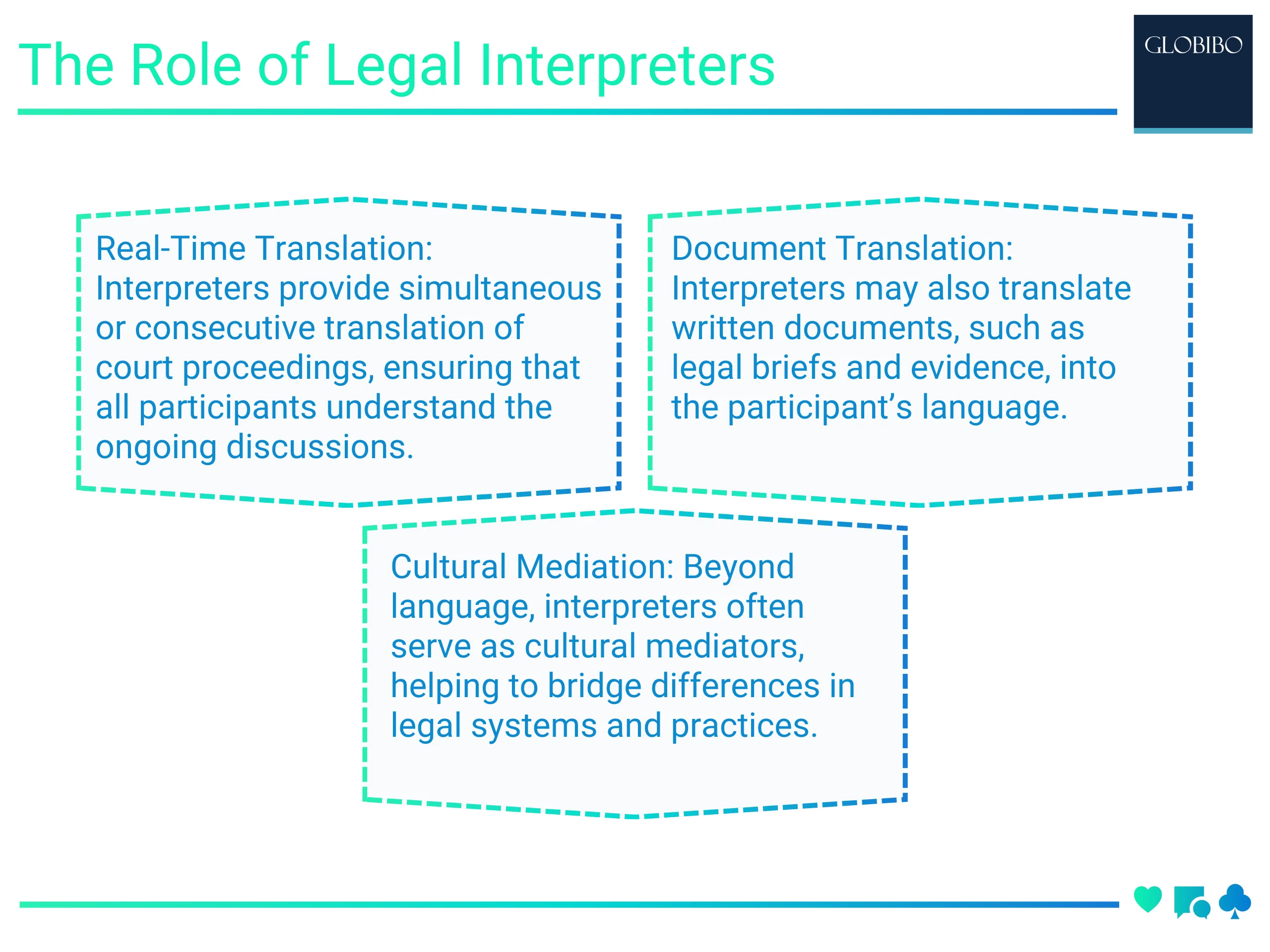
- Real-Time Translation: Interpreters provide simultaneous or consecutive translation of court proceedings, ensuring that all participants understand the ongoing discussions.
- Document Translation: Interpreters may also translate written documents, such as legal briefs and evidence, into the participant’s language.
- Cultural Mediation: Beyond language, interpreters often serve as cultural mediators, helping to bridge differences in legal systems and practices.
The Legal Framework and Ethical Standards
Legal interpreting is governed by several frameworks and standards to ensure accuracy and professionalism. Key aspects include:
- Ethical Guidelines: Legal interpreters must adhere to strict ethical guidelines, including neutrality, confidentiality, and impartiality. They are required to refrain from offering personal opinions or advice and to disclose any potential conflicts of interest.
- Certification and Training: Professional interpreters typically undergo rigorous training and certification to meet the demands of legal settings. Certifications may be provided by professional organizations such as the American Translators Association (ATA) or the National Association of Judiciary Interpreters and Translators (NAJIT).
ISO Standards and Their Impact
ISO 13611:2014
ISO 13611:2014 provides comprehensive guidelines for community interpreting, including legal contexts. It emphasizes:
- Professionalism: Interpreters are expected to demonstrate a high level of professionalism, including a thorough understanding of legal terminology and procedures.
- Ethical Practices: The standard outlines ethical practices such as maintaining confidentiality and impartiality.
- Competence: Ensuring that interpreters possess the necessary skills and knowledge to handle complex legal situations.
ISO 9001:2015
ISO 9001:2015 focuses on quality management systems and applies to legal interpreting services as it provides:
- Quality Assurance: The standard outlines processes for maintaining high-quality service, including regular evaluations and feedback mechanisms.
- Continuous Improvement: It promotes a culture of continuous improvement, ensuring that interpreting services evolve with changing legal and linguistic requirements.
Detailed Impact of Legal Interpreting in Criminal Cases
Enhancing Access to Justice
Legal interpreting services are crucial for ensuring that all parties involved in a criminal case, regardless of their language proficiency, can participate fully and effectively. This has several critical implications:
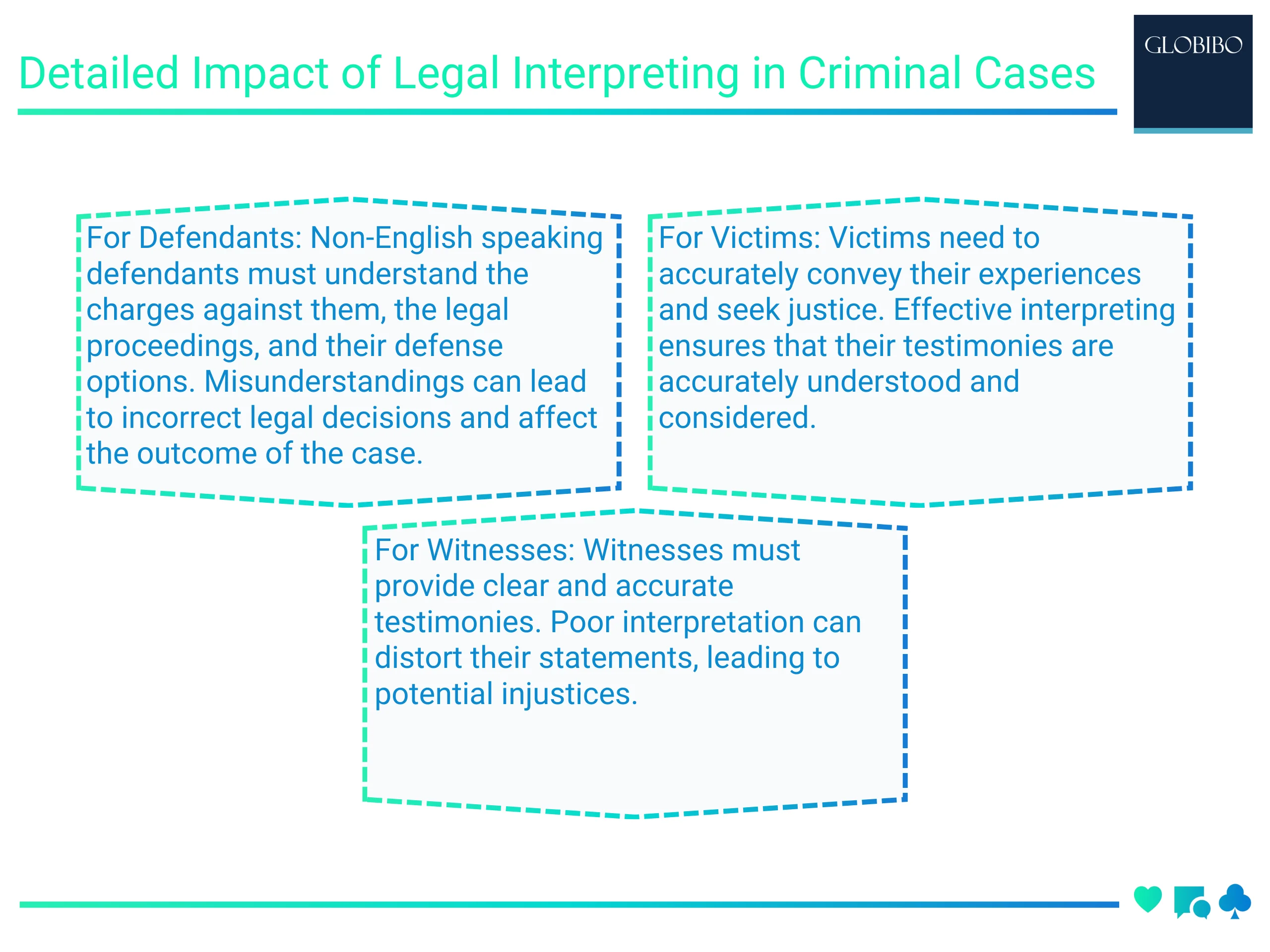
- For Defendants: Non-English speaking defendants must understand the charges against them, the legal proceedings, and their defense options. Misunderstandings can lead to incorrect legal decisions and affect the outcome of the case.
- For Victims: Victims need to accurately convey their experiences and seek justice. Effective interpreting ensures that their testimonies are accurately understood and considered.
- For Witnesses: Witnesses must provide clear and accurate testimonies. Poor interpretation can distort their statements, leading to potential injustices.
Case Studies
Case Study 1: The Importance of Accurate Interpretation
In a landmark case in the United States, a defendant was wrongfully convicted due to inadequate interpretation services. The interpreter’s inaccuracies led to significant misinterpretations of the defendant’s statements, resulting in a conviction that was later overturned on appeal. This case underscored the need for precise and reliable interpreting to avoid miscarriages of justice.
Case Study 2: Effective Interpretation and Fair Trials
Conversely, in a recent high-profile trial, effective legal interpreting played a crucial role in ensuring a fair outcome. The interpreter provided clear and accurate translations, allowing the defendant to fully understand the proceedings and present a well-informed defense. The outcome was widely regarded as fair and just, highlighting the positive impact of high-quality interpreting services.
Benefits of High-Quality Legal Interpreting
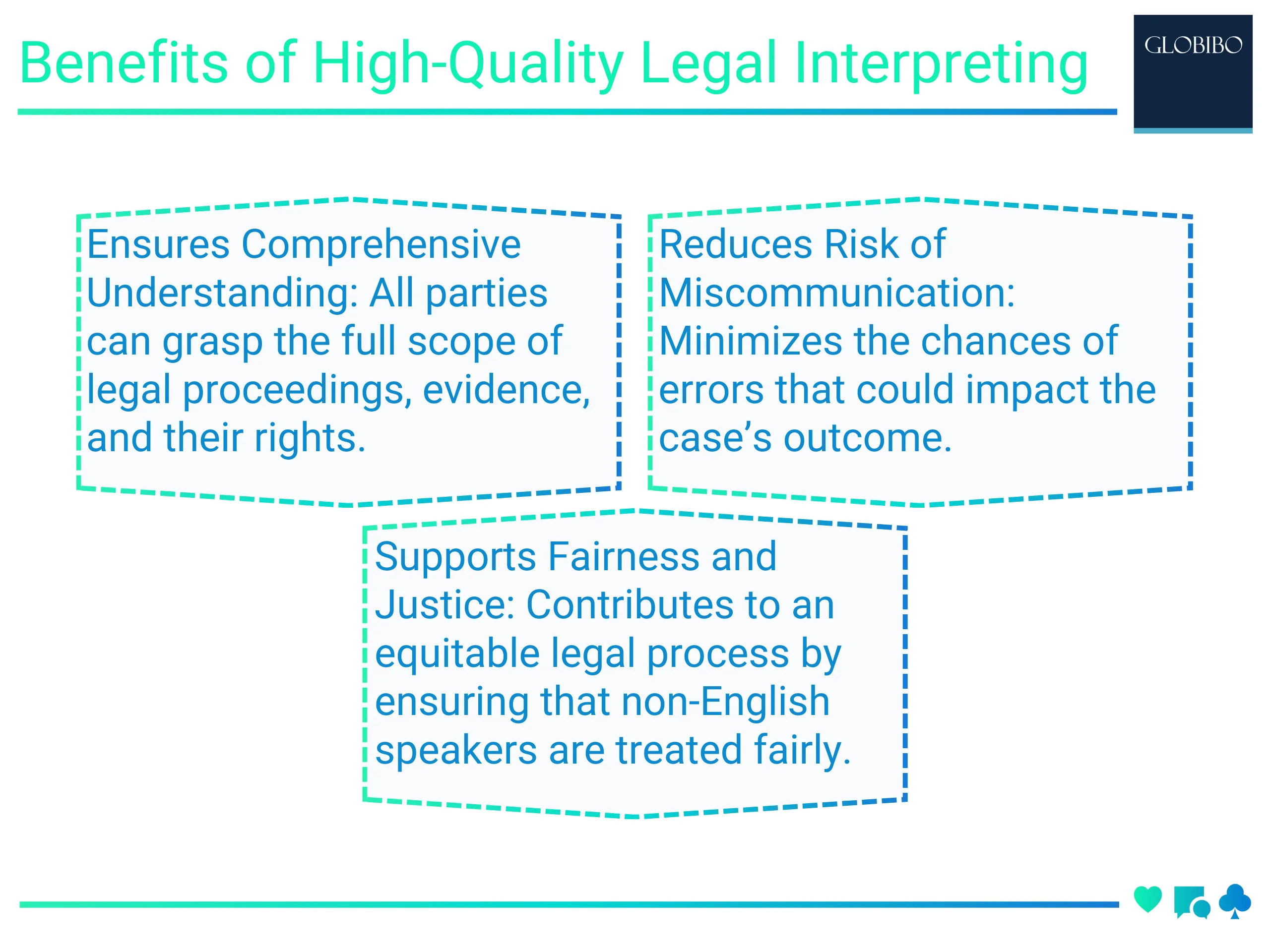
- Ensures Comprehensive Understanding: All parties can grasp the full scope of legal proceedings, evidence, and their rights.
- Reduces Risk of Miscommunication: Minimizes the chances of errors that could impact the case’s outcome.
- Supports Fairness and Justice: Contributes to an equitable legal process by ensuring that non-English speakers are treated fairly.
Risks of Poor Legal Interpreting
- Misrepresentation of Evidence: Incorrect interpretation can lead to misrepresentation or omission of critical evidence, affecting the case’s outcome.
- Legal Challenges and Appeals: Inadequate interpreting may result in appeals or legal challenges, undermining the judicial process and leading to additional legal complications.
- Inequitable Legal Outcomes: Poor interpretation can disadvantage non-English speakers, potentially resulting in unjust legal decisions.

Implementing Effective Legal Interpreting Services
Effective implementation of legal interpreting services requires adherence to established standards and practices. Key strategies include:
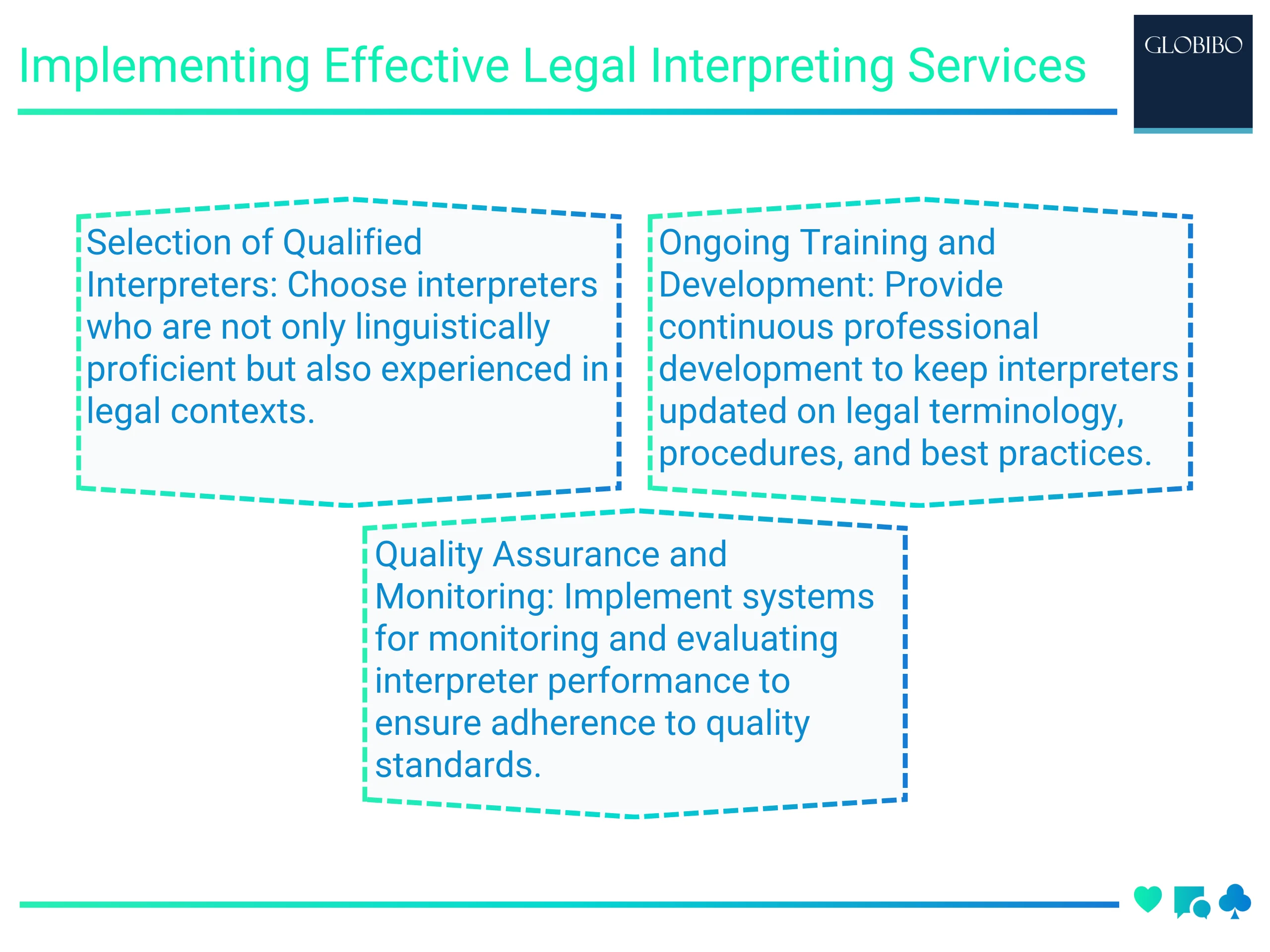
- Selection of Qualified Interpreters: Choose interpreters who are not only linguistically proficient but also experienced in legal contexts. Verification of qualifications and credentials is essential.
- Ongoing Training and Development: Provide continuous professional development to keep interpreters updated on legal terminology, procedures, and best practices.
- Quality Assurance and Monitoring: Implement systems for monitoring and evaluating interpreter performance to ensure adherence to quality standards.
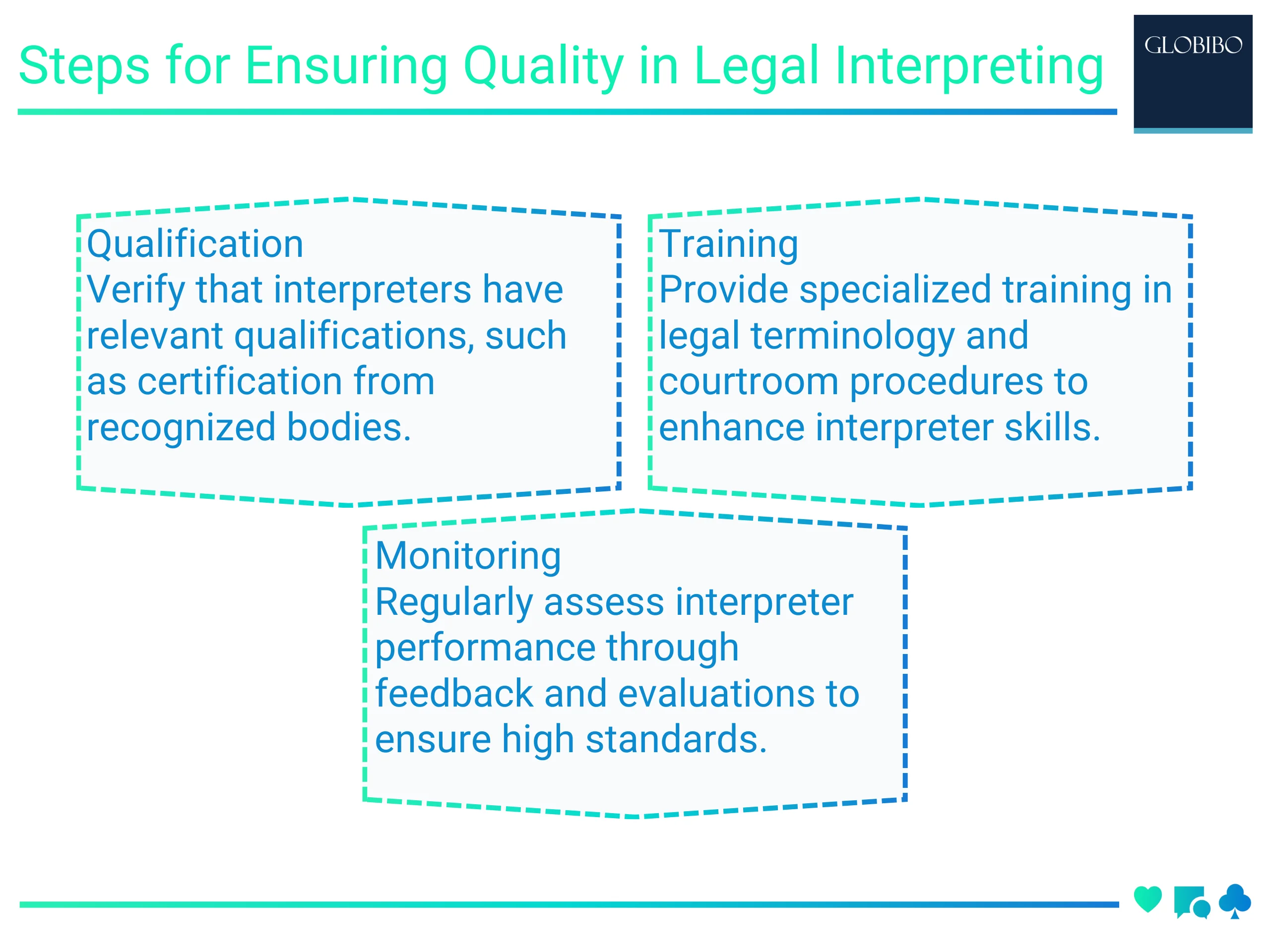
Steps for Ensuring Quality in Legal Interpreting
| Step | Description |
|---|---|
| 1. Qualification | Verify that interpreters have relevant qualifications, such as certification from recognized bodies. |
| 2. Training | Provide specialized training in legal terminology and courtroom procedures to enhance interpreter skills. |
| 3. Monitoring | Regularly assess interpreter performance through feedback and evaluations to ensure high standards. |
Legal Interpreting in Criminal Cases Summary
Legal interpreting in criminal cases is vital for upholding the principles of justice in criminal cases. By facilitating clear communication and ensuring that all parties understand the proceedings, legal interpreters play a crucial role in maintaining the integrity of the judicial process. Adhering to ISO standards and implementing robust quality assurance practices are essential for delivering effective interpreting services.
In summary, the role of legal interpreting in criminal cases or other cases like immigration cases extends beyond mere translation. It is integral to ensuring fairness and equity and supporting defendants, victims, and witnesses in navigating the legal system. As such, ongoing attention to the quality and effectiveness of legal interpreting services is essential for safeguarding justice and upholding the rights of all participants.
Academic References On Legal Interpreting in Criminal Cases
-
The role of the court interpreter: a powerless or powerful participant in criminal proceedings?
-
Looking back while going forward: 15 years of legal interpreting in the EU
YouTube Video on Legal Interpreting in Criminal Cases

Susan Tan
Leadership Development Trainer
Susan has extensive experience in document localization for governmental and legal needs. Her work with embassies and government agencies ensures that documents meet specific regional requirements, making her expertise invaluable for international clients.