Interpretation in Arbitration
Arbitration, as a method of alternative dispute resolution (ADR), has gained global prominence due to its efficiency, flexibility, and confidentiality. However, one of the key challenges in international arbitration is the language barrier, which can lead to miscommunication, misunderstanding, and ultimately, a miscarriage of justice.
This challenge necessitates the use of interpretation services, particularly legal interpreting services, to ensure that all parties involved can fully understand and participate in the proceedings. This article delves into the critical role of interpretation in arbitration, exploring its significance, the standards governing it, and the challenges associated with it.
The Role of Interpretation in Arbitration
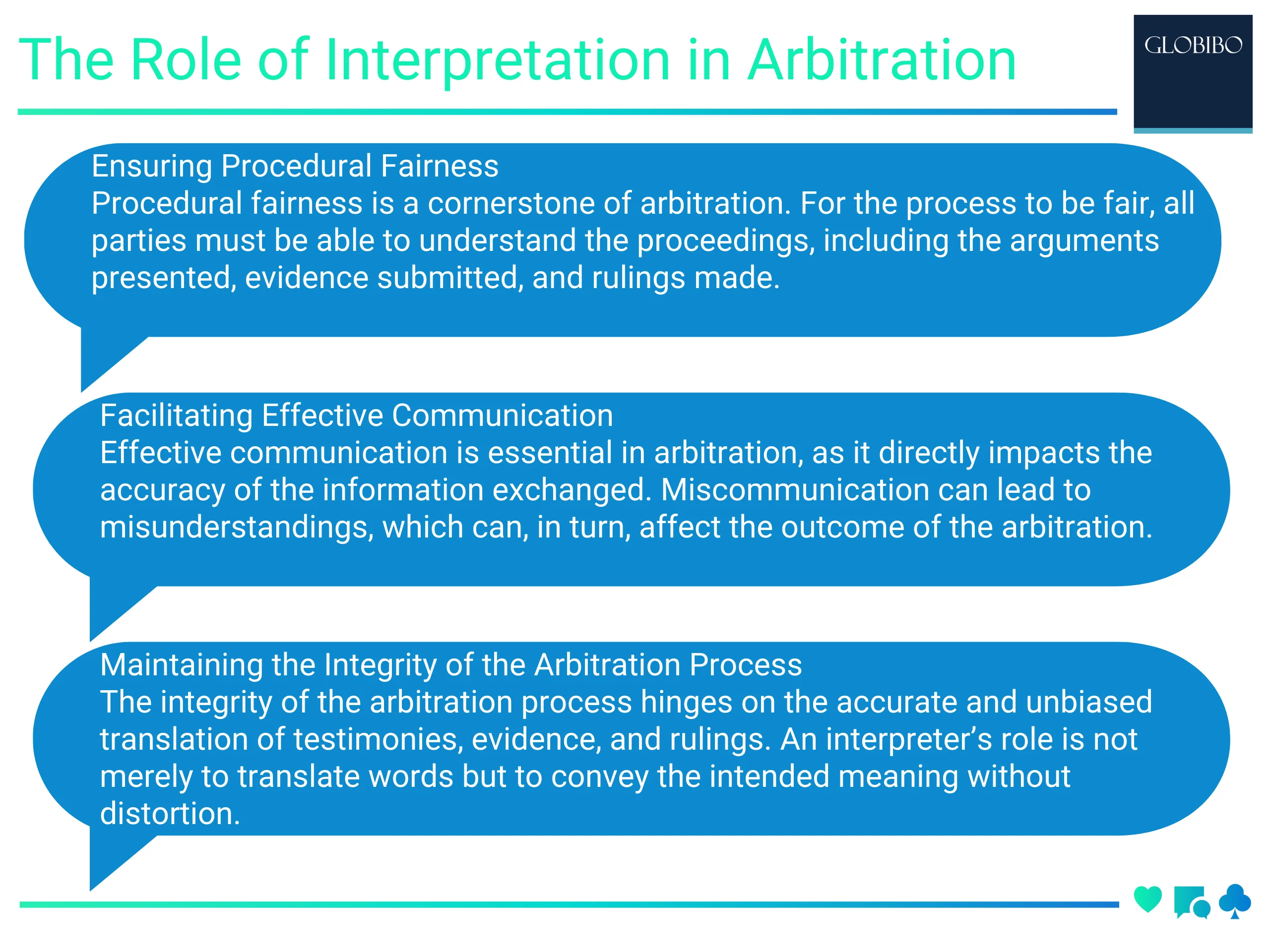
1. Ensuring Procedural Fairness
Procedural fairness is a cornerstone of arbitration. For the process to be fair, all parties must be able to understand the proceedings, including the arguments presented, evidence submitted, and rulings made. In international arbitration, where parties often come from different linguistic and cultural backgrounds, interpretation services are crucial. Legal interpreting services ensure that all parties can engage fully in the legal process, regardless of the language spoken.
2. Facilitating Effective Communication
Effective communication is essential in arbitration, as it directly impacts the accuracy of the information exchanged. Miscommunication can lead to misunderstandings, which can, in turn, affect the outcome of the arbitration. Professional legal interpreters are trained to convey messages accurately, taking into account the nuances of legal terminology and cultural differences. This ensures that the communication between parties, arbitrators, and witnesses is clear and precise.
3. Maintaining the Integrity of the Arbitration Process
The integrity of the arbitration process hinges on the accurate and unbiased translation of testimonies, evidence, and rulings. An interpreter’s role is not merely to translate words but to convey the intended meaning without distortion. This is particularly important in legal settings, where the precise meaning of a word or phrase can significantly impact the case. Legal interpreting services, therefore, play a vital role in maintaining the integrity of the arbitration process.
Standards Governing Interpretation in Arbitration
ISO Standards on Interpretation
The International Organization for Standardization (ISO) has developed several standards that are relevant to interpretation in arbitration. These standards provide guidelines for the quality and delivery of interpreting services, ensuring that interpreters possess the necessary qualifications and skills to perform their duties effectively.
Key ISO Standards:
- ISO 18841:2018 – Interpreting Services:
- Scope: This standard outlines the basic requirements for interpreting services, including the qualifications of interpreters, the quality of service, and the ethical considerations involved.
- Importance in Arbitration: ISO 18841:2018 ensures that the interpreters engaged in arbitration are competent and adhere to a high standard of professionalism, which is critical for maintaining the fairness and integrity of the process.
- ISO 13611:2014 – Community Interpreting:
- Scope: While this standard primarily applies to community interpreting, its principles are relevant in arbitration, especially in cases involving public interest or where community-specific issues are being addressed.
- Importance in Arbitration: ISO 13611:2014 provides guidelines for ensuring that interpreters are sensitive to cultural nuances and community-specific concerns, which can be crucial in cases involving parties from diverse backgrounds.
- ISO 20228:2019 – Legal Interpreting:
- Scope: This standard specifically addresses legal interpreting, providing guidelines on the competencies required for interpreters working in legal settings, including arbitration.
- Importance in Arbitration: ISO 20228:2019 is directly applicable to arbitration, as it ensures that interpreters possess the legal knowledge and interpreting skills necessary to accurately convey legal concepts and arguments.
Challenges in Interpretation during Arbitration
1. Complexity of Legal Terminology
Legal language is often complex and laden with terminology that may not have direct equivalents in other languages. This poses a significant challenge for interpreters, who must accurately convey the meaning of legal terms without altering the substance of the message. Legal interpreting services are crucial in this context, as they involve interpreters who are specifically trained in legal terminology and concepts.
2. Cultural Differences
Cultural differences can also complicate interpretation in arbitration. Certain legal concepts or practices may be interpreted differently depending on cultural context. For example, the concept of “good faith” may vary significantly between common law and civil law jurisdictions. Interpreters must be aware of these differences and ensure that they are taken into account when interpreting.
3. Maintaining Neutrality
Interpreters must remain neutral and impartial at all times. This can be challenging, especially in cases where the interpreter may have a personal or cultural connection to one of the parties involved. To mitigate this risk, it is essential to engage professional legal interpreting services that adhere to strict ethical guidelines.

Best Practices for Interpretation in Arbitration
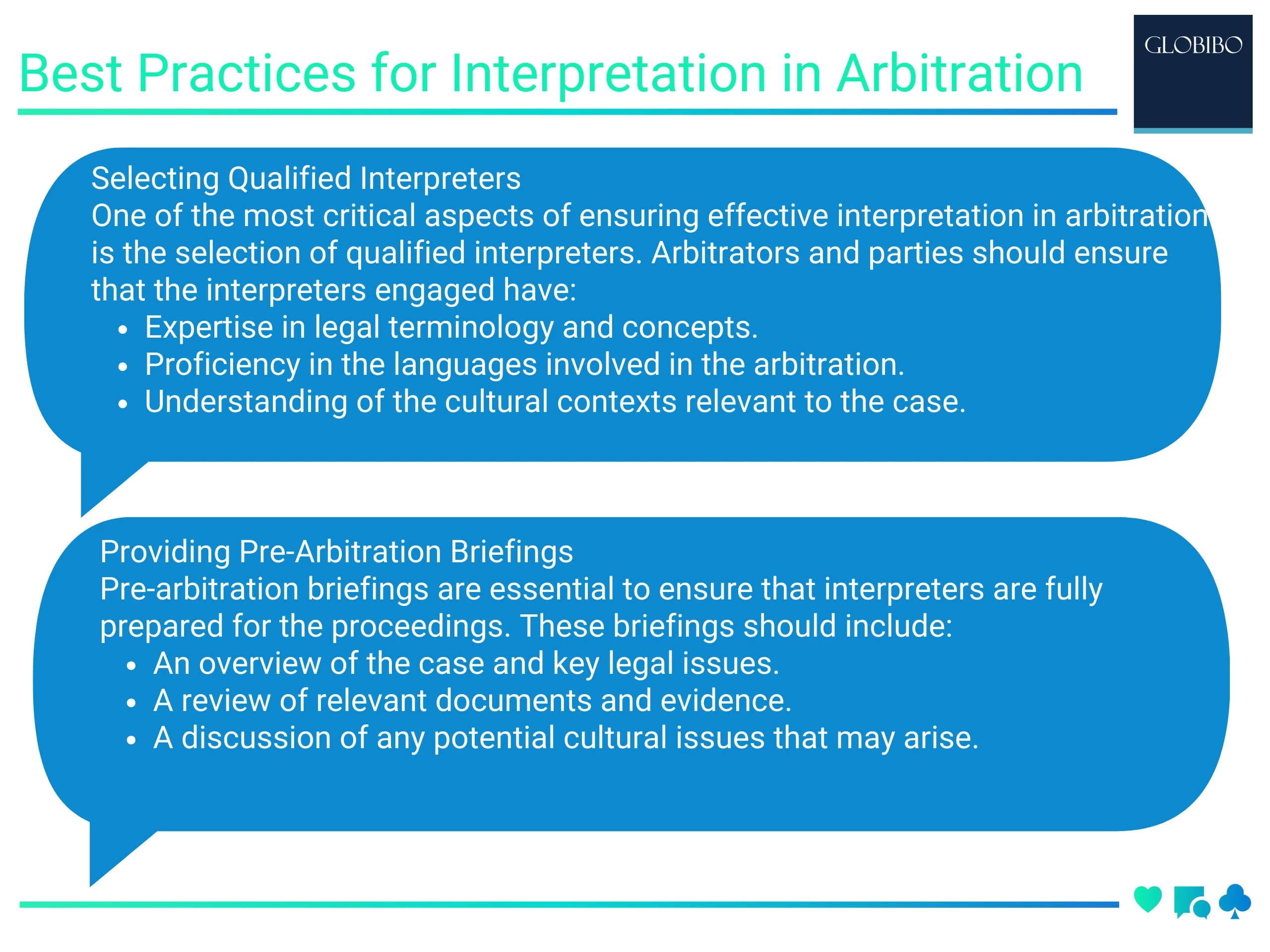
1. Selecting Qualified Interpreters
One of the most critical aspects of ensuring effective interpretation in arbitration is the selection of qualified interpreters. Arbitrators and parties should ensure that the interpreters engaged have:
- Expertise in legal terminology and concepts.
- Proficiency in the languages involved in the arbitration.
- Understanding of the cultural contexts relevant to the case.
Table 1 below outlines the key qualifications and competencies that interpreters in arbitration should possess.
| Qualification/Competency | Description |
|---|---|
| Language Proficiency | Fluency in the languages involved in the arbitration. |
| Legal Knowledge | Understanding of legal terminology and concepts. |
| Cultural Competence | Awareness of cultural differences that may impact interpretation. |
| Ethical Integrity | Commitment to maintaining neutrality and confidentiality. |
2. Providing Pre-Arbitration Briefings
Pre-arbitration briefings are essential to ensure that interpreters are fully prepared for the proceedings. These briefings should include:
- An overview of the case and key legal issues.
- A review of relevant documents and evidence.
- A discussion of any potential cultural issues that may arise.
These briefings help interpreters familiarize themselves with the case and ensure that they can provide accurate and effective interpretation during the arbitration.
Impact of Poor Interpretation on Arbitration Outcomes
Poor interpretation can have a significant impact on the outcome of arbitration. Misinterpretation of key legal concepts or evidence can lead to misunderstandings that may result in an unjust ruling.
Furthermore, if a party feels that the interpretation services provided were inadequate, they may challenge the arbitration award on the grounds of procedural unfairness.
1. Case Study: Misinterpretation Leading to Procedural Unfairness
In a recent arbitration case involving parties from different linguistic backgrounds, the interpretation of a key piece of evidence was later found to be inaccurate. The misinterpretation led the arbitrators to draw incorrect conclusions, ultimately resulting in an unjust award.
The affected party successfully challenged the award in court, arguing that the interpretation services provided were inadequate and that they had been denied a fair hearing.
2. Impact on the Credibility of the Arbitration Process
The credibility of the arbitration process can be severely undermined by poor interpretation. If parties lose confidence in the accuracy of the interpretation, they may be less willing to engage in arbitration in the future.
This could lead to a decline in the use of arbitration as a preferred method of dispute resolution, particularly in international cases where language barriers are common.
Legal Interpreting Services: A Critical Component of Arbitration
Given the challenges and potential impact of interpretation on arbitration outcomes, it is clear that legal interpreting services are a critical component of the arbitration process. These services ensure that all parties have access to accurate and reliable interpretation, which is essential for maintaining the fairness, integrity, and credibility of the arbitration process.
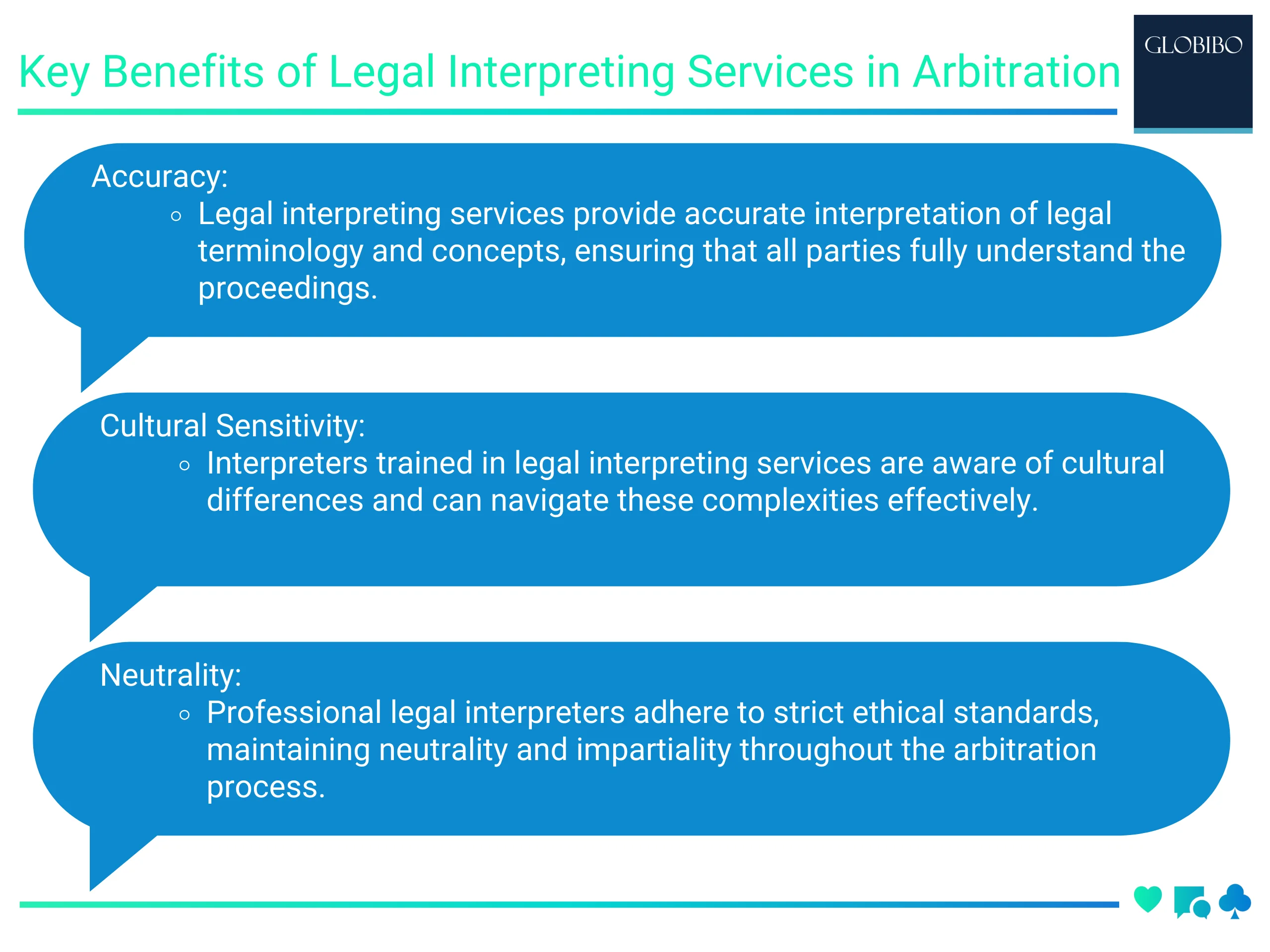
Key Benefits of Legal Interpreting Services in Arbitration
- Accuracy:
- Legal interpreting services provide accurate interpretation of legal terminology and concepts, ensuring that all parties fully understand the proceedings.
- Cultural Sensitivity:
- Interpreters trained in legal interpreting services are aware of cultural differences and can navigate these complexities effectively.
- Neutrality:
- Professional legal interpreters adhere to strict ethical standards, maintaining neutrality and impartiality throughout the arbitration process.
- Confidentiality:
- Legal interpreting services ensure that interpreters respect the confidentiality of the arbitration proceedings, protecting the interests of all parties involved.
Future Trends in Interpretation in Arbitration
As international arbitration continues to grow, the demand for high-quality interpretation services is likely to increase. Several trends are emerging that could shape the future of interpretation in arbitration.
1. Technological Advancements
Advancements in technology, such as AI-driven translation tools and remote interpreting platforms, are likely to play an increasingly significant role in arbitration. While these tools can enhance the efficiency and accessibility of interpretation services, they also raise concerns about accuracy and the potential loss of human nuance in interpretation.
2. Increased Focus on Cultural Competence
As arbitration cases become more global, there is likely to be a greater emphasis on cultural competence in interpretation. This could lead to the development of specialized training programs for interpreters, focusing on the cultural and legal nuances of different jurisdictions.
3. Strengthening of International Standards
There is likely to be a continued effort to strengthen international standards for interpretation in arbitration, particularly in the areas of quality control and interpreter qualifications. This could involve the development of new ISO standards or the revision of existing ones to address emerging challenges in the field.

Recommendations for Enhancing Interpretation in Arbitration
- Implement Rigorous Selection Processes:
- Ensure that interpreters engaged in arbitration are selected based on their qualifications, experience, and adherence to international standards.
- Provide Comprehensive Pre-Arbitration Briefings:
- Conduct detailed briefings with interpreters before the arbitration begins to ensure they are fully prepared and aware of all relevant issues.
- Adopt Technological Innovations Cautiously:
- While leveraging technology can enhance efficiency, it is essential to ensure that it does not compromise the accuracy and quality of interpretation.
- Strengthen Training and Certification Programs:
- Invest in specialized training and certification programs for legal interpreters to ensure they possess the necessary skills and cultural competence.
- Promote Awareness of International Standards:
- Encourage the adoption of ISO standards for interpreting services in arbitration to ensure consistency and quality across all cases.
- By following these recommendations, arbitrators, parties, and legal interpreting services can work together to enhance the quality and effectiveness of interpretation in arbitration, ensuring that language barriers do not impede the pursuit of justice.

Interpretation in Arbitration Summary
Interpretation in arbitration plays a vital role in ensuring the fairness, integrity, and effectiveness of arbitration, particularly in international disputes. Legal interpreting services are essential for overcoming language barriers, facilitating effective communication, and maintaining the credibility of the arbitration process.
As the demand for arbitration continues to grow, so too will the need for high-quality interpretation services that meet the stringent requirements set out by international standards, such as those provided by the ISO.
Academic References On Interpretation in Arbitration
-
Legal interpretation in international commercial arbitration
-
The Guidelines for Effective Interpretation of the Arbitration Agreement
-
Contract interpretation: the plain meaning rule in labor arbitration
-
The law applicable to the interpretation of arbitration agreements revisited
-
The New York Arbitration Convention of 1958: towards a uniform judicial interpretation
YouTube video on Interpretation in Arbitration

Susan Tan
Leadership Development Trainer
Susan has extensive experience in document localization for governmental and legal needs. Her work with embassies and government agencies ensures that documents meet specific regional requirements, making her expertise invaluable for international clients.