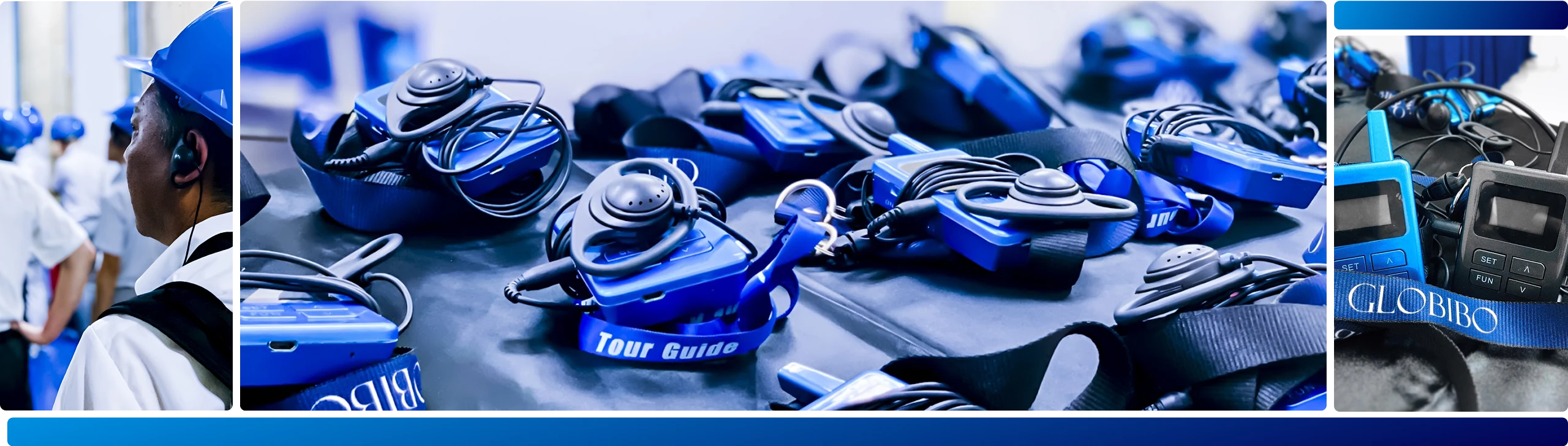
Portable Interpretation Equipment
Portable interpretation equipment has become indispensable in the world of international conferences, multilingual meetings, and events where language diversity is prevalent. This equipment enables interpreters to deliver real-time language translation to participants, ensuring seamless communication across linguistic barriers. The need for portable, efficient, and high-quality interpretation equipment has grown exponentially as global interactions increase. This article delves into the various aspects of portable interpretation equipment, its components, technologies, and integration with modern audiovisual (AV) systems, all while emphasizing the importance of selecting the right tools for specific needs.
The Importance of Portable Interpretation Equipment
Portable interpretation equipment plays a crucial role in ensuring that language does not become a barrier to effective communication in multilingual settings. Unlike fixed interpretation systems, portable systems offer the flexibility to be set up in various locations, whether it be a small meeting room, a large conference hall, or even outdoor venues. This flexibility is particularly beneficial for events that require quick setup, teardown, and transportation. Portable interpretation equipment can be used alongside interpretation consoles to provide flexibility and maintain control over interpretation services.
Key Advantages of Portable Interpretation Equipment:
- Flexibility and Mobility: Portable interpretation equipment can be easily transported and set up in different venues, making it ideal for events that occur in multiple locations or where space is limited.
- Cost-Effectiveness: Portable systems are often more cost-effective than installing permanent interpretation booths and equipment, especially for short-term events.
- Scalability: These systems can be scaled up or down depending on the number of participants and languages required, providing a customizable solution for various event sizes.
- Ease of Use: Designed for quick deployment, portable interpretation systems are user-friendly, allowing event organizers and interpreters to focus more on content delivery rather than technical setup.

Components of Portable Interpretation Equipment
Portable interpretation equipment comprises several key components, each playing a vital role in delivering clear and accurate interpretation services. Understanding these components is essential for selecting the right equipment for specific applications.
1. Transmitters: Transmitters are the core of any portable interpretation system. They broadcast the interpreter’s voice to the receivers carried by participants. Modern transmitters often use digital technology to ensure high-quality sound transmission with minimal interference.
2. Receivers: Receivers are compact devices used by participants to listen to the interpretation. They are typically equipped with volume controls and headphone jacks, allowing users to adjust the audio according to their preferences. Advanced receivers may offer multiple channels, enabling users to switch between languages.
3. Microphones: Interpreters use microphones to capture their voice clearly and transmit it to the audience. Portable systems often include wireless microphones, which provide freedom of movement and reduce the clutter of cables.
4. Headsets: Both interpreters and participants use headsets to listen to the audio. For interpreters, headsets with built-in microphones are common, while participants use standard headphones to receive the interpreted audio.
5. Portable Booths: While not always included in the core equipment, portable interpretation booths are essential to reduce background noise and ensure that interpreters can focus on their work. These booths are lightweight and easy to assemble, providing a quiet environment in various settings.
6. Power Supply: Portable interpretation equipment typically includes rechargeable batteries or the ability to connect to a power outlet, ensuring that the system remains operational throughout the event.
7. Carrying Cases: Given the mobile nature of these systems, carrying cases is essential for transporting and protecting the equipment. These cases are designed to hold all components securely, making it easy to move the equipment between locations.
Technologies Behind Portable Interpretation Equipment
The technology underlying portable interpretation equipment has evolved significantly, with advancements that enhance audio quality, reliability, and ease of use. Understanding these technologies is crucial for selecting the right equipment for specific needs.
1. Digital vs. Analog Systems: Portable interpretation equipment can be based on either digital or analog technology. Digital systems offer superior audio quality, with reduced interference and noise compared to analog systems. They also support more channels, making them suitable for events requiring multiple language translations.
2. Radio Frequency (RF) Technology: RF technology is commonly used in portable interpretation systems to transmit audio signals from the interpreter to the participants. RF systems operate on various frequency bands, with UHF (Ultra High Frequency) being the most popular due to its range and resistance to interference.
3. Infrared (IR) Technology: Infrared systems use light waves to transmit audio signals. While they offer excellent sound quality and are immune to radio interference, their line-of-sight requirement can be a limitation in some settings. IR systems are typically used in environments where confidentiality is paramount, as the signals do not pass through walls.
4. Wi-Fi and Bluetooth: Some modern portable interpretation systems leverage Wi-Fi or Bluetooth technology for audio transmission. These systems offer the convenience of wireless connectivity and are often integrated with mobile apps, allowing participants to use their smartphones as receivers.
5. Noise-Cancellation Technology: To ensure clear audio transmission, many portable interpretation systems incorporate noise-cancellation technology. This feature reduces background noise, allowing interpreters’ voices to be heard more clearly by participants.
Key Considerations for Choosing Portable Interpretation Equipment
When selecting portable interpretation equipment, several factors must be considered to ensure that the chosen system meets the specific needs of the event.
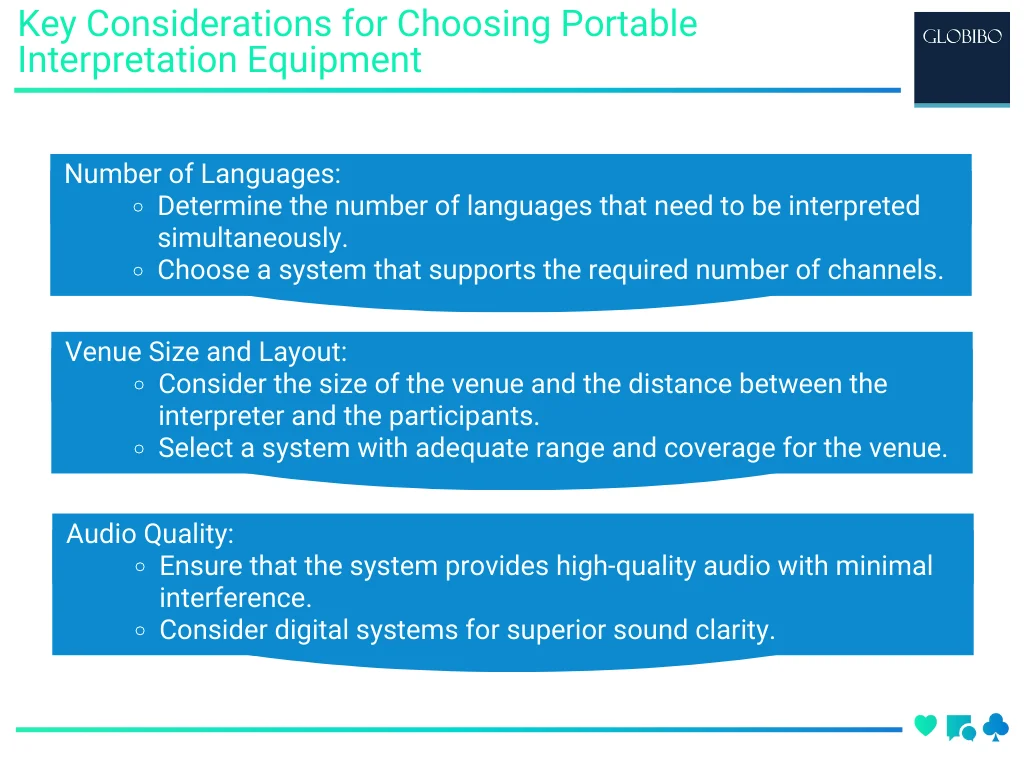
- Number of Languages:
- Determine the number of languages that need to be interpreted simultaneously.
- Choose a system that supports the required number of channels.
- Venue Size and Layout:
- Consider the size of the venue and the distance between the interpreter and the participants.
- Select a system with adequate range and coverage for the venue.
- Audio Quality:
- Ensure that the system provides high-quality audio with minimal interference.
- Consider digital systems for superior sound clarity.
- Portability:
- Evaluate the ease of transportation and setup.
- Choose lightweight and compact equipment if frequent mobility is required.
- Battery Life:
- Check the battery life of the transmitters and receivers.
- Opt for systems with long-lasting batteries or those that offer quick recharging capabilities.
- Ease of Use:
- Assess the user-friendliness of the equipment.
- Ensure that the system can be easily operated by non-technical staff.
- Budget:
- Consider the cost of the equipment in relation to the event’s budget.
- Balance cost with the required features and quality.
Integration with Audiovisual (AV) Systems
The integration of portable interpretation equipment with AV systems is essential to providing a seamless experience for both interpreters and participants. Proper integration ensures the interpreted audio synchronizes with other AV elements, such as video presentations, live streaming, and in-room sound systems.
1. Connecting to AV Systems: Most portable interpretation systems can be connected to the venue’s existing AV infrastructure. This connection allows the interpreted audio to be broadcast through the venue’s sound system or streamed to remote participants.
2. Audio Mixing: In some cases, the interpreted audio needs to be mixed with the original audio before being transmitted to participants. Portable mixers can be used to blend the interpreter’s voice with the speaker’s voice, providing a balanced audio experience.
3. Remote Interpretation: For events with remote participants, portable interpretation equipment can be integrated with web conferencing platforms. This setup enables interpreters to work from a different location while participants receive the interpreted audio through their devices.
4. Feedback Prevention: When integrating with AV systems, it is crucial to prevent audio feedback, which can occur when the interpreted audio is picked up by the interpreter’s microphone. Proper placement of microphones and speakers, along with the use of feedback suppression technology, is necessary to avoid this issue.
Common Challenges and Solutions in Portable Interpretation
Implementing portable interpretation systems comes with its own set of challenges. Understanding these challenges and their solutions can help in planning and executing successful multilingual events.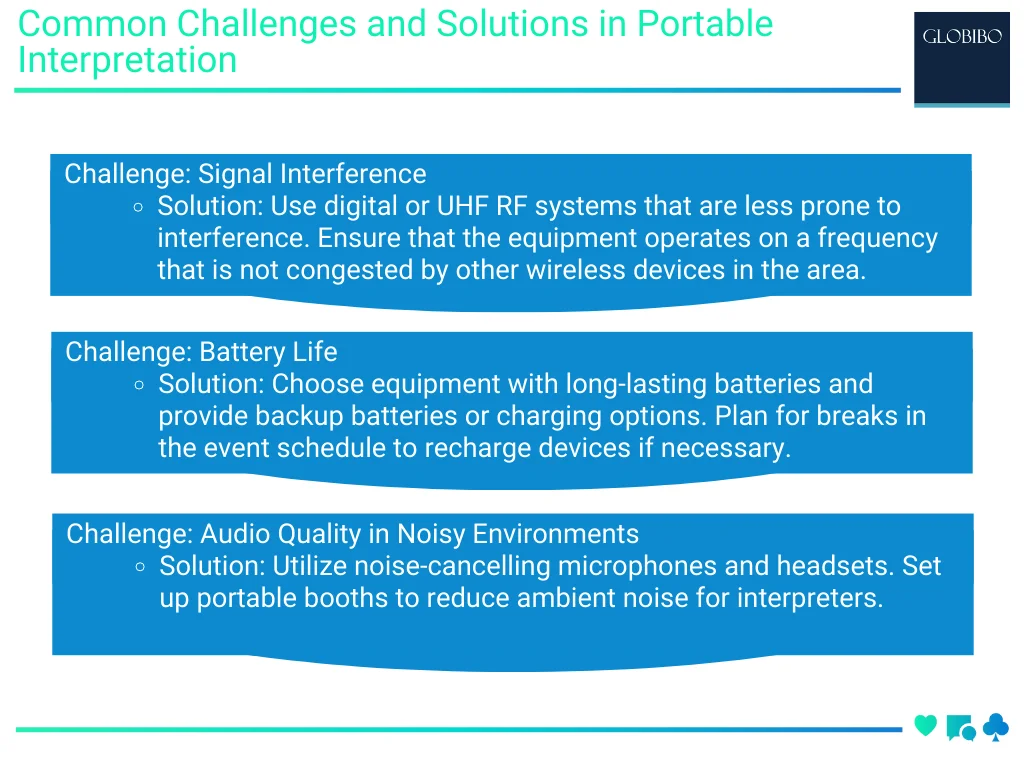
- Challenge: Signal Interference
- Solution: Use digital or UHF RF systems that are less prone to interference. Ensure that the equipment operates on a frequency that is not congested by other wireless devices in the area.
- Challenge: Battery Life
- Solution: Choose equipment with long-lasting batteries and provide backup batteries or charging options. Plan for breaks in the event schedule to recharge devices if necessary.
- Challenge: Audio Quality in Noisy Environments
- Solution: Utilize noise-cancelling microphones and headsets. Set up portable booths to reduce ambient noise for interpreters.
- Challenge: Limited Range
- Solution: Ensure the selected system has sufficient range for the venue. Consider using RF systems for large areas and IR systems for smaller, more controlled environments.
- Challenge: Equipment Mismanagement
- Solution: Assign staff to manage the distribution and collection of equipment. Use labeled carrying cases and tracking systems to prevent loss or damage.
- Challenge: Participant Technical Issues
- Solution: Provide clear instructions to participants on how to use the receivers. Offer technical support on-site to address any issues that may arise.
Case Study: Portable Interpretation Equipment in Action
To illustrate the practical application of portable interpretation equipment, consider a case study of an international business conference held in a large hotel ballroom. The event featured participants from 10 different countries, requiring interpretation in five languages.
Event Setup:
- Equipment Used: A digital RF portable interpretation system with 5 channels, wireless microphones for interpreters, and noise-cancelling headsets for participants.
- Venue Size: 500-seat ballroom with a stage for speakers and an adjacent room for interpreters.
- Integration: The interpretation system was integrated with the hotel’s AV system, allowing interpreted audio to be broadcast through the venue’s speakers and streamed to remote attendees.
Challenges Encountered:
- Signal Interference: The initial setup revealed interference from other wireless devices in the hotel. The system was switched to a different frequency band, resolving the issue.
- Battery Management: Backup batteries were provided for all devices, ensuring uninterrupted service throughout the day-long event.
- Participant Confusion: Some participants initially struggled to switch between language channels. On-site staff provided quick tutorials, minimizing disruption.
Outcome: The event was a success, with clear and uninterrupted interpretation provided to all participants. The portability and ease of setup of the interpretation equipment allowed the event organizers to focus on content delivery rather than technical issues.
Comparison of Portable Interpretation Equipment Technologies
| Technology | Advantages | Disadvantages | Best Use Cases |
|---|---|---|---|
| Digital RF | High-quality audio, reduced interference, multiple channels | Potentially higher cost | Large venues, multiple languages |
| Analog RF | Cost-effective, reliable | Lower audio quality, prone to interference | Smaller venues, limited budget |
| Infrared | Immune to RF interference, secure | Requires line-of-sight, limited range | Confidential meetings, controlled environments |
| Wi-Fi/Bluetooth | Wireless convenience, integrates with mobile devices | Dependent on network quality, potential latency | Small to medium events, mobile participants |
Future Trends in Portable Interpretation Equipment
The future of portable interpretation equipment is likely to be shaped by advancements in technology, particularly in the areas of artificial intelligence (AI), automation, and enhanced connectivity.
1. AI-Powered Interpretation: AI-driven interpretation systems are emerging, offering real-time translation without the need for human interpreters. While still in the early stages, these systems could complement traditional interpretation equipment by handling less complex or more standardized content.
2. Enhanced Connectivity: As 5G networks become more widespread, portable interpretation systems may leverage this technology for even faster and more reliable wireless transmission. This would enable more seamless integration with cloud-based platforms and remote participants.
3. Integration with Augmented Reality (AR): AR technology could be integrated with portable interpretation systems, providing participants with visual cues and translations directly on their smart devices. This would enhance the overall user experience, particularly in immersive event environments.
4. Eco-Friendly Designs: Sustainability is becoming increasingly important in event planning. Future portable interpretation equipment may feature eco-friendly designs, such as rechargeable batteries with longer life cycles, energy-efficient components, and recyclable materials.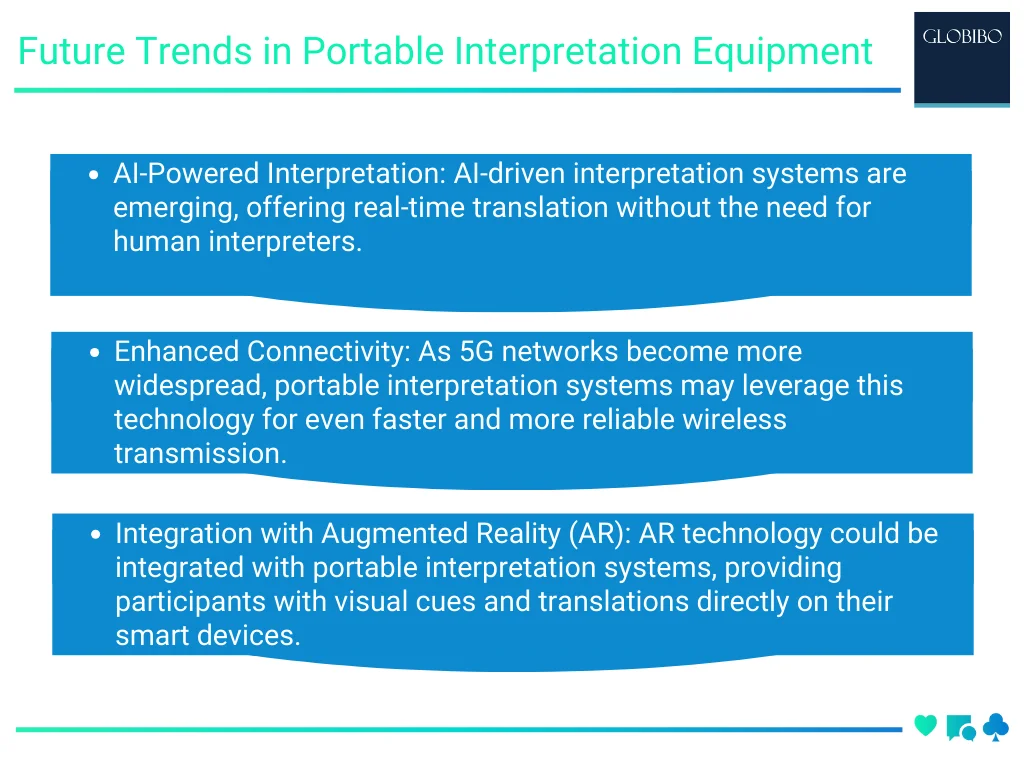
Portable Interpretation Equipment Summary
Portable interpretation equipment is a critical component of modern multilingual events, offering flexibility, high-quality audio, and ease of use. By understanding the various components, technologies, and challenges associated with these systems, event organizers can make informed decisions that ensure effective communication across language barriers. As technology continues to evolve, the capabilities and applications of portable interpretation equipment will only expand, making it an even more essential tool for global communication.
While interpretation booths offer a permanent solution, portable interpretation equipment provides an adaptable alternative for different event setups. Portable interpretation equipment offers flexibility for various settings. This equipment should be compatible with interpretation consoles, booths, and transmitters and receivers. It complements a hybrid setup and can be used alongside simultaneous interpreting equipment.
Academic References on Portable Interpretation Equipment
-
Person-portable equipment in environmental forensic investigations: application to fire scenes
-
Portable equipment for luminescence lifetime measurements on surfaces
-
Experiences and lessons learned with a portable interface to hardware performance counters
-
Comparing in-person, video, and telephonic medical interpretation
-
Portable spectroscopy for cultural heritage: applications and practical challenges
YouTube Video on Portable Interpretation Equipment

Susan Tan
Leadership Development Trainer
Susan has extensive experience in document localization for governmental and legal needs. Her work with embassies and government agencies ensures that documents meet specific regional requirements, making her expertise invaluable for international clients.