Remote Simultaneous Interpretation Solutions for Governmental Sessions
In today’s globalized world, where communication between countries, cultures, and languages is more essential than ever, the need for effective and accurate interpretation services has become paramount. Governmental sessions, which often involve complex discussions on policy, international relations, and law, require the highest level of interpretation to ensure that all participants can understand and contribute regardless of language barriers.
Remote simultaneous interpretation (RSI) has emerged as a vital solution in this context, offering flexibility, scalability, and efficiency that traditional interpretation methods cannot match. This article explores the technical aspects of RSI, its implementation in governmental sessions, and the benefits and challenges associated with its adoption.
Understanding Remote Simultaneous Interpretation
Remote simultaneous interpretation involves interpreters delivering real-time translations of spoken content via digital platforms, allowing participants to receive the interpretation almost instantaneously. This differs from consecutive interpretation, where the interpreter waits for the speaker to pause before delivering the translation. RSI is particularly valuable in settings like governmental sessions, where time efficiency and the need for immediate understanding are critical. Remote simultaneous interpretation solutions for conferences are essential for governmental summits that include representatives from various countries.
Key Components of RSI Systems:
- Interpreter Hub: A centralized location where interpreters are based. This hub is equipped with professional audio equipment, high-speed internet, and other necessary tools to facilitate real-time interpretation.
- Digital Platforms: These platforms host the communication between the interpreters and participants. They must support multiple languages, provide clear audio and video quality, and include features like language selection and participant management.
- Audio-Visual Equipment: High-quality microphones, headsets, and cameras are essential to ensure clear communication between all parties.
- Networking Infrastructure: A robust and secure network is crucial for minimizing latency and preventing disruptions during the interpretation process.
- Security Protocols: Given the sensitive nature of governmental sessions, it is imperative to have strong encryption and authentication measures in place to protect the integrity and confidentiality of the communication.

Benefits of Remote Simultaneous Interpretation in Governmental Sessions
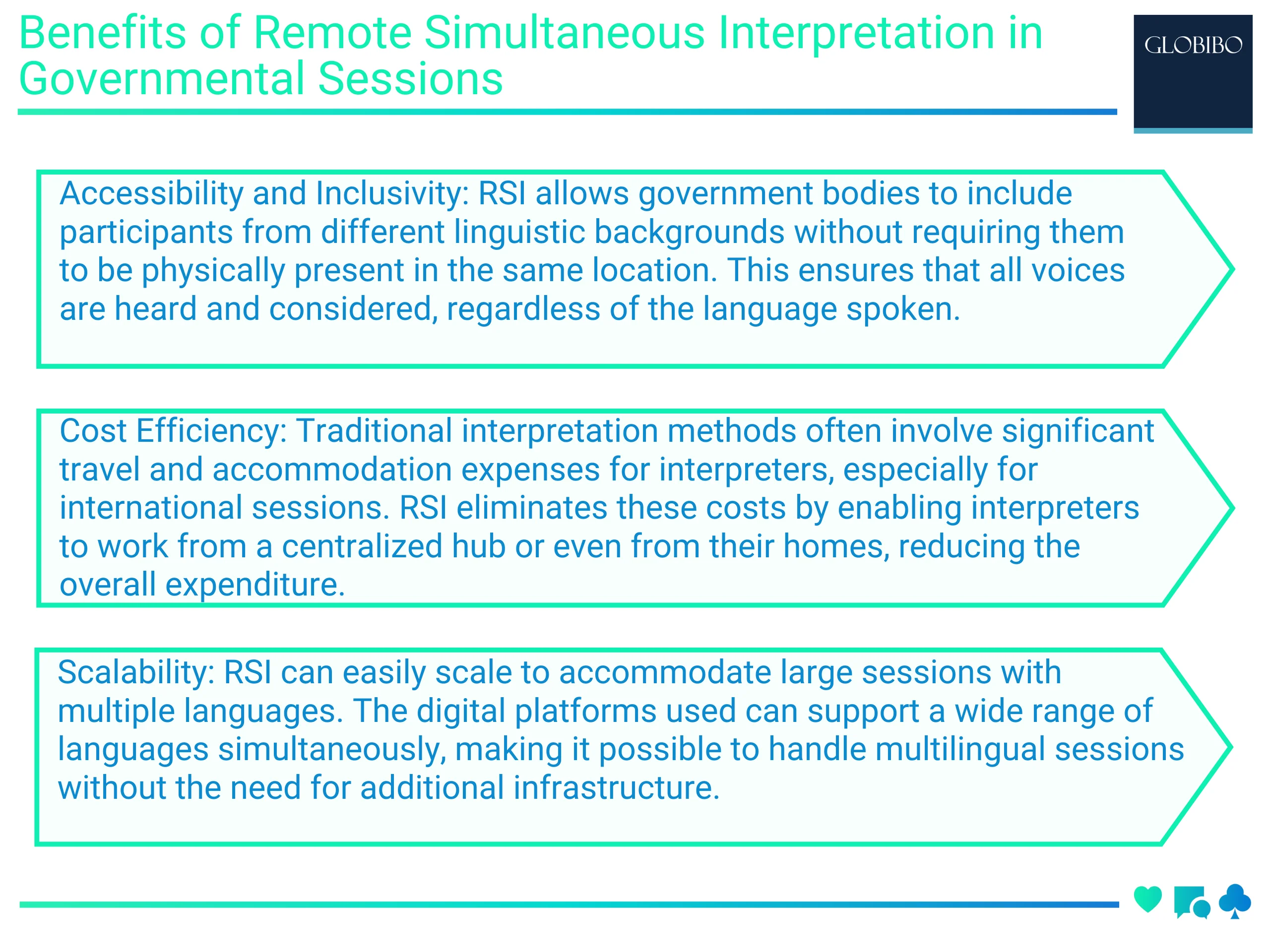
- Accessibility and Inclusivity: RSI allows government bodies to include participants from different linguistic backgrounds without requiring them to be physically present in the same location. This ensures that all voices are heard and considered, regardless of the language spoken.
- Cost Efficiency: Traditional interpretation methods often involve significant travel and accommodation expenses for interpreters, especially for international sessions. RSI eliminates these costs by enabling interpreters to work from a centralized hub or even from their homes, reducing the overall expenditure.
- Scalability: RSI can easily scale to accommodate large sessions with multiple languages. The digital platforms used can support a wide range of languages simultaneously, making it possible to handle multilingual sessions without the need for additional infrastructure.
- Flexibility: Governmental sessions often require last-minute changes or additions to the agenda. RSI systems are flexible enough to accommodate these changes without disrupting the flow of the session. Interpreters can be quickly added or replaced, and language channels can be adjusted in real-time.
- Environmental Impact: By reducing the need for travel, RSI contributes to lower carbon emissions, and it is a more environmentally sustainable option compared to traditional interpretation methods.
Challenges and Solutions in Implementing RSI for Governmental Sessions
While RSI offers numerous advantages, its implementation in governmental sessions is not without challenges. These challenges can be broadly categorized into technical, operational, and security-related issues.
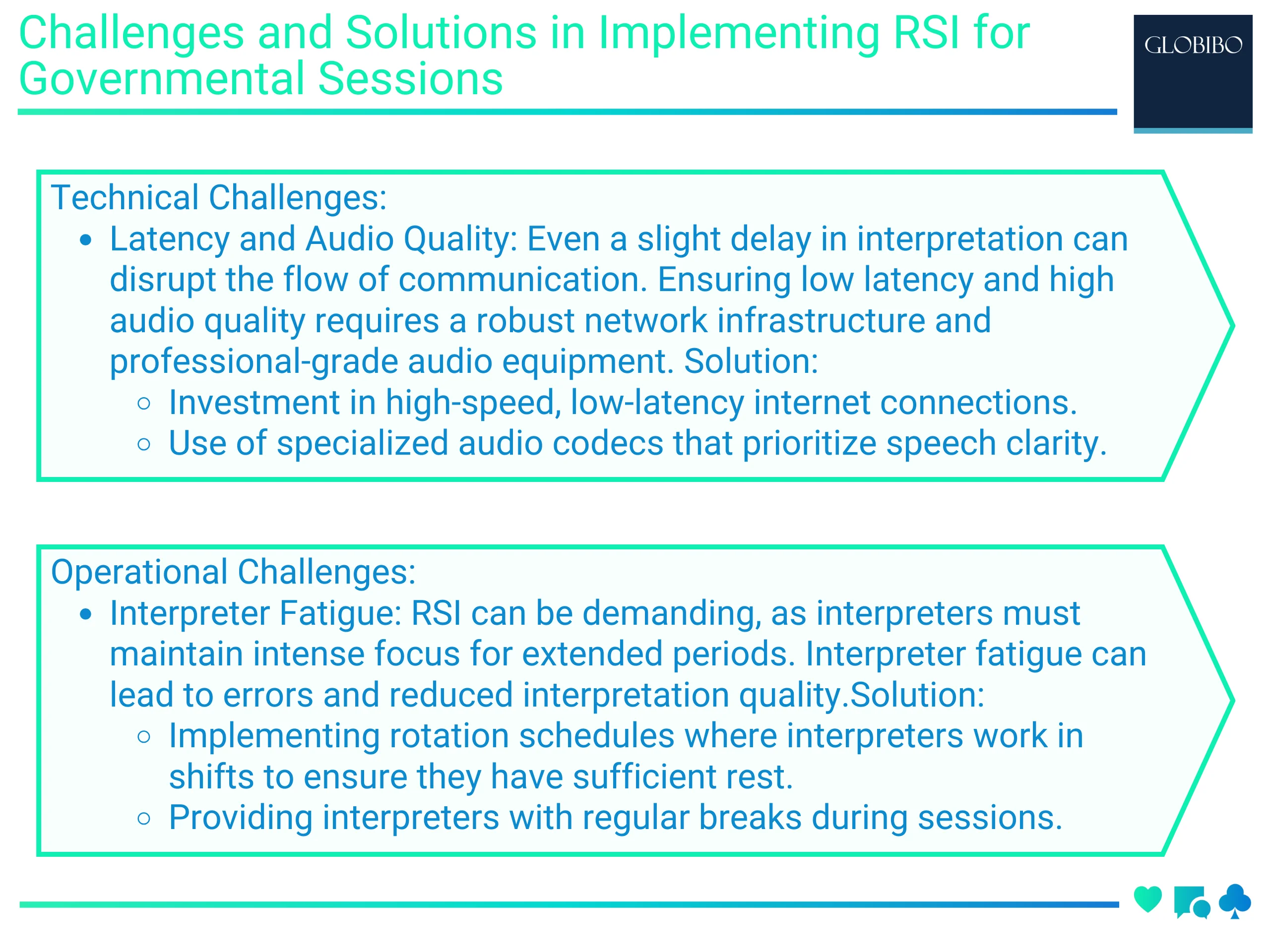
Technical Challenges:
- Latency and Audio Quality: Even a slight delay in interpretation can disrupt the flow of communication. Ensuring low latency and high audio quality requires a robust network infrastructure and professional-grade audio equipment. Solution:
- Investment in high-speed, low-latency internet connections.
- Use of specialized audio codecs that prioritize speech clarity.
- Regular testing and maintenance of equipment to ensure optimal performance.
- Platform Reliability: The digital platforms used for RSI must be reliable and capable of handling high volumes of traffic without crashing or experiencing downtime.Solution:
- Selection of platforms with proven track records in handling large-scale events.
- Implementation of backup systems and redundancy measures to ensure continuity in case of platform failure.
Operational Challenges:
- Interpreter Fatigue: RSI can be demanding, as interpreters must maintain intense focus for extended periods. Interpreter fatigue can lead to errors and reduced interpretation quality.Solution:
- Implementing rotation schedules where interpreters work in shifts to ensure they have sufficient rest.
- Providing interpreters with regular breaks during sessions.
- Training and Adaptation: Interpreters may require training to adapt to the digital tools and platforms used in RSI, particularly if they are accustomed to traditional in-person interpretation.Solution:
- Conducting regular training sessions for interpreters to familiarize them with the technology.
- Providing technical support during sessions to assist with any issues that may arise.
Security Challenges:
- Confidentiality and Data Security: Governmental sessions often involve sensitive information that must be protected from unauthorized access or leaks.Solution:
- Implementing end-to-end encryption for all communication channels.
- Using secure authentication methods, such as multi-factor authentication, to ensure that only authorized personnel have access to the interpretation feed.
- Regular security audits to identify and address potential vulnerabilities.
Key Technologies and Tools in RSI
The success of RSI in governmental sessions hinges on the effective integration of several key technologies and tools. Below is an overview of the most critical components:
1. High-Quality Audio Equipment:
- Microphones: Directional microphones with noise-canceling capabilities to minimize background noise and ensure clear audio capture.
- Headsets: Professional-grade headsets with comfortable fit and superior audio quality, designed for long-duration use.
- Mixers and Audio Interfaces: Devices that allow interpreters to adjust audio levels and integrate multiple audio sources seamlessly.
2. Digital Platforms:
3. Networking Solutions:
- Dedicated Internet Connections: Ensuring that interpreters and participants have access to high-speed, dedicated internet connections to prevent any interruptions.
- VPNs: Virtual Private Networks (VPNs) to secure communication channels and protect against potential cyber threats.
4. Software Solutions:
- Speech Recognition Software: Tools that assist interpreters by providing real-time transcription of the spoken content.
- Translation Memory Systems: Databases that store previously translated segments of text, helping interpreters maintain consistency in terminology.

Key Technologies and Tools in RSI
| Technology/Tool | Description | Example Products |
|---|---|---|
| High-Quality Audio Equipment | Includes microphones, headsets, and mixers designed for clear and precise audio. | Shure SM7B (Microphone), Bose QC35 (Headset) |
| Digital Platforms | Platforms that host RSI sessions and provide language support and security features. | Events.Studio Assist app |
| Networking Solutions | Infrastructure to ensure reliable and secure internet connectivity. | Dedicated Internet Connections, VPNs |
| Software Solutions | Tools that assist with speech recognition, transcription, and translation memory. | Otter.ai (Speech Recognition), SDL Trados (Translation Memory) |
Hybrid Interpretation: A Strategic Advantage
Hybrid interpretation combines both remote and on-site interpretation to provide a flexible and efficient solution for governmental sessions. This approach allows some interpreters to work remotely, while others are physically present at the session venue, providing a balanced solution that leverages the strengths of both methods.
Advantages of Hybrid Interpretation:
- Redundancy and Reliability:
- Having interpreters both on-site and remotely ensures that if one system fails, the other can seamlessly take over, minimizing the risk of disruptions.
- Cost Management:
- Hybrid interpretation allows governments to optimize costs by reducing the number of on-site interpreters, while still maintaining high-quality interpretation through remote interpreters.
- Customization:
- Sessions can be customized based on the specific needs of the event, such as the number of languages required, the duration of the session, and the availability of interpreters.
Factors to Consider in Hybrid Interpretation
- Session Type: The nature of the session (e.g., high-stakes negotiation vs. routine meeting) may influence the decision to use hybrid interpretation.
- Interpreter Availability: The availability of interpreters with the necessary language skills and subject matter expertise.
- Technical Infrastructure: The quality and reliability of the technical infrastructure at both the remote and on-site locations.
- Security Requirements: The level of security required for the session, particularly if sensitive information is discussed.
- Participant Preferences: Preferences of the participants, such as their comfort level with remote technology or their desire for in-person interaction.

Implementing Hybrid Interpretation:
The implementation of hybrid interpretation requires careful planning and coordination. Below is a structured approach to successfully implementing hybrid interpretation for governmental sessions:
Step 1: Needs Assessment
- Determine Language Requirements: Identify the languages needed for the session and the number of interpreters required for each language.
- Evaluate Technical Infrastructure: Assess the technical capabilities at both the remote and on-site locations, including internet connectivity, audio-visual equipment, and security protocols.
Step 2: Selection of Interpreters
- Remote Interpreters: Choose interpreters who are comfortable with remote technology and have access to a reliable internet connection.
- On-Site Interpreters: Select interpreters who can be physically present at the session and who have experience with the subject matter.
Step 3: Platform and Tool Selection
- Choose the Right Platform: Select a digital platform that supports hybrid interpretation, with features like real-time language switching, secure communication, and participant management.
- Integrate Audio-Visual Tools: Ensure that the audio-visual tools used by both remote and on-site interpreters are compatible and provide high-quality sound and video.
Step 4: Testing and Dry Runs
- Conduct Pre-Session Testing: Test all equipment and connections before the session to identify and resolve any technical issues.
- Run Simulated Sessions: Conduct dry runs with interpreters and participants to familiarize them with the technology and to practice coordination between remote and on-site interpreters.
Step 5: Session Execution
- Monitor the Session: Continuously monitor the session for any technical issues or interpreter fatigue, and make adjustments as needed.
- Provide Support: Have technical support staff on standby to assist with any issues that arise during the session.
Future Trends in Remote Simultaneous Interpretation
As technology continues to evolve, several trends are likely to shape the future of RSI in governmental sessions:
1. AI-Powered Interpretation: Artificial Intelligence (AI) and machine learning are beginning to play a role in RSI, with AI-powered interpretation systems that can assist human interpreters by providing real-time translations. While AI is not yet capable of fully replacing human interpreters, it can augment their capabilities, particularly in areas like speech recognition and terminology management.
2. Enhanced Security Features: With increasing concerns about cybersecurity, future RSI platforms are expected to incorporate advanced security features such as blockchain technology for secure communication and biometric authentication to ensure that only authorized individuals have access to the interpretation feed.
3. Greater Integration with Governmental Systems: Future RSI solutions may be more closely integrated with other governmental systems, such as video conferencing tools, document management systems, and collaboration platforms. This integration would streamline the workflow and make it easier for government bodies to manage multilingual sessions.
4. Expansion of Hybrid Interpretation: As hybrid work models become more common, the use of hybrid interpretation is expected to expand. This will allow governments to continue leveraging the benefits of both remote and on-site interpretation, while also adapting to the changing needs of participants.
Emerging Technologies in RSI
- AI-Powered Speech Recognition: Enhances the accuracy and speed of interpretation by providing real-time transcription and language processing.
- Blockchain-Based Security: Ensures secure and tamper-proof communication during RSI sessions.
- Biometric Authentication: Provides an additional layer of security by using biometric data (e.g., fingerprints, facial recognition) to verify the identity of participants and interpreters.
- Augmented Reality (AR): AR technology could be used to create more immersive and interactive interpretation experiences, allowing interpreters to visualize the content they are translating in new ways.
Summary of RSI Benefits and Challenges
| Benefits | Challenges |
|---|---|
| Accessibility and Inclusivity | Latency and Audio Quality |
| Cost Efficiency | Platform Reliability |
| Scalability | Interpreter Fatigue |
| Flexibility | Training and Adaptation |
| Environmental Impact | Confidentiality and Data Security |
Remote Simultaneous Interpretation Solutions for Governmental Sessions Summary
As the world becomes increasingly interconnected, the importance of effective communication in governmental sessions cannot be overstated. Remote simultaneous interpretation, supported by the strategic use of hybrid interpretation and the integration of emerging technologies, provides a robust solution to the linguistic challenges governments face today. By investing in the right tools, training, and infrastructure, governments can ensure that their sessions are not only efficient and inclusive but also secure and reliable.
Remote simultaneous interpretation solutions for government have become indispensable for facilitating effective communication in governmental sessions. Its ability to provide real-time translation, accommodate multiple languages, and adapt to the needs of different sessions makes it a powerful solution for governments looking to enhance their communication capabilities. While challenges such as latency, interpreter fatigue, and security concerns must be addressed, the benefits of RSI far outweigh the potential drawbacks.
Proper participant setup for hybrid interpretation is essential for the success of any event, especially in scenarios like governmental sessions, where Remote Simultaneous Interpretation solutions are often utilized to ensure clear and accurate communication across multiple languages.
As governments continue to navigate the complexities of international relations and policy-making in a multilingual world, adopting advanced RSI solutions will play a crucial role in ensuring that all voices are heard and understood. Governmental press conferences demand the precision offered by remote simultaneous interpretation solutions for press conferences, particularly when dealing with international media. By embracing hybrid interpretation, leveraging emerging technologies, and prioritizing security, governments can create an environment where effective and inclusive communication is possible, regardless of language barriers. Over-the-phone interpreting (OPI) is a flexible option for last-minute language needs in governmental communication.
Academic References RSI Solutions for Governmental Sessions
-
Interpreting at the United Nations: the impact of external variables. The Interpreters‘ View
-
Remote interpreting in Spain after the irruption of COVID-19: A mapping exercise
-
[PDF] Multimedia communication technologies and their impact on interpreting
-
Chinese–Russian distance interpreting landscape: a local perspective
-
[BOOK] Inference and anticipation in simultaneous interpreting
YouTube Video on Solutions for Governmental Sessions

Susan Tan
Leadership Development Trainer
Susan has extensive experience in document localization for governmental and legal needs. Her work with embassies and government agencies ensures that documents meet specific regional requirements, making her expertise invaluable for international clients.