Interpreting Modes for Conferences
Effective communication in multilingual conferences is essential for successful outcomes. Interpreting modes play a crucial role in ensuring that participants understand each other clearly, regardless of the languages they speak. At Globibo, we adhere to the ISO 23155 (2022) standard to provide the highest quality interpreting services tailored to your conference needs.
Interpreting modes based on ISO 23155 (2022)
The ISO 23155 (2022) standard outlines several interpreting modes suitable for various conference settings. Understanding these modes helps in selecting the right type of interpretation for your event.
1. Simultaneous Interpreting
Simultaneous interpreting is a highly demanding mode in which the interpreter translates the speaker’s words in real-time, usually with a few seconds of delay. This mode is ideal for large conferences where multiple languages are spoken.
- Advantages:
- Real-time communication without interruptions.
- Efficient for large audiences.
- Suitable for fast-paced discussions.
- Requirements:
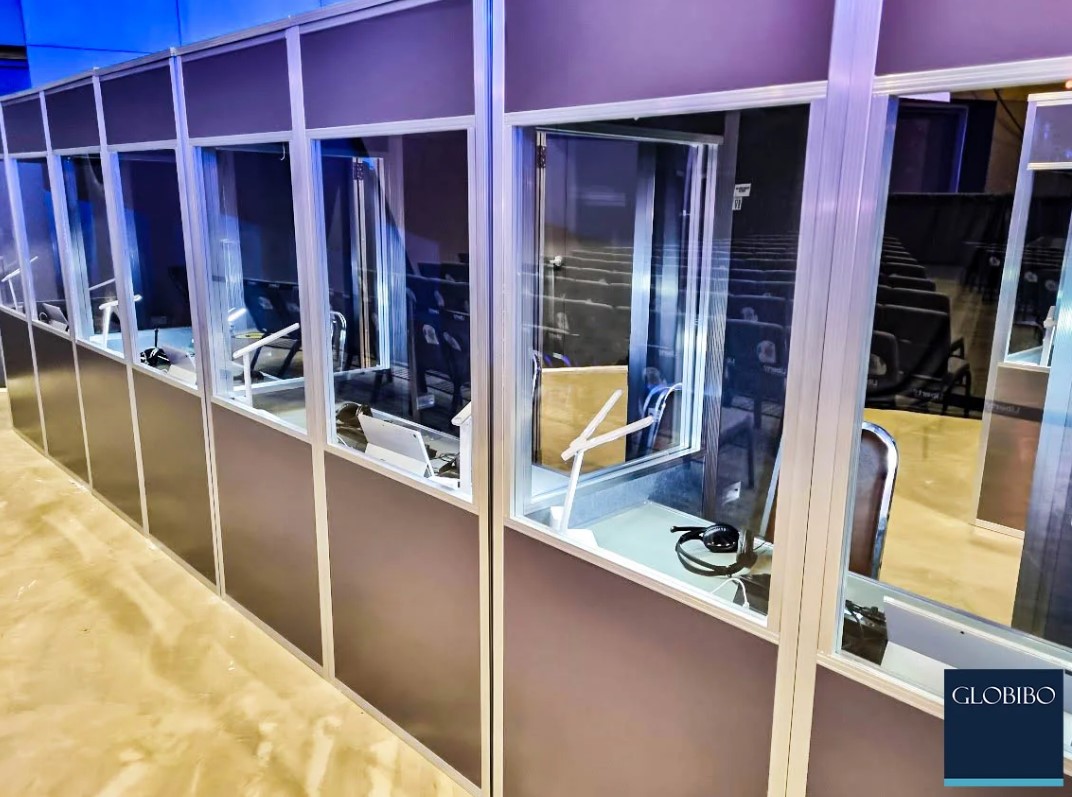
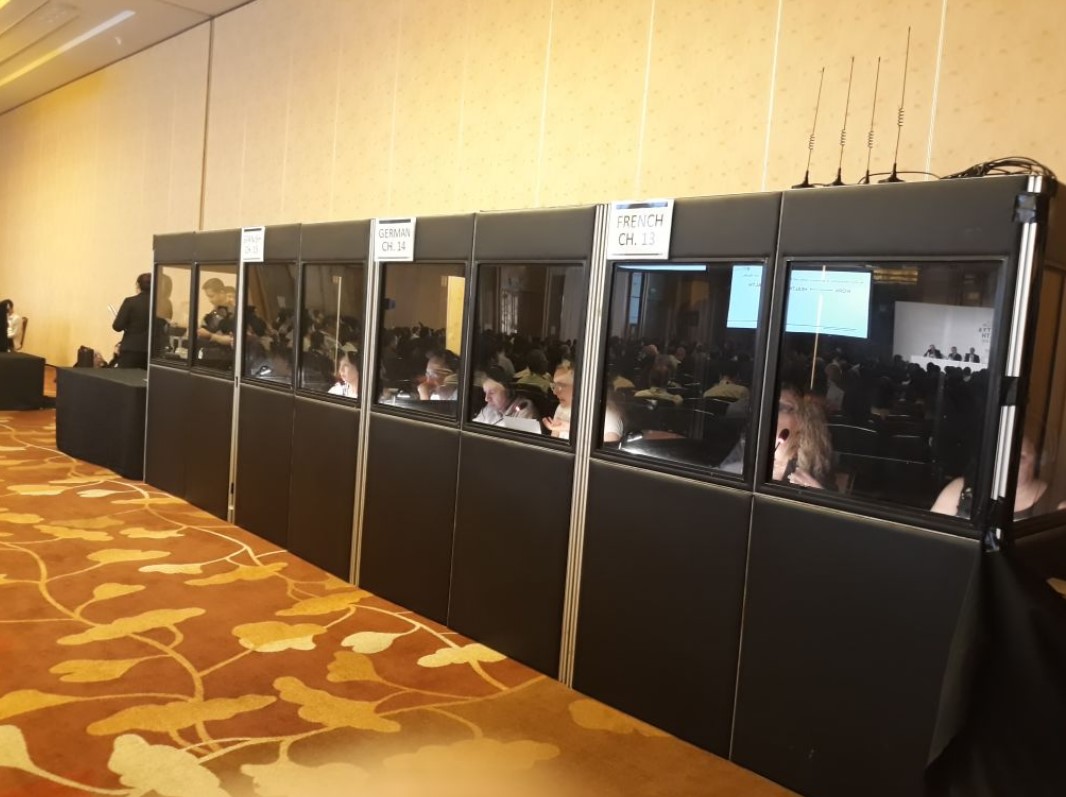
- Interpreting booths.
- High-quality audio equipment.
- Skilled interpreters with strong concentration and quick thinking abilities.
2. Consecutive Interpreting
In consecutive interpreting, the speaker pauses periodically to allow the interpreter to translate segments of speech. This model is often used in smaller meetings or settings where detailed and nuanced communication is required.
- Advantages:
- Detailed and accurate interpretation.
- Better for discussions that require clarity and precision.
- No need for special equipment.
- Requirements:
- Skilled interpreters with excellent memory and note-taking skills.
- A suitable structure for speech delivery (with pauses).
3. Whispered Interpreting (Chuchotage)
Whispered interpreting, or chuchotage, involves the interpreter sitting close to the listener and whispering the translation. This mode is ideal for small groups or individual participants who require interpretation in a language different from the main presentation language.
- Advantages:
- Personalized interpretation.
- No need for technical equipment.
- Requirements:
- Skilled interpreters who can manage simultaneous interpretation in a low voice.
- Close physical proximity to the listener.
4. Relay Interpreting
Relay interpreting is used when multiple languages are involved, and direct interpretation between some language pairs is not available. In this mode, one interpreter translates the speech into a common (pivot) language, which is then interpreted into other target languages by additional interpreters.
- Advantages:
- Allows for multiple language interpretations.
- Useful when direct interpretation is not possible.
- Requirements:
- Highly coordinated team of interpreters.
- Effective communication channels among interpreters.
5. Remote Interpreting
Remote interpreting has become increasingly popular, especially for virtual conferences. Interpreters work remotely and provide interpretation services via an online platform.
- Advantages:
- Flexible and cost-effective.
- Accessible for participants from different locations.
- Ideal for virtual and hybrid conferences.
- Requirements:
- Reliable internet connection and high-quality audio/video equipment.
- Specialized remote interpreting platforms.
- Skilled interpreters are comfortable with remote settings.

Interpreting Modes for Conferences Summary
Choosing the right interpreting mode is essential for the success of any multilingual conference. By adhering to the ISO 23155 (2022) standard, Globibo ensures that our interpreting services meet the highest quality standards. Our experienced interpreters are equipped to handle any conference setting, providing clear and accurate communication across languages.
For more information or to discuss your conference interpreting needs, please contact us.
FAQ on Interpreting Modes for Conferences
Q1: What are the main interpreting modes outlined in ISO 23155:2022 for conferences?
ISO 23155:2022 outlines several interpreting modes suitable for various conference settings:
- Simultaneous Interpreting: Real-time translation with a few seconds delay, ideal for large conferences.
- Consecutive Interpreting: Translation during pauses in speech, suitable for detailed discussions.
- Whispered Interpreting (Chuchotage): The interpreter whispers translation to a listener, suitable for small groups or individuals.
- Relay Interpreting: Uses a pivot language to interpret into multiple target languages, useful when direct interpretation is not possible.
- Remote Interpreting: Interpretation via an online platform, ideal for virtual and hybrid conferences
Q2: What are the advantages and requirements of simultaneous interpreting?
Advantages:
- Real-time communication without interruptions.
- Efficient for large audiences.
- Suitable for fast-paced discussions.
Requirements:
- Interpreting booths.
- High-quality audio equipment.
- Skilled interpreters with strong concentration and quick-thinking abilities
Q3: How does consecutive interpreting differ from simultaneous interpreting?
Consecutive Interpreting involves the speaker pausing periodically to allow the interpreter to translate segments of speech. This mode is used for detailed and nuanced communication, often in smaller meetings. It does not require special equipment but relies on skilled interpreters with excellent memory and note-taking skills.
Simultaneous Interpreting, on the other hand, involves real-time translation with a few seconds delay, requiring interpreting booths, high-quality audio equipment, and interpreters with strong concentration and quick thinking abilities.






YouTube Video on Interpreting Modes for Conferences

Susan Tan
Leadership Development Trainer
Susan has extensive experience in document localization for governmental and legal needs. Her work with embassies and government agencies ensures that documents meet specific regional requirements, making her expertise invaluable for international clients.