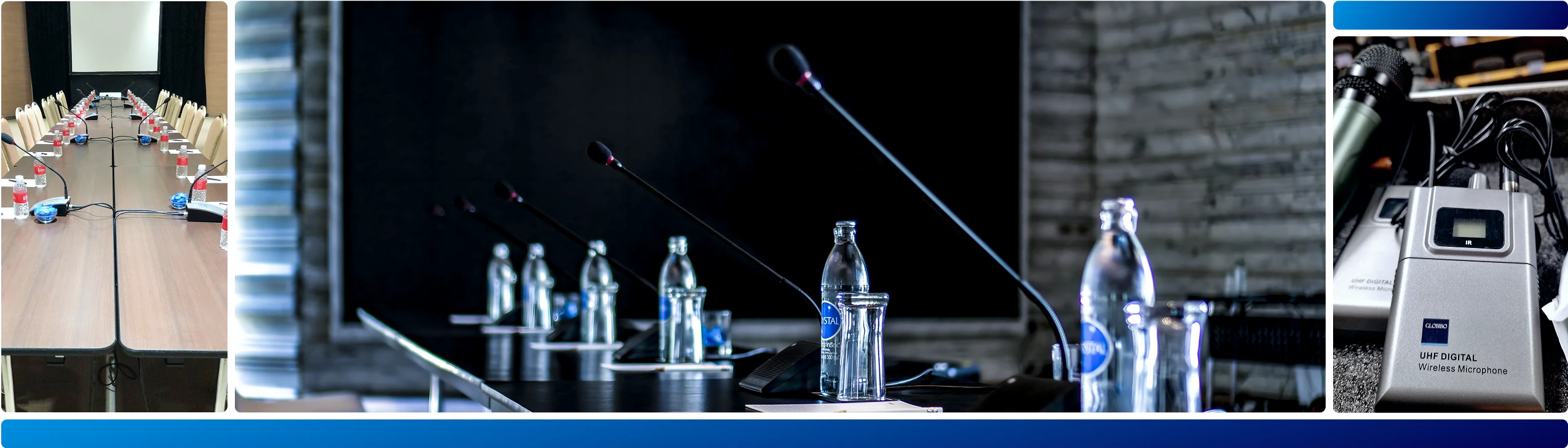
Conference Microphones and Audio Quality for Interpreting
In the realm of conference interpreting, the quality of audio equipment is pivotal for effective communication. Conference microphones play a crucial role in ensuring that interpreters receive clear, undistorted sound, which directly impacts their ability to provide accurate translations. This article delves into the technical aspects of conference microphones, their influence on audio quality, and how they integrate into interpreting systems. We will explore various microphone types, their specifications, and their roles in the broader context of interpretation equipment.
Types of Conference Microphones
Conference microphones can be broadly categorized into several types, each with specific features and applications. Here, we explore the most common types and their relevance to interpreting.

1. Boundary Microphones
- Design and Functionality: Boundary microphones, also known as surface microphones, are designed to pick up sound from a broad area. They are often placed on a table or surface and are ideal for capturing audio from multiple speakers.
- Advantages:
- Wide pickup pattern.
- Effective in capturing ambient sound.
- Disadvantages:
- Susceptible to background noise.
- Potential for audio reflections and distortion.
2. Gooseneck Microphones
- Design and Functionality: Gooseneck microphones feature a flexible neck that allows precise positioning. They are commonly used in meeting rooms and conference settings where individual speaker clarity is crucial.
- Advantages:
- Adjustable and positionable for optimal sound capture.
- Reduces background noise due to directional design.
- Disadvantages:
- Can be obtrusive if not properly managed.
- Requires careful placement to avoid proximity effects.
3. Lavalier Microphones
- Design and Functionality: Lavalier microphones are small, clip-on microphones that are typically worn by speakers. They are widely used in situations where hands-free operation is essential.
- Advantages:
- Portable and unobtrusive.
- Provides clear audio close to the speaker’s mouth.
- Disadvantages:
- Prone to handling noise.
- Requires proper positioning to avoid audio dropouts.
4. Shotgun Microphones
- Design and Functionality: Shotgun microphones are highly directional and designed to capture sound from a specific area while rejecting off-axis noise. They are less common in conference settings but can be used in specific scenarios where distance is a factor.
- Advantages:
- Excellent for capturing distant audio.
- Minimal interference from background noise.
- Disadvantages:
- Limited pickup area.
- Requires precise alignment with the sound source.
Audio Quality Considerations
The quality of audio in interpreting scenarios is paramount. Several factors influence audio quality, including microphone placement, environment acoustics, and the technology used.
1. Microphone Placement and Orientation
- Optimal Placement: Microphones should be positioned to minimize distance from the speaker and avoid obstructions. In conference settings, boundary microphones should be placed centrally to capture sound from all participants.
- Orientation: Directional microphones should be oriented toward the speaker’s mouth to capture clear audio while minimizing background noise. Clear audio is essential for effective Simultaneous Interpreting Equipment.
2. Environmental Acoustics
- Room Design: The acoustics of the room can significantly affect audio quality. Conference rooms should be designed to reduce echo and reverberation. Acoustic treatments, such as sound-absorbing panels, can enhance audio clarity.
- Background Noise: Minimizing background noise is crucial. Microphones with noise-canceling features can help reduce the impact of ambient sounds.
3. Technology and Specifications
- Frequency Response: The frequency response of a microphone determines how well it captures different sound frequencies. A wider frequency response typically results in more accurate audio reproduction.
- Signal-to-Noise Ratio (SNR): A high SNR indicates that the microphone can capture clear audio with minimal background noise. Microphones with a high SNR are preferable for interpreting scenarios.
Integration with Interpretation Equipment
Microphones are just one component of a comprehensive interpretation system. They must be integrated seamlessly with other portable interpretation equipment to ensure high-quality audio delivery.
1. Wireless Systems
- Overview: Wireless microphone systems provide flexibility and mobility, allowing speakers to move freely without being tethered to a microphone. They are commonly used in large conference settings.
- Components: Wireless systems include transmitters, receivers, and antennas. The quality of these components impacts overall audio performance.
- Considerations: Interference and battery life are critical factors to manage in wireless systems.
2. Wired Systems
- Overview: Wired microphone systems offer a stable and reliable connection, eliminating concerns about interference and battery life. They are often used in settings where stability is paramount. High-quality microphones need reliable Interpretation Transmitter Receivers.
- Components: Wired systems include microphones, cables, and audio mixers. Proper cable management is essential to avoid signal loss and degradation.
- Considerations: Cable quality and connections affect audio fidelity. High-quality cables and connectors are recommended.

Factors Influencing Microphone Choice
- Conference Size:
- Small meetings: Lavalier or gooseneck microphones.
- Large conferences: Boundary or shotgun microphones.
- Audio Requirements:
- High clarity: Directional microphones with high SNR.
- Ambient capture: Boundary microphones with wide pickup patterns.
Microphone Specifications to Consider
- Frequency Response:
- Wide frequency range for accurate audio reproduction.
- Typical range: 20 Hz to 20 kHz.
- Sensitivity:
- Determines how well the microphone picks up quiet sounds.
- Higher sensitivity for detailed audio capture.
- Impedance:
- Affects compatibility with other audio equipment.
- Low impedance microphones are preferable for professional use.
Microphone Types and Features
| Microphone Type | Pickup Pattern | Ideal Use Case | Advantages | Disadvantages |
|---|---|---|---|---|
| Boundary | Omnidirectional | Conference tables, group settings | Wide coverage, captures ambient sound | Background noise, potential reflections |
| Gooseneck | Unidirectional | Lectures, panels | Adjustable, reduces background noise | Can be obtrusive, requires careful placement |
| Lavalier | Omnidirectional | Personal use, hands-free settings | Portable, clear close-up audio | Prone to handling noise, positioning issues |
| Shotgun | Highly directional | Distant sound capture | Minimal background noise, focused pickup | Limited pickup area, precise alignment required |
Conference Microphones and Audio Quality for Interpreting Summary
Conference Microphones and Audio Quality for Interpreting, the choice and quality of microphones significantly impact the effectiveness of communication. Understanding the types of microphones available, their technical specifications, and how they integrate with other interpretation equipment is essential for ensuring optimal audio performance. By considering factors such as microphone placement, environmental acoustics, and technology specifications, conference organizers can enhance the clarity and accuracy of interpreted content. The integration of high-quality microphones with sophisticated interpretation systems contributes to a seamless and professional interpreting experience.
Conference microphones are essential for accurate interpretation. They should be paired with interpretation consoles, booths, transmitters, and receivers to ensure clarity. A good hybrid setup incorporates these microphones effectively.
Academic References on Conference Microphones and Audio Quality for Interpreting
-
Remote interpreting: A technical perspective on recent experiments
-
[PDF] Development of technological competences: remote simultaneous interpreting explored
-
Remote simultaneous interpreting and COVID-19: Conference interpreters‘ perspective
-
[BOOK] Information and communication technologies in conference interpreting
-
Expectations vs. experience: Attitudes towards video remote<? br?> conference interpreting
Youtube Video on Conference Microphones and Audio Quality for Interpreting

Susan Tan
Leadership Development Trainer
Susan has extensive experience in document localization for governmental and legal needs. Her work with embassies and government agencies ensures that documents meet specific regional requirements, making her expertise invaluable for international clients.