Remote Simultaneous Interpretation Solutions for Business Meetings
The globalization of business has necessitated the use of advanced language services to ensure seamless communication across different regions and cultures. Remote Simultaneous Interpretation solutions for business meetings have emerged as a critical solution for businesses that require real-time interpretation during meetings, conferences, government sessions, and other corporate events. This article will explore the various aspects of RSI, including its technological components, benefits, challenges, and the implementation strategies that organizations can use to leverage this technology effectively.
Remote Simultaneous Interpretation (RSI) is a technology-driven solution that enables interpreters to provide real-time translation services from remote locations. Unlike traditional interpretation, where interpreters are physically present at the event, RSI allows them to connect via the internet, enabling a more flexible and cost-effective approach to interpretation. This technology is particularly useful for business meetings that involve participants from different parts of the world.
Key Components of RSI:
- Interpreter’s Console: The interpreter’s console is a specialized interface that allows interpreters to manage audio channels, switch between languages, and monitor the quality of the interpretation.
- Cloud-based Platform: The RSI platform is usually hosted in the cloud, providing scalability, reliability, and ease of access. The platform manages the distribution of audio and video feeds between the interpreters and participants.
- Audio and Video Equipment: High-quality microphones, headsets, and cameras are essential to ensure clear communication. The quality of these components directly impacts the accuracy and efficiency of the interpretation.
- Internet Connectivity: Reliable, high-speed internet is crucial for RSI to function effectively. The latency and bandwidth of the connection can significantly affect the quality of the interpretation.
- Collaboration Tools: RSI platforms often integrate with other collaboration tools like Zoom, Microsoft Teams, or Webex, allowing for seamless integration into existing business processes.
Benefits of Remote Simultaneous Interpretation
RSI offers several advantages over traditional on-site interpretation, particularly in the context of business meetings.
Cost-Effectiveness
- Reduction in Travel Costs: One of the most significant advantages of RSI is the elimination of travel costs for interpreters. Businesses no longer need to cover expenses related to flights, accommodation, or per diem allowances for interpreters.
- Scalability: RSI allows businesses to scale their interpretation needs based on the size of the meeting or the number of languages required, without the need for additional physical space or equipment.
Flexibility and Accessibility
- Global Reach: RSI enables businesses to access a global pool of interpreters, ensuring that they can find the right expertise for their specific needs. This is particularly beneficial for rare language pairs or specialized industries.
- 24/7 Availability: The remote nature of RSI means that interpreters can be available at any time, making it easier to schedule meetings across different time zones.
Enhanced Collaboration
- Integration with Collaboration Tools: RSI platforms can be integrated with existing collaboration tools, enhancing the overall meeting experience. This integration allows participants to engage in discussions, share documents, and collaborate in real-time, regardless of language barriers.
- Hybrid Interpretation: Hybrid interpretation combines the benefits of both RSI and traditional on-site interpretation. This approach is particularly useful for meetings with both in-person and remote participants, allowing for a seamless interpretation experience.
Improved Accuracy and Efficiency
- Real-time Interpretation: RSI provides real-time interpretation, ensuring that there are no delays in communication. This is particularly important for fast-paced business environments where time is of the essence.
- Multilingual Support: RSI platforms can support multiple languages simultaneously, allowing businesses to conduct meetings with participants from diverse linguistic backgrounds.
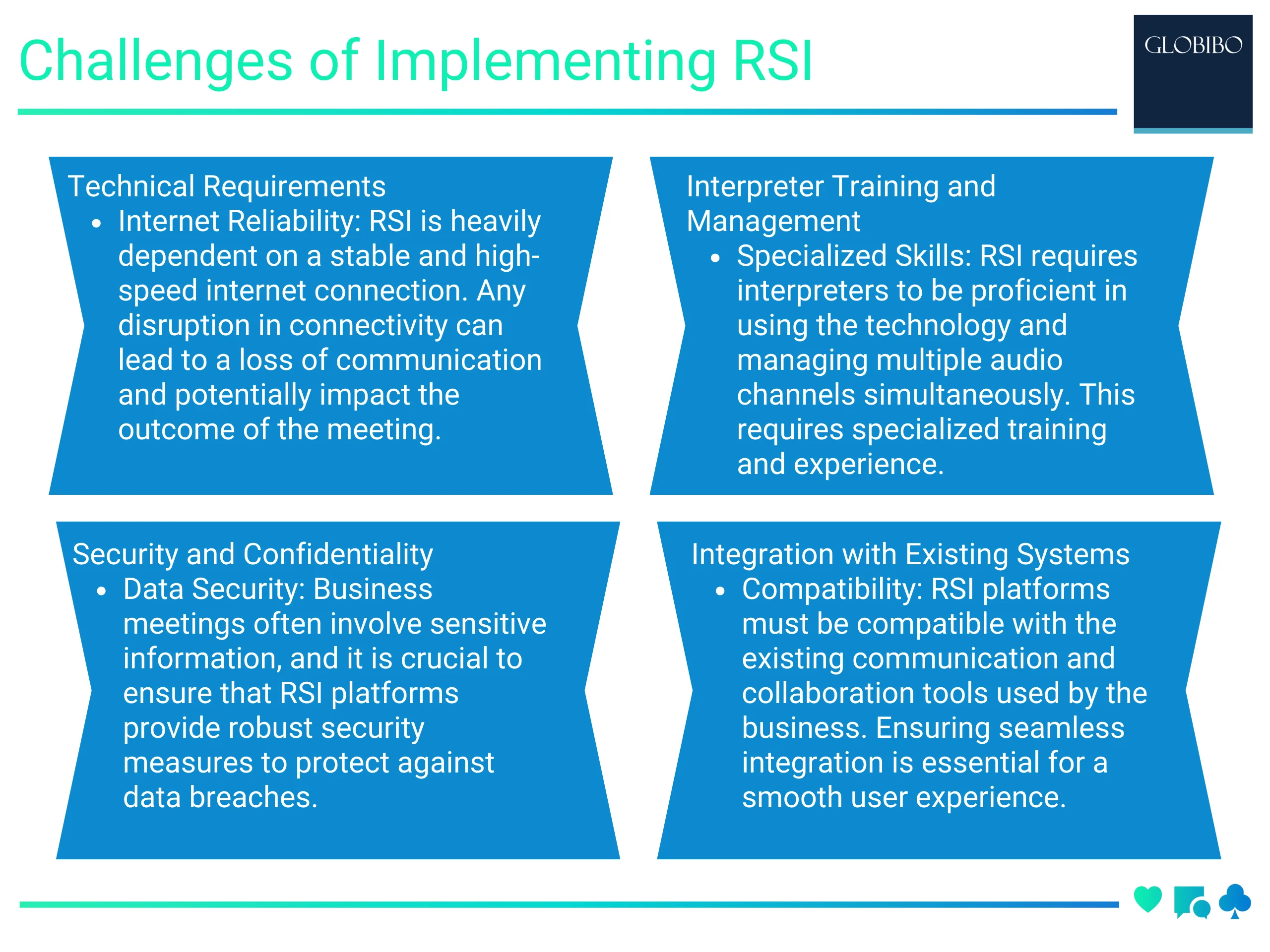
Challenges of Implementing RSI
While RSI offers numerous benefits, there are also challenges that businesses must address to implement this technology effectively.
Technical Requirements
- Internet Reliability: RSI is heavily dependent on a stable and high-speed internet connection. Any disruption in connectivity can lead to a loss of communication and potentially impact the outcome of the meeting.
- Audio and Video Quality: The quality of the audio and video feeds is critical for effective interpretation. Poor quality can lead to misunderstandings and miscommunication, which can be detrimental in a business context.
Interpreter Training and Management
- Specialized Skills: RSI requires interpreters to be proficient in using the technology and managing multiple audio channels simultaneously. This requires specialized training and experience.
- Fatigue Management: Simultaneous interpretation is mentally demanding, and interpreters can experience fatigue, especially during long sessions. Managing interpreter schedules and providing adequate breaks is essential to maintain the quality of interpretation.
Security and Confidentiality
- Data Security: Business meetings often involve sensitive information, and it is crucial to ensure that RSI platforms provide robust security measures to protect against data breaches.
- Confidentiality Agreements: Businesses must ensure that interpreters sign confidentiality agreements to protect the privacy of the information being discussed.
Integration with Existing Systems
- Compatibility: RSI platforms must be compatible with the existing communication and collaboration tools used by the business. Ensuring seamless integration is essential for a smooth user experience.
- User Training: Employees and meeting participants may require training to use the RSI platform effectively. This includes understanding how to connect to the platform, select the appropriate language channel, and interact with interpreters.
Technological Solutions for RSI
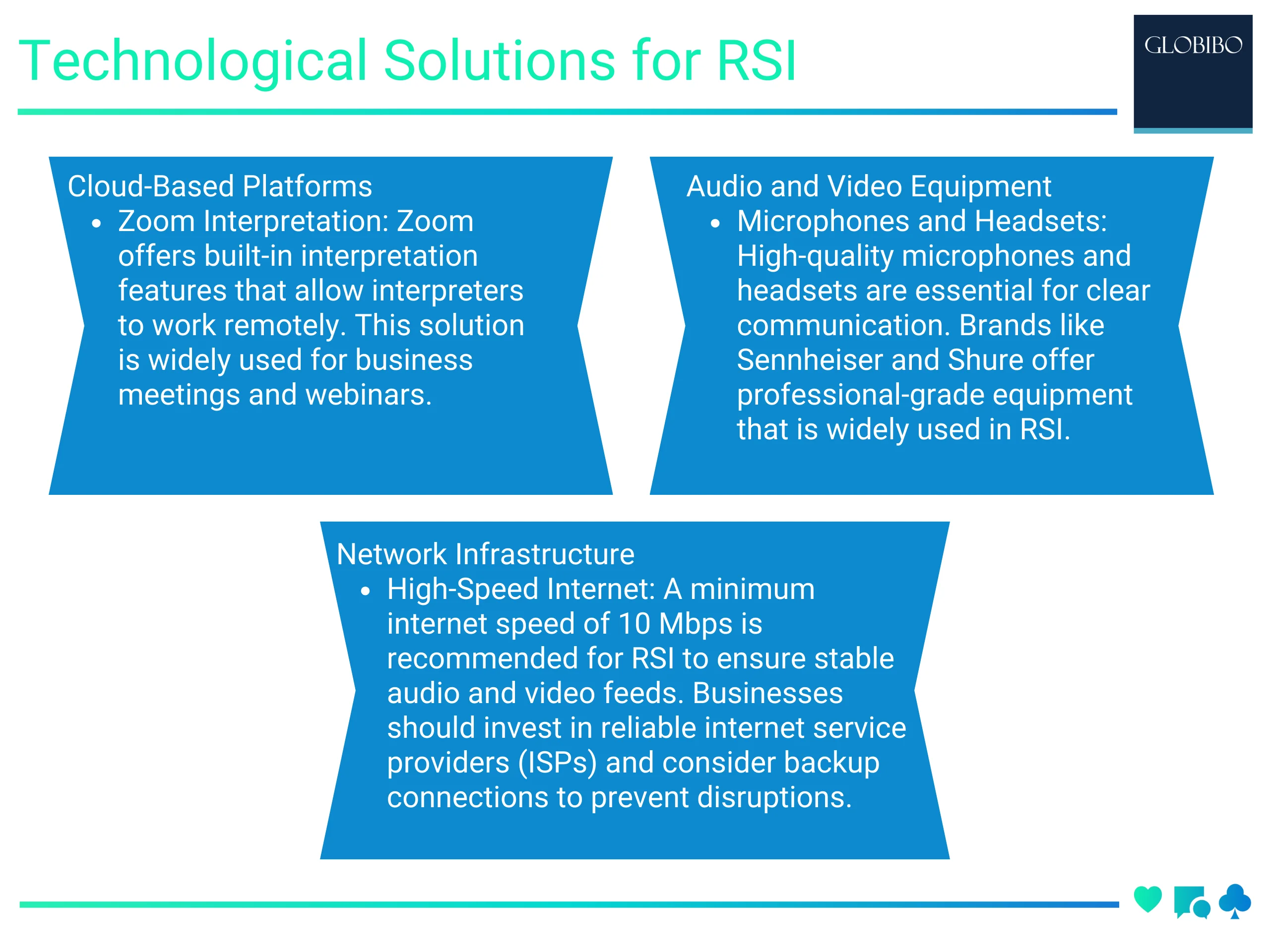
The successful implementation of RSI requires the integration of various technological solutions. Below is a structured list of key technologies that support RSI:
Cloud-Based Platforms
- Events.Studio AI assist app.
Audio and Video Equipment
- Microphones and Headsets: High-quality microphones and headsets are essential for clear communication. Brands like Sennheiser and Shure offer professional-grade equipment that is widely used in RSI.
- Cameras: HD cameras from brands like Logitech and Sony ensure that interpreters have a clear view of the meeting participants, which is crucial for accurate interpretation.
- Audio Mixers: Audio mixers are used to manage multiple audio channels, allowing interpreters to switch between languages seamlessly.
Network Infrastructure
- High-Speed Internet: A minimum internet speed of 10 Mbps is recommended for RSI to ensure stable audio and video feeds. Businesses should invest in reliable internet service providers (ISPs) and consider backup connections to prevent disruptions.
- VPNs and Firewalls: VPNs and firewalls are used to secure the communication between the RSI platform and the participants. These tools help protect against cyber threats and ensure data privacy.
Implementation Strategies for RSI
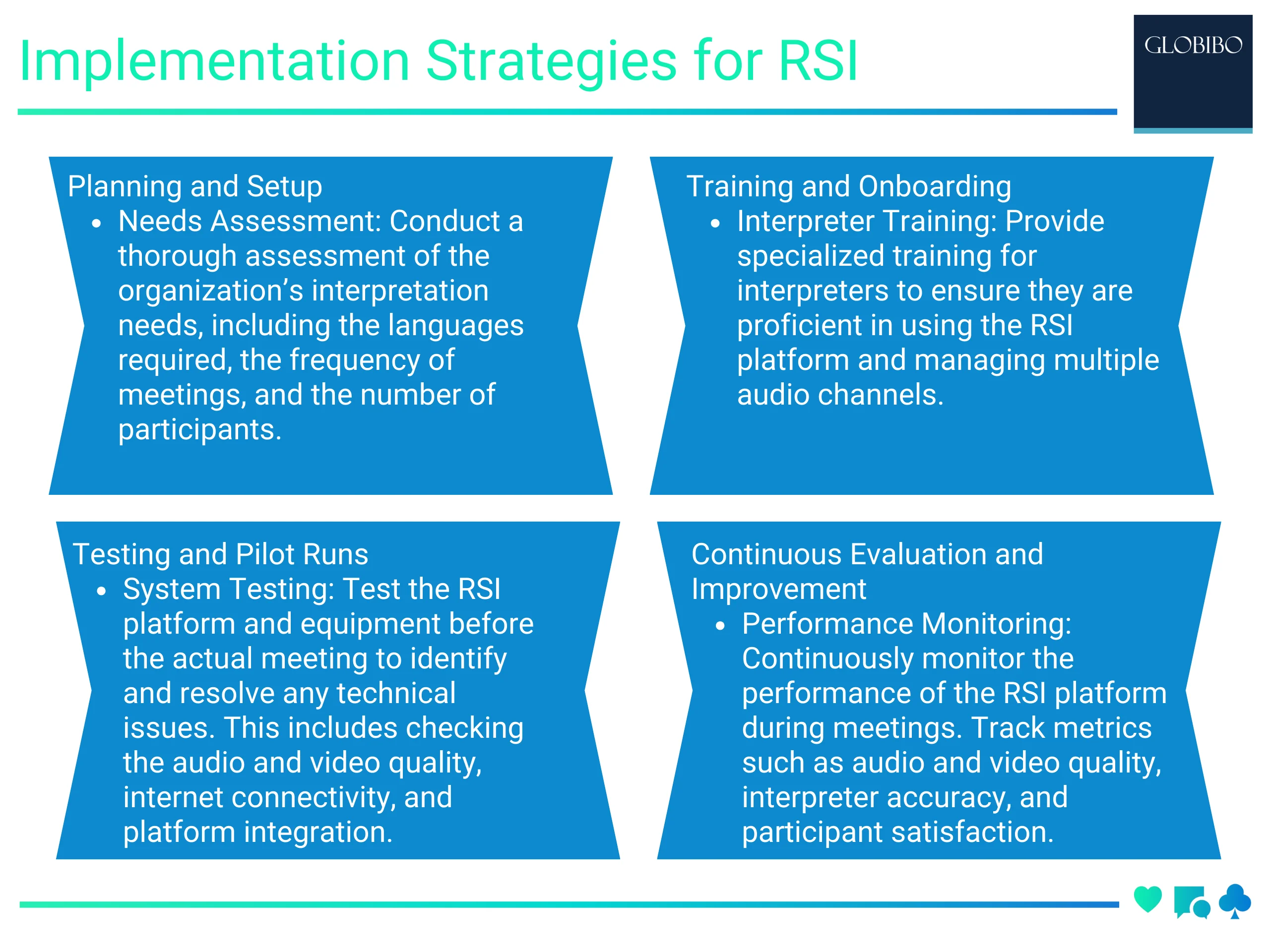
To effectively implement RSI in business meetings, organizations should follow a structured approach that includes planning, training, and continuous evaluation.
Planning and Setup
- Needs Assessment: Conduct a thorough assessment of the organization’s interpretation needs, including the languages required, the frequency of meetings, and the number of participants.
- Platform Selection: Choose an RSI platform that meets the organization’s technical requirements and integrates with existing collaboration tools. Consider factors such as scalability, ease of use, and security features.
- Equipment Procurement: Invest in high-quality audio and video equipment that meets the technical specifications of the RSI platform. Ensure that all participants have access to the necessary equipment.
Training and Onboarding
- Interpreter Training: Provide specialized training for interpreters to ensure they are proficient in using the RSI platform and managing multiple audio channels.
- Participant Onboarding: Conduct onboarding sessions for meeting participants to familiarize them with the RSI platform. Provide guidelines on how to connect to the platform, select language channels, and interact with interpreters.
Testing and Pilot Runs
- System Testing: Test the RSI platform and equipment before the actual meeting to identify and resolve any technical issues. This includes checking the audio and video quality, internet connectivity, and platform integration.
- Pilot Runs: Conduct pilot runs with a small group of participants to ensure that the system is functioning as expected. Use feedback from the pilot runs to make any necessary adjustments.
Continuous Evaluation and Improvement
- Performance Monitoring: Continuously monitor the performance of the RSI platform during meetings. Track metrics such as audio and video quality, interpreter accuracy, and participant satisfaction.
- Feedback Collection: Collect feedback from interpreters and participants after each meeting to identify areas for improvement. Use this feedback to make ongoing adjustments to the RSI setup.
- Regular Updates: Keep the RSI platform and equipment updated to ensure compatibility with the latest technology and security standards.
Case Studies
Case Study 1: Global Tech Conference
- Challenge: A leading technology company needed to host a global conference with participants from 50+ countries, requiring real-time interpretation in 10 languages.
- Solution: The company implemented Events.Studio RSI platform, integrating it with Zoom for video conferencing. High-quality microphones and headsets were provided to all participants, and a backup internet connection was established.
- Outcome: The conference was a success, with seamless interpretation and high participant satisfaction. The company reported a 30% reduction in interpretation costs compared to previous conferences.
Case Study 2: Hybrid Business Meeting
- Challenge: A multinational corporation needed to conduct a hybrid business meeting with both in-person and remote participants, requiring simultaneous interpretation in 5 languages.
- Solution: The company used Events.Studio hybrid interpretation capabilities, with interpreters working remotely and on-site. The platform was integrated with Microsoft Teams, allowing all participants to access the interpretation services seamlessly.
- Outcome: The meeting was highly effective, with clear communication between all participants. The hybrid interpretation approach enabled the company to reduce costs while maintaining high-quality interpretation services.
Future Trends in RSI
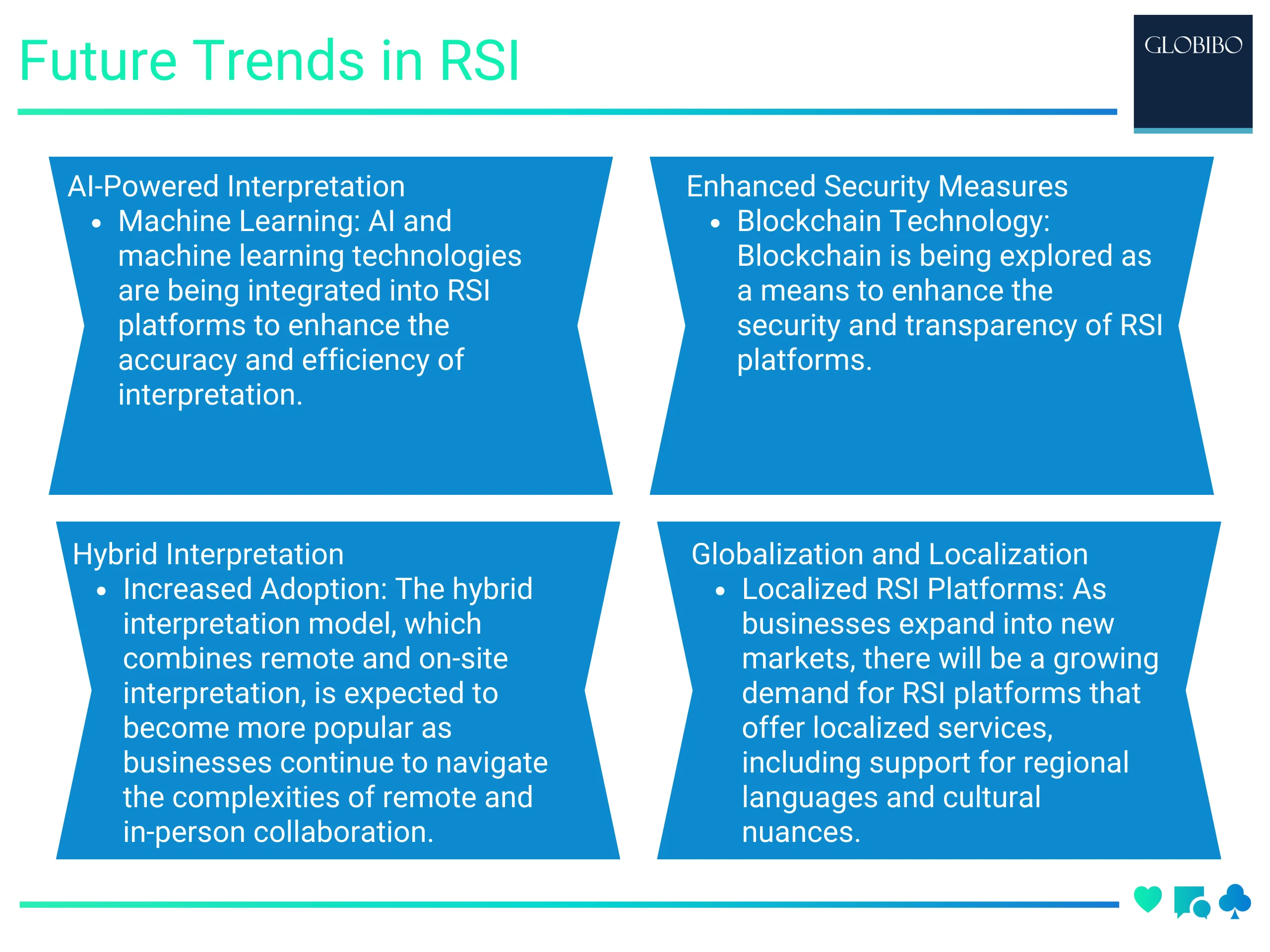
The field of Remote Simultaneous Interpretation is rapidly evolving, driven by advancements in technology and changing business needs. Below are some key trends that are likely to shape the future of RSI:
AI-Powered Interpretation
- Machine Learning: AI and machine learning technologies are being integrated into RSI platforms to enhance the accuracy and efficiency of interpretation. These technologies can assist human interpreters by providing real-time suggestions and corrections.
- Automated Interpretation: While human interpreters will continue to play a critical role, automated interpretation systems are expected to become more prevalent, particularly for low-stakes meetings and routine business communications.
Enhanced Security Measures
- Blockchain Technology: Blockchain is being explored as a means to enhance the security and transparency of RSI platforms. This technology can be used to verify the identity of participants and ensure the integrity of the interpretation process.
- End-to-End Encryption: As concerns about data privacy continue to grow, RSI platforms are expected to adopt more advanced encryption methods to protect sensitive business communications.
Hybrid Interpretation
- Increased Adoption: The hybrid interpretation model, which combines remote and on-site interpretation, is expected to become more popular as businesses continue to navigate the complexities of remote and in-person collaboration.
- Improved Tools: RSI platforms are likely to develop more sophisticated tools for managing hybrid interpretation, including features that allow for seamless switching between remote and on-site interpreters.
Globalization and Localization
- Localized RSI Platforms: As businesses expand into new markets, there will be a growing demand for RSI platforms that offer localized services, including support for regional languages and cultural nuances.
- Cross-Cultural Training: Interpreters will need to undergo cross-cultural training to ensure that they can accurately convey the nuances of different languages and cultures in a business context.
Remote Simultaneous Interpretation Solutions for Business Meetings Summary
Remote Simultaneous Interpretation solutions for business meetings are a powerful tool that enables businesses to communicate effectively across language barriers in real time. As globalization continues to accelerate, RSI will become increasingly important for companies looking to engage with diverse stakeholders worldwide.
By leveraging the right technological solutions, addressing the challenges of implementation, and staying ahead of emerging trends, businesses can harness the full potential of RSI to enhance their global communication strategy. In addition to Remote Simultaneous Interpretation, integrating Over-the-Phone Interpreting (OPI) can offer additional flexibility for business meetings, ensuring that participants who cannot join in person or online still have access to professional interpretation services.
The integration of hybrid interpretation approaches, advanced security measures, and AI-powered tools will further transform the RSI landscape, making it more accessible and efficient for businesses of all sizes. As companies continue to adapt to the demands of a globalized world, RSI will remain a key enabler of effective and inclusive communication.
Academic References Remote Simultaneous Interpretation Solutions for Business Meetings
-
Remote simultaneous interpreting and COVID-19: Conference interpreters‘ perspective
-
Remote interpreting: A technical perspective on recent experiments
-
Remote Simultaneous Interpreting: perceptions, practices and developments
-
[PDF] Exploring the visual interface in Remote Simultaneous Interpreting
YouTube Video on Remote Simultaneous Interpretation Solutions for Business Meetings

Susan Tan
Leadership Development Trainer
Susan has extensive experience in document localization for governmental and legal needs. Her work with embassies and government agencies ensures that documents meet specific regional requirements, making her expertise invaluable for international clients.