Conference Interpretation in Multilingual Settings
Conference interpretation in multilingual settings is a complex and nuanced process that involves translating spoken language in real-time during conferences, meetings, and other international events. This task is essential for ensuring that participants from different linguistic backgrounds can understand and engage with the content being presented. This article explores the key aspects of conference interpretation in multilingual settings, including technological tools, interpreter roles, challenges, and best practices.

Overview of Conference Interpretation
Conference interpretation is a specialized field that requires interpreters to provide real-time oral translations from one language to another. This can be done using various interpretation modes, each suited to different types of events and settings. The primary modes of interpretation include:
- Simultaneous Interpretation: Interpreters translate the speaker’s words in real-time, with minimal delay, often using headsets and microphones.
- Consecutive Interpretation: Interpreters wait until the speaker has finished a segment before translating, taking notes, and providing a translated summary.
- Liaison Interpretation: This is often used in smaller, informal settings where the interpreter facilitates communication between participants who speak different languages.
In multilingual settings, where multiple languages are involved, the process becomes significantly more intricate. This complexity demands a high level of skill and coordination to ensure accurate and effective communication.
For more details on interpreter qualifications and their importance, see Competence & Qualification of Conference Interpreters.
Key Challenges in Multilingual Conference Interpretation
- Language Proficiency and Fluency Interpreters must have an advanced level of proficiency in all the languages spoken at the conference. This includes not only fluency but also a deep understanding of technical terms and industry-specific jargon. Interpreters must be able to switch seamlessly between languages and maintain the meaning and nuance of the original message.
- Technological IntegrationThe integration of technology is crucial in multilingual settings. Advanced conference equipment, such as interpretation booths, wireless systems, and translation software, must be used effectively. These tools help ensure that translations are delivered clearly and without delay. For a detailed look at the equipment and settings used in conference interpretation, see Conference Equipment & Settings.
- Cultural Sensitivity Understanding cultural differences is essential for accurate interpretation. Cultural nuances, idioms, and social norms can significantly affect the meaning of spoken words. Interpreters must be aware of these factors to avoid misunderstandings and ensure the intended message is conveyed correctly. Cultural Sensitivity in Conference Interpretation explores this aspect more.
- Maintaining Accuracy and Neutrality Interpreters must faithfully and impartially translate the speaker’s message. They should avoid injecting personal opinions or biases into the interpretation. Maintaining neutrality is crucial to ensuring that all participants receive the same message regardless of their language.

Technological Tools for Multilingual Conference Interpretation
The following table summarizes the key technological tools used in multilingual conference interpretation and their functions:
| Technology | Function |
|---|---|
| Interpretation Booths | Provide a soundproof environment for interpreters, reducing external noise and distractions. |
| Wireless Interpretation Systems | Allow interpreters to transmit their translations wirelessly to attendees’ receivers, enhancing mobility and flexibility. |
| Simultaneous Interpretation Equipment | Facilitates real-time translation by transmitting the interpreter’s voice to attendees via headsets. |
| Consecutive Interpretation Equipment | Used in consecutive interpretation where interpreters record and translate after the speaker finishes, often utilizing recording devices. |
| Translation Software | Helps manage terminology and ensure consistency across multiple languages, particularly in complex conferences. |
Modes of Interpretation
In multilingual settings, different modes of interpretation are employed based on the nature of the event and the number of languages involved. Here is a more detailed look at each mode:

- Simultaneous Interpretation
- Description: Interpreters provide real-time translation while the speaker is speaking. This mode requires interpreters to listen to the speaker through headphones and transmit the translation to the audience via wireless headsets.
- Advantages: This mode minimizes delays, allowing for a smooth conference flow. It is particularly useful for large conferences with multiple sessions running concurrently.
- Challenges: Requires interpreters to have excellent concentration and quick decision-making skills. It also relies heavily on the technology used to transmit the interpretation. For more information on interpreting modes, see Interpreting Modes for Conferences.
- Consecutive Interpretation
- Description: Interpreters wait for the speaker to finish their segment before providing the translation. This mode involves taking detailed notes to ensure accuracy.
- Advantages: It allows for more thorough and accurate translations, as interpreters have time to process and reflect on the speaker’s message.
- Challenges: Creates a delay in communication, which can disrupt the flow of discussions, especially in fast-paced settings.
- Liaison Interpretation
- Description: Typically used in smaller, informal settings, this mode involves interpreting back and forth between speakers in a more interactive manner.
- Advantages: It provides a flexible and dynamic method of communication that is suitable for informal meetings or negotiations.
- Challenges: It may not be ideal for large conferences or highly technical discussions where simultaneous or consecutive interpretation is preferred.
Best Practices for Multilingual Conference Interpretation
- Preparation and Briefing
- Familiarize with Conference Content: Review all relevant materials and topics to understand the subject matter and terminology used. This preparation is essential for accurate interpretation.
- Understand the Audience: Gain insights into the audience’s background and expectations to tailor the interpretation to their needs. This helps in delivering a message that resonates with the audience.
- Test Equipment: Ensure all technological equipment, including interpretation booths and wireless systems, is thoroughly tested before the conference begins.
- During the Conference
- Maintain Focus: Stay attentive throughout the event to ensure accurate and timely interpretation. Any lapse in concentration can lead to errors in translation.
- Use Appropriate Technology: Based on the conference’s specific requirements, select and utilize the correct interpretation mode and technological tools. Effective use of interpretation equipment is key to success.
- Communicate with Colleagues: Coordinate with other interpreters and technical staff to handle any issues that may arise. Effective teamwork ensures smooth operation and problem resolution.
Training and Certification for Conference Interpreters
Conference interpreters in multilingual settings must undergo extensive training and certification to be effective. Training typically includes:
- Language Proficiency: Advanced courses to achieve fluency in multiple languages.
- Interpretation Techniques: Specialized training in different modes of interpretation and the use of related technologies.
- Cultural Competency: Courses on cultural contexts and nuances to handle diverse settings sensitively. For a detailed overview, see Training and Certification for Conference Interpreters.
Certifications from recognized professional bodies or educational institutions are essential for validating the interpreter’s skills and knowledge.

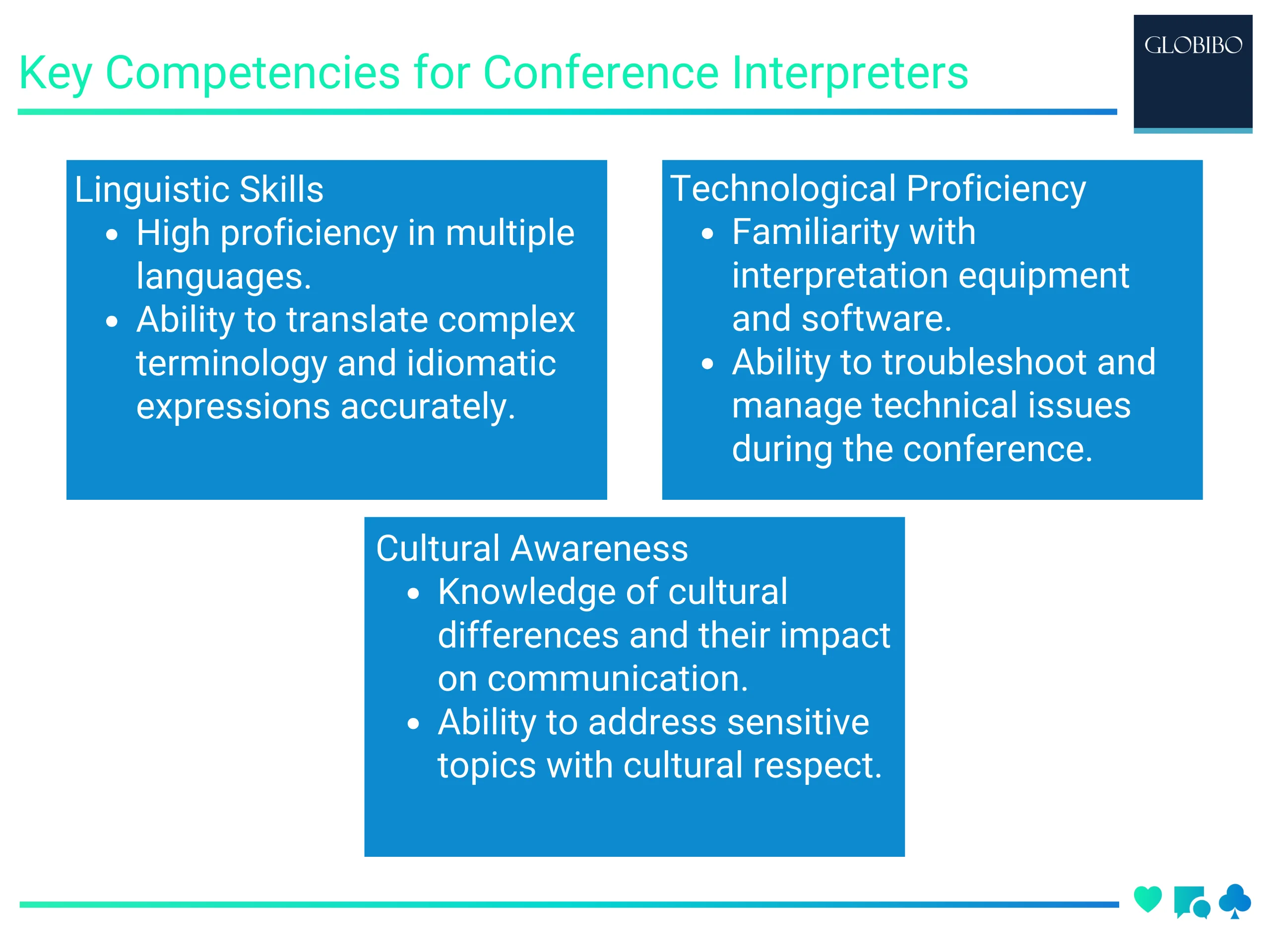
Key Competencies for Conference Interpreters
- Linguistic Skills
- High proficiency in multiple languages.
- Ability to translate complex terminology and idiomatic expressions accurately.
- Technological Proficiency
- Familiarity with interpretation equipment and software.
- Ability to troubleshoot and manage technical issues during the conference.
- Cultural Awareness
- Knowledge of cultural differences and their impact on communication.
- Ability to address sensitive topics with cultural respect.
- Professionalism and Neutrality
- Maintaining impartiality and avoiding personal biases.
- Adhering to professional standards and ethical guidelines.
Conference Interpretation for Different Industries
Different industries have specific requirements for conference interpretation. For example, medical conferences demand knowledge of medical terminology and practices, while legal conferences require familiarity with legal jargon and proceedings. Interpreters must adapt their skills to meet the needs of various industries. For more on this, see Conference Interpretation for Different Industries.
Summary of Conference Interpretation in Multilingual Settings
Conference interpretation in multilingual settings is a critical aspect of global communication, requiring a combination of advanced linguistic skills, technological proficiency, and cultural awareness. By employing best practices, leveraging modern technology, and undergoing rigorous training, interpreters can ensure effective communication across multiple languages. As international events continue to grow in complexity, the role of skilled interpreters in facilitating seamless multilingual dialogue will remain vital. For a broader view of the challenges involved in this field, refer to Challenges in Conference Interpretation.
Academic References of Conference Interpretation
-
Multilingual mock conferences: a valuable tool in the training of conference interpreters
-
Pedagogy for the multilingual classroom: interpreting education
-
Simultaneous and consecutive interpreting in conference situations (conference interpreting)
-
Simultaneous and consecutive interpreting (non-conference settings)
-
[PDF] Multilingualism in Europe: Can conference interpreters adapt to new political and economic pressures
-
Interpreting in small-group bilingual videoconferences: Challenges and adaptation processes
YouTube video on Conference Interpretation in Multilingual Settings

Susan Tan
Leadership Development Trainer
Susan has extensive experience in document localization for governmental and legal needs. Her work with embassies and government agencies ensures that documents meet specific regional requirements, making her expertise invaluable for international clients.