Conference Interpretation for Different Industries
Conference interpretation for different industries is crucial in facilitating communication among participants who speak different languages. It ensures that discussions remain fluid and participants can engage meaningfully, regardless of their native tongue. Due to distinct terminologies, contexts, and requirements, the needs and challenges of conference interpretation can vary significantly across different industries. This article delves into how conference interpretation adapts to various sectors, detailing the specific demands and solutions for healthcare, legal, finance, and technology industries.
Understanding Industry-Specific Needs in Conference Interpretation
Conference interpretation involves real-time spoken language translation, which can vary greatly between industries. The distinct characteristics of each sector influence how interpretation services are provided:
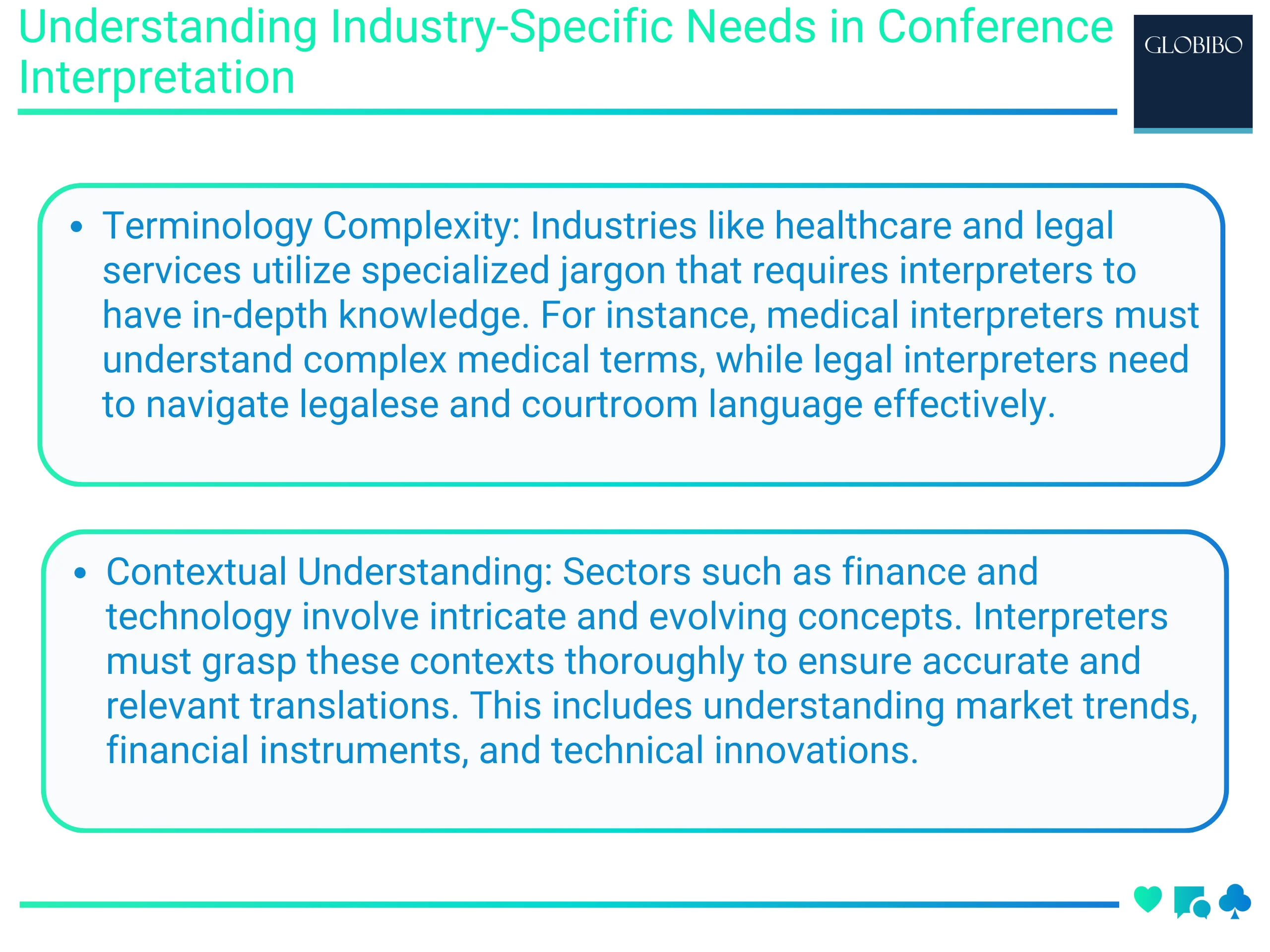
- Terminology Complexity: Industries like healthcare and legal services utilize specialized jargon that requires interpreters to have in-depth knowledge. For instance, medical interpreters must understand complex medical terms, while legal interpreters need to navigate legalese and courtroom language effectively.
- Contextual Understanding: Sectors such as finance and technology involve intricate and evolving concepts. Interpreters must grasp these contexts thoroughly to ensure accurate and relevant translations. This includes understanding market trends, financial instruments, and technical innovations.
- Confidentiality and Sensitivity: Certain industries, such as legal and diplomatic fields, handle highly sensitive information. Interpreters in these sectors must adhere to strict confidentiality protocols and manage sensitive data with the utmost discretion.
- Cultural Nuances: Every industry has its cultural norms and expectations. Interpreters must be aware of these cultural contexts to ensure their translations are respectful and appropriate. For example, interpreting in diplomatic settings often requires an understanding of international etiquette and cultural diplomacy.
Key Industries and Their Interpretation Needs
Conference interpretation varies widely across different industries. Here’s an in-depth look at how interpretation services are tailored to meet the needs of specific sectors:
2.1. Healthcare
Challenges:
- Medical Terminology: Healthcare interpreters must be well-versed in medical terminology related to diseases, treatments, and procedures. This includes understanding technical terms and medical abbreviations used by healthcare professionals.
- Patient Sensitivity: Interpreting for patients requires high empathy and accuracy. Misinterpretations in medical contexts can lead to misunderstandings about treatment options or patient conditions.
- Regulatory Compliance: Healthcare interpreters must comply with regulations such as HIPAA in the U.S., which mandates the protection of patient information.
Solutions:
- Specialized Training: Healthcare interpreters often undergo rigorous training programs that cover medical terminology, patient communication, and ethical considerations. This training ensures that they can handle complex medical discussions with precision.
- Confidentiality Measures: Implementing strict confidentiality measures, such as secure communication channels and non-disclosure agreements, helps protect patient information and meet regulatory standards.
- Collaborative Practices: Healthcare interpreters work closely with medical professionals to ensure accurate communication of medical information. They may also participate in pre-conference briefings to familiarize themselves with specific medical topics and patient cases.
For detailed insights into the qualifications required for healthcare interpreters, see Competence & Qualification of Conference Interpreters.

2.2. Legal
Challenges:
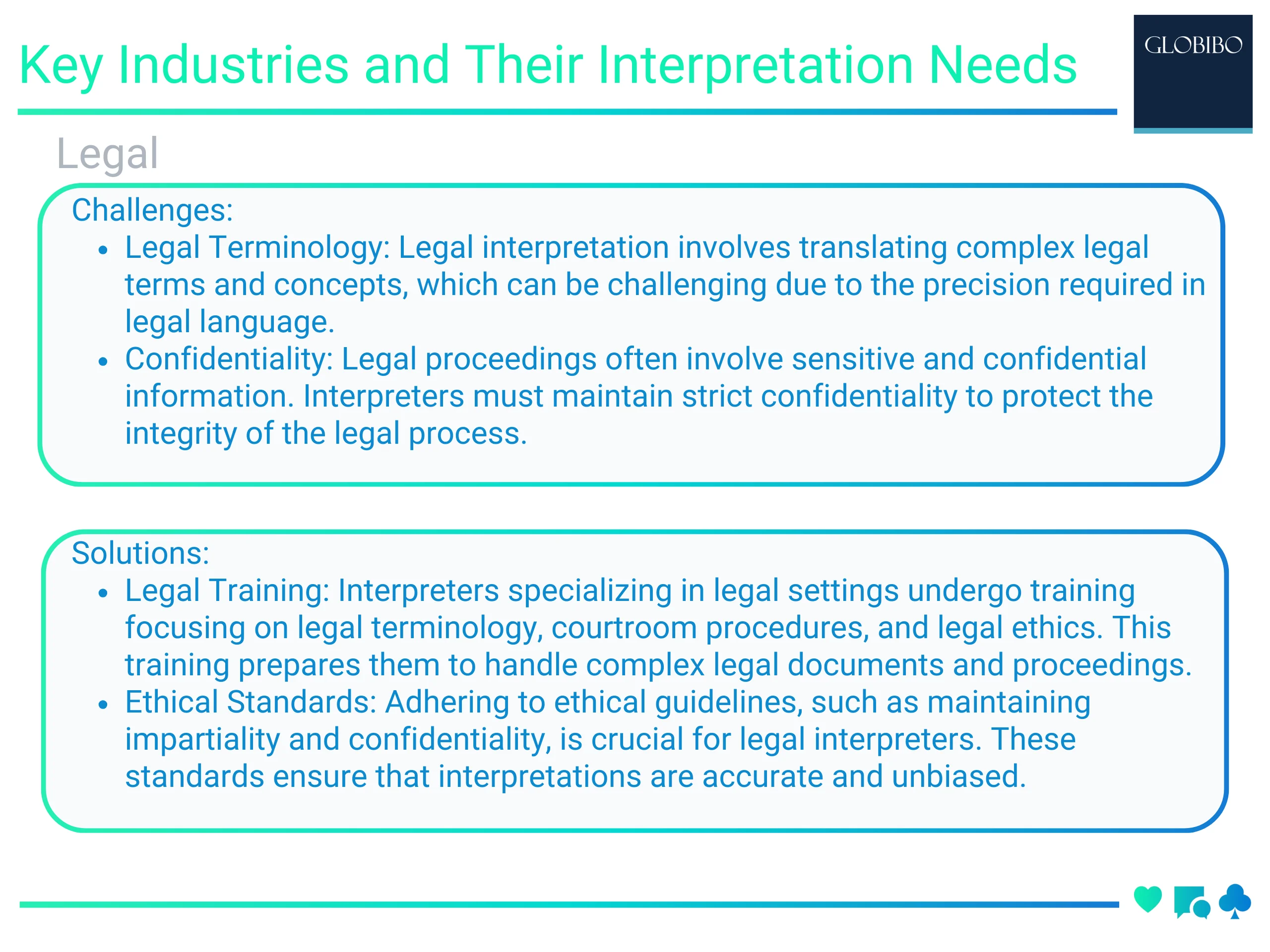
- Legal Terminology: Legal interpretation involves translating complex legal terms and concepts, which can be challenging due to the precision required in legal language.
- Confidentiality: Legal proceedings often involve sensitive and confidential information. Interpreters must maintain strict confidentiality to protect the integrity of the legal process.
- Cultural and Jurisdictional Differences: Legal systems vary widely across jurisdictions, and interpreters must be familiar with these differences to provide accurate translations.
Solutions:
- Legal Training: Interpreters specializing in legal settings undergo training focusing on legal terminology, courtroom procedures, and legal ethics. This training prepares them to handle complex legal documents and proceedings.
- Ethical Standards: Adhering to ethical guidelines, such as maintaining impartiality and confidentiality, is crucial for legal interpreters. These standards ensure that interpretations are accurate and unbiased.
- Expertise in Jurisdictions: Interpreters gain knowledge of different legal systems and cultural practices to enhance their ability to navigate jurisdictional differences and provide contextually relevant interpretations.
For more on the challenges and solutions in legal interpretation, refer to Challenges in Conference Interpretation.
2.3. Finance
Challenges:
- Complex Financial Terms: Financial discussions involve intricate terminology related to markets, investments, and economic data. Interpreters must be adept at translating these terms accurately.
- Market Trends: Interpreters must stay informed about current market trends and economic developments to provide relevant interpretations.
- Precision and Clarity: Accurate translation of financial data is crucial for decision-making processes. Interpreters must ensure that financial documents and reports are translated with precision.
Solutions:
- Financial Training: Interpreters specializing in finance receive training in financial terminology, market dynamics, and economic concepts. This training helps them handle complex financial discussions effectively.
- Real-Time Updates: Access to up-to-date financial information allows conference interpreters to provide interpretations that reflect the latest market conditions and trends.
- Attention to Detail: Emphasizing precision and clarity in financial translations ensures that all data is accurately conveyed, which is essential for informed decision-making.
For more information on financial interpretation and related practices, see Interpreting Modes for Conferences.

2.4. Technology
Challenges:
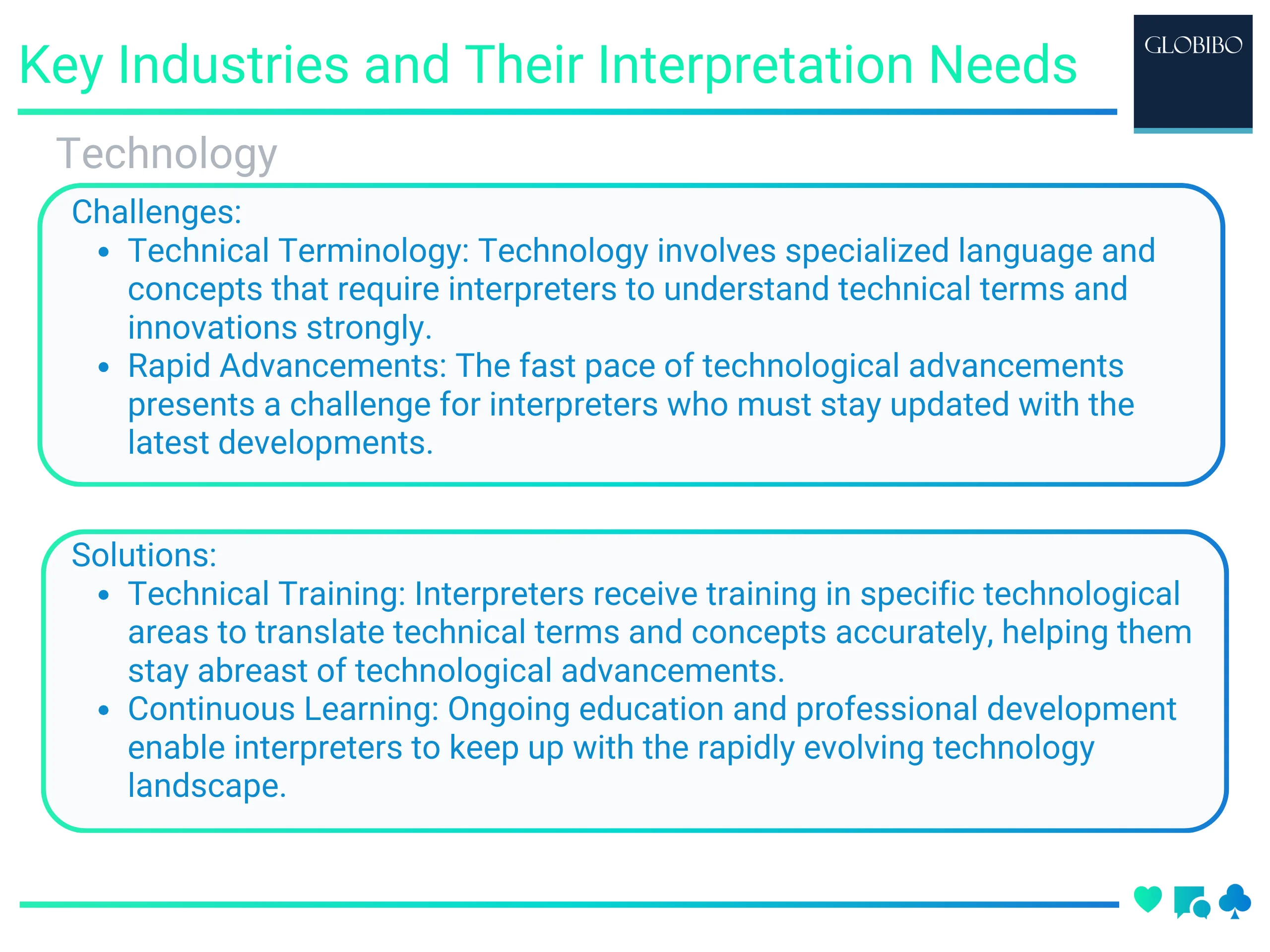
- Technical Terminology: Technology involves specialized language and concepts that require interpreters to understand technical terms and innovations strongly.
- Rapid Advancements: The fast pace of technological advancements presents a challenge for interpreters who must stay updated with the latest developments.
- Diverse Applications: Technology spans various fields, each with its own set of terminologies and contexts. Interpreters must be knowledgeable about these diverse applications.
Solutions:
- Technical Training: Interpreters receive training in specific technological areas to translate technical terms and concepts accurately, helping them stay abreast of technological advancements.
- Continuous Learning: Ongoing education and professional development enable interpreters to keep up with the rapidly evolving technology landscape.
- Collaboration with Experts: Working with technology experts and engineers ensures that interpreters have access to accurate and contextually relevant information.
For more on technology-related interpretation, see Conference Equipment & Settings.
Best Practices for Industry-Specific Conference Interpretation
To provide effective conference interpretation for different industries, the following best practices should be considered:

3.1. Specialized Training and Certification
- Industry-Specific Training: Interpreters should pursue specialized training programs tailored to their industry. This targeted training helps them acquire the knowledge and skills needed for sector-specific content.
- Certification Programs: Obtaining certification in various industries validates an interpreter’s expertise and adherence to high standards. Certification programs, such as those outlined in Training and Certification for Conference Interpreters, are essential for establishing credibility and ensuring quality.
3.2. Collaboration and Consultation
- Expert Consultation: Interpreters should collaborate with industry experts to understand specific terminologies, concepts, and contexts. This collaboration improves the accuracy and relevance of interpretations.
- Pre-Conference Briefings: Before the conference, briefings with clients and participants help interpreters prepare for industry-specific content. These briefings can include discussions on key topics and terminologies to be used during the conference.
3.3. Technology and Equipment
- Advanced Interpretation Equipment: High-quality interpretation equipment, such as wireless systems and headsets, ensures clear and accurate communication. Properly functioning equipment minimizes disruptions and technical issues.
- Technical Support: Providing technical support during conferences helps address any issues with interpretation equipment promptly, ensuring smooth and effective communication.
Summary of Conference Interpretation for Different Industries
The table below summarizes the key requirements and solutions for conference interpretation for different industries:
| Industry | Challenges | Solutions |
|---|---|---|
| Healthcare | Medical terminology, patient sensitivity, regulations | Specialized training, confidentiality measures, collaboration |
| Legal | Legal terminology, confidentiality, cultural differences | Legal training, ethical standards, expertise in jurisdictions |
| Finance | Financial terms, market trends, precision | Financial training, real-time updates, attention to detail |
| Technology | Technical terminology, rapid advancements, diverse applications | Technical training, continuous learning, collaboration with experts |
Conference interpretation for different industries is a vital service ensuring effective communication across various industries in multilingual settings. By understanding and addressing different sectors’ specific needs and challenges, interpreters can provide tailored services that meet industry standards and expectations. Specialized training, expert consultation, and advanced technology are crucial for delivering high-quality interpretation. As industries evolve, interpreters must adapt and update their skills to maintain effective practices in conference interpretation for different industries.
Academic References on Conference Interpretation for Different Industries
-
Conference and community interpreting: Commonalities and differences
-
The history of research into conference interpreting: A scientometric approach
-
Historical developments in conference interpreting: An overview
-
An artificial intelligence-enabled industry classification and its interpretation
-
Computer Aided Interpreting (CAI) for conference interpreters. Concepts, content and prospects
YouTube video on Conference Interpretation for Different Industries

Susan Tan
Leadership Development Trainer
Susan has extensive experience in document localization for governmental and legal needs. Her work with embassies and government agencies ensures that documents meet specific regional requirements, making her expertise invaluable for international clients.