Cultural Sensitivity in Conference Interpretation
Conference interpretation is a critical component in international conferences and events, facilitating communication among participants who speak different languages. In today’s globalized world, cultural sensitivity is a paramount concern for interpreters. It ensures that the message is conveyed accurately, without any misinterpretation that could arise due to cultural differences. This article delves into the significance of cultural sensitivity in conference interpretation, examining how interpreters can navigate cultural nuances to provide accurate and effective communication.
Understanding Cultural Sensitivity
Cultural sensitivity in conference interpretation refers to the awareness and consideration of cultural differences and similarities between the source and target languages during interpretation. It involves understanding the cultural context in which the language is used and ensuring that the interpretation respects these cultural nuances. The interpreter must be aware of cultural norms, values, beliefs, and practices that may influence how the message is received by the target audience.
Cultural sensitivity goes beyond mere linguistic translation; it encompasses understanding the cultural connotations of words, gestures, and expressions. For instance, certain idioms or phrases in one language may not have a direct equivalent in another, and an interpreter must find an appropriate way to convey the same meaning without altering the intent or tone of the original message.
The Role of Cultural Sensitivity in Conference Interpretation
- Accurate Message Delivery: The primary goal of conference interpretation is to deliver the speaker’s message as accurately as possible. Cultural sensitivity plays a crucial role in ensuring that the message is not distorted due to cultural misunderstandings. For example, a joke or a reference that is humorous in one culture may be offensive in another. An interpreter must recognize such potential pitfalls and adjust the interpretation accordingly to maintain the speaker’s intended meaning.
- Building Trust and Rapport: In a multicultural conference setting, trust and rapport between participants are essential for effective communication. Interpreters who demonstrate cultural sensitivity help build this trust by showing respect for the cultural backgrounds of all participants. This can lead to more open and productive discussions, as participants feel understood and respected.
- Navigating Cultural Taboos and Sensitivities: Every culture has its taboos and sensitive topics that must be navigated carefully during interpretation. For example, topics related to religion, gender, or politics can be highly sensitive and may require careful handling to avoid offending participants. A culturally sensitive interpreter is aware of these issues and can manage them effectively, ensuring that the conference proceeds smoothly without any cultural faux pas.

The Importance of Competence and Qualification of Conference Interpreters
To be effective in their role, conference interpreters must possess a high level of competence and qualification, including cultural sensitivity. The competence and qualification of conference interpreters are crucial in ensuring that they have the necessary skills to handle the complexities of cultural differences in interpretation. This includes not only linguistic proficiency but also an in-depth understanding of the cultural contexts in which the languages are spoken.
Interpreters should undergo rigorous training and certification to ensure they are well-equipped to handle the demands of conference interpretation in multicultural settings. This training should include modules on cultural sensitivity, enabling interpreters to develop the skills necessary to navigate cultural nuances effectively. More information on the importance of competence and qualification can be found in the article Competence & qualification of Conference Interpreter.
Interpreting Modes for Conferences and Cultural Sensitivity
Different interpreting modes, such as simultaneous and consecutive interpretation, require varying levels of cultural sensitivity. In simultaneous interpretation, where interpreters must translate the speaker’s message in real time, there is little room for error. The interpreter must quickly identify any cultural references and adjust the interpretation accordingly. In consecutive interpretation, where the interpreter translates after the speaker has finished a segment of speech, there is more time to consider cultural nuances and ensure that the message is delivered accurately.
Each mode of interpretation has its challenges, and cultural sensitivity is essential in both. The article Interpreting Modes for Conferences provides further insights into the different modes of interpretation and their specific requirements.
Conference Equipment and Settings: Their Impact on Cultural Sensitivity
The equipment and settings used in conference interpretation can also impact cultural sensitivity. For example, the use of certain technologies, such as interpretation booths and headsets, can affect how interpreters perceive and convey cultural nuances. Additionally, the physical setup of the conference, such as seating arrangements and the presence of cultural symbols, can influence how participants from different cultures interact and communicate.
Interpreters must be aware of how these factors can impact their interpretation and take steps to mitigate any potential issues. This includes familiarizing themselves with the conference equipment and settings beforehand to ensure that they are well-prepared to handle any cultural challenges that may arise. Further details on conference equipment and settings can be explored in the article Conference Equipment & settings.
Challenges in Conference Interpretation Related to Cultural Sensitivity
Cultural sensitivity in conference interpretation presents several challenges that interpreters must navigate to ensure effective communication. Some of these challenges include:
- Language Variations: Even within the same language, there can be significant cultural differences. For example, the Spanish spoken in Spain differs from the Spanish spoken in Latin America, not just in terms of vocabulary but also in cultural references. An interpreter must be aware of these differences and adjust their interpretation accordingly.
- Non-Verbal Communication: Cultural sensitivity also extends to non-verbal communication, such as gestures, facial expressions, and body language. These non-verbal cues can vary significantly between cultures and can affect how the message is perceived. Interpreters must be attuned to these differences and ensure that they convey the appropriate non-verbal cues during interpretation.
- Managing Biases: Interpreters must also be aware of their own cultural biases and ensure that these do not affect their interpretation. This requires a high level of self-awareness and the ability to remain neutral, even when dealing with culturally sensitive topics.
For a more comprehensive analysis of the challenges in conference interpretation, the article Challenges in Conference Interpretation offers valuable insights.
Conference Interpretation in Multilingual Settings
Conference interpretation in multilingual settings adds another layer of complexity to cultural sensitivity. In such settings, interpreters must navigate not only the cultural differences between the source and target languages but also the cultural dynamics among participants who speak different languages. This requires a high level of cultural awareness and the ability to quickly adapt to different cultural contexts.
Interpreters must also be aware of the power dynamics that can exist in multilingual settings, where certain languages may be perceived as more dominant or prestigious than others. Cultural sensitivity involves recognizing these dynamics and ensuring that all participants feel equally valued and respected, regardless of the language they speak.
More information on the intricacies of conference interpretation in multilingual settings can be found in the article Conference Interpretation in Multilingual Settings.
Training and Certification for Conference Interpreters
Given the importance of cultural sensitivity in conference interpretation, training and certification programs for interpreters should place a strong emphasis on this aspect. These programs should include comprehensive modules on cultural awareness, enabling interpreters to develop the skills necessary to navigate cultural differences effectively.
Certification programs should also assess interpreters’ ability to handle culturally sensitive situations, ensuring that they are fully equipped to provide accurate and culturally appropriate interpretations in any setting. The article Training and Certification for Conference Interpreters provides further details on the importance of training and certification in this field.
Conference Interpretation for Different Industries
Cultural sensitivity is particularly important in conference interpretation for different industries, where the cultural context can significantly impact the interpretation. For example, in the medical industry, interpreters must be aware of cultural differences in health beliefs and practices, while in the legal industry, they must navigate cultural variations in legal terminology and procedures.
Interpreters must tailor their approach to the specific industry in which they are working, taking into account the unique cultural challenges that may arise. This requires not only linguistic proficiency but also an in-depth understanding of the cultural nuances specific to the industry.
For a closer look at the role of conference interpretation in various industries, the article Conference Interpretation for Different Industries offers valuable insights.
Key Aspects of Cultural Sensitivity in Conference Interpretation
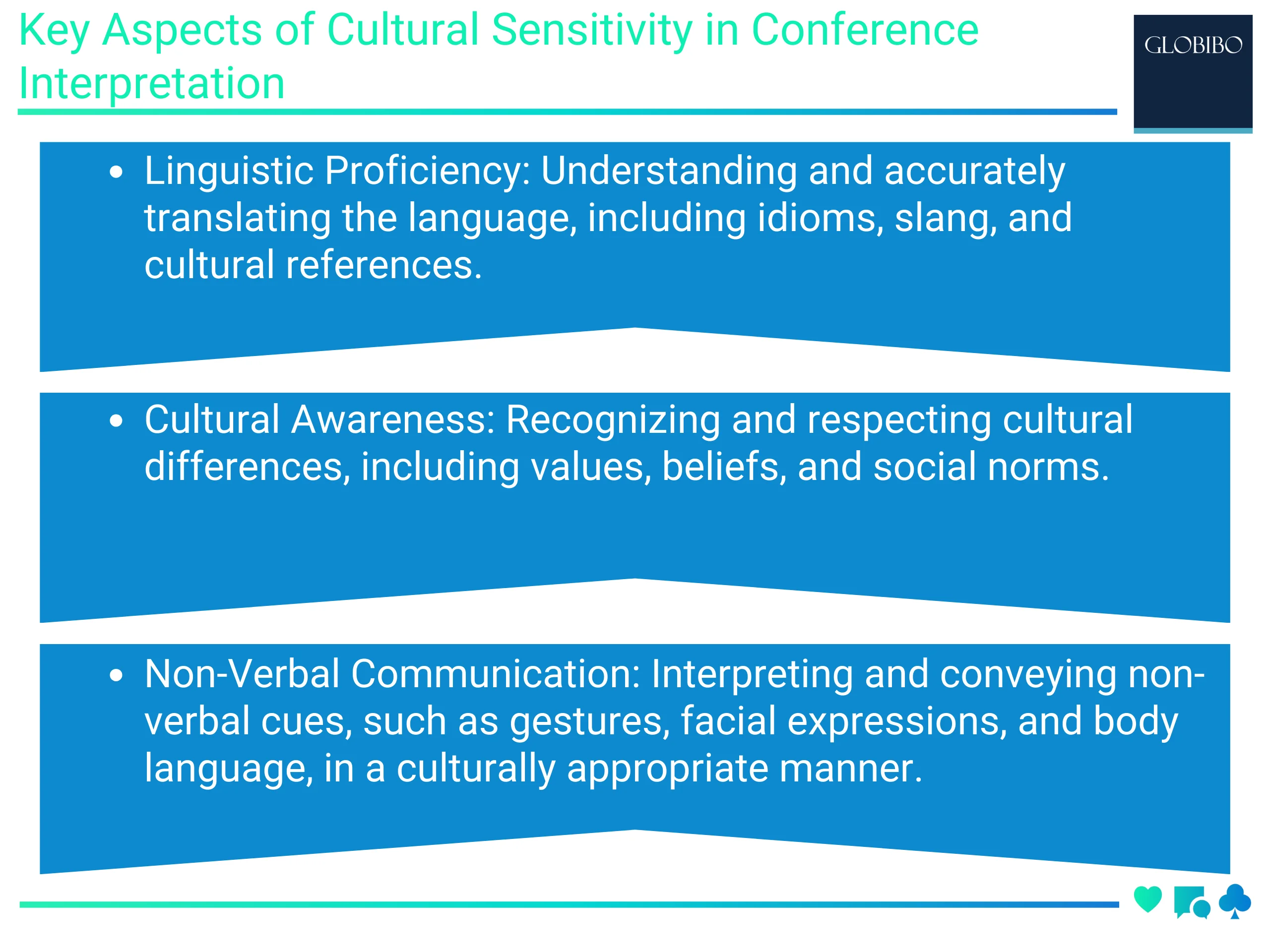
- Linguistic Proficiency: Understanding and accurately translating the language, including idioms, slang, and cultural references.
- Cultural Awareness: Recognizing and respecting cultural differences, including values, beliefs, and social norms.
- Non-Verbal Communication: Interpreting and conveying non-verbal cues, such as gestures, facial expressions, and body language, in a culturally appropriate manner.
- Adaptability: Quickly adjusting interpretation to accommodate cultural nuances and context.
- Neutrality: Maintaining impartiality and avoiding cultural biases during interpretation.
Challenges in Achieving Cultural Sensitivity
- Language Variations: Dealing with regional dialects and variations within the same language.
- Cultural Taboos: Navigating sensitive topics that may be considered taboo in certain cultures.
- Time Constraints: Managing cultural sensitivity in real-time interpretation, especially in simultaneous interpreting.
- Technological Limitations: Overcoming challenges posed by conference equipment and settings that may affect cultural interpretation.
- Maintaining Consistency: Ensuring consistent cultural sensitivity across different interpreting modes and settings.

Enhancing Cultural Sensitivity in Conference Interpretation
Interpreters play a crucial role in bridging cultural gaps during conferences. By understanding and respecting the cultural norms of different countries, they can ensure that communication is clear, respectful, and effective. This involves not only translating words but also conveying the appropriate cultural context, body language, and tone, thereby preventing potential misunderstandings and fostering a more inclusive and respectful environment.
Cultural Sensitivity in Conference Interpretation Summary
Cultural sensitivity is a critical aspect of conference interpretation, ensuring that communication is effective, respectful, and accurate across different cultural contexts. Interpreters must be equipped with the necessary skills, training, and awareness to navigate the complexities of cultural differences. By understanding the cultural nuances of the languages they are interpreting, maintaining neutrality, and being adaptable, interpreters can ensure that the message is conveyed accurately and respectfully, regardless of the cultural background of the participants.
In conclusion, cultural sensitivity is not just an added skill but a fundamental requirement for successful conference interpretation. As the world becomes increasingly interconnected, the demand for culturally sensitive interpretation will continue to grow, making it an essential component of the interpreter’s toolkit. By prioritizing cultural sensitivity, interpreters can contribute to more effective and meaningful communication in our globalized world.
Watch the YouTube video on Cultural Sensitivity in Conference Interpretation

Susan Tan
Leadership Development Trainer
Susan has extensive experience in document localization for governmental and legal needs. Her work with embassies and government agencies ensures that documents meet specific regional requirements, making her expertise invaluable for international clients.