Role of Legal Interpreters in Depositions
Legal interpreting plays a pivotal role in the judicial system, especially during depositions. Depositions are a critical phase in the pre-trial discovery process, where sworn testimonies are recorded outside the courtroom to gather information and build a case. For non-English-speaking or Limited English Proficiency (LEP) individuals, understanding and communicating effectively during depositions can be challenging. This is where legal interpreters come into play, bridging the linguistic and cultural gaps to ensure fair access to justice.
Importance of Legal Interpreters in Depositions
Legal interpreters are not merely translators; they are specialists with a deep understanding of legal terminology, procedures, and ethical standards. Their role extends beyond converting words from one language to another; they must convey the exact meaning, tone, and intent of the speaker. Misinterpretation or mistranslation can have severe consequences, potentially altering the outcome of a legal case.
The accuracy and professionalism of legal interpreting services are governed by international standards, such as those outlined by the International Organization for Standardization (ISO). Adherence to these standards ensures that legal interpreters provide high-quality services, minimizing the risk of errors during legal proceedings.
Core Responsibilities of Legal Interpreters in Depositions
Legal interpreters have several critical responsibilities during depositions, which include:
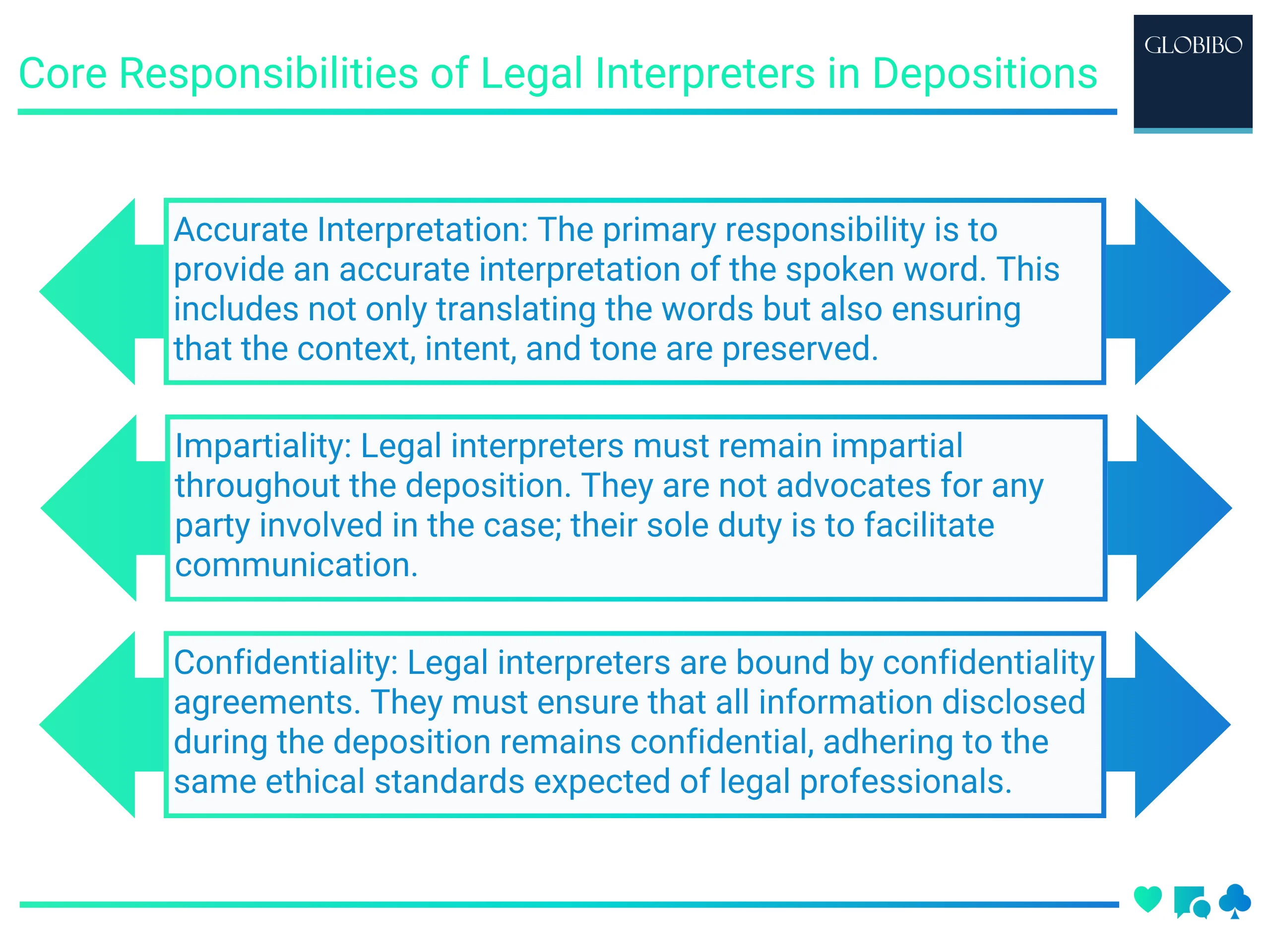
- Accurate Interpretation: The primary responsibility is to provide an accurate interpretation of the spoken word. This includes not only translating the words but also ensuring that the context, intent, and tone are preserved. The interpreter must understand the legal jargon and nuances to ensure that the testimony is accurately conveyed according to modes of interpreting.
- Impartiality: Legal interpreters must remain impartial throughout the deposition. They are not advocates for any party involved in the case; their sole duty is to facilitate communication. Impartiality also means avoiding any conflicts of interest that could compromise the interpreter’s objectivity.
- Confidentiality: Legal interpreters are bound by confidentiality agreements. They must ensure that all information disclosed during the deposition remains confidential, adhering to the same ethical standards expected of legal professionals.
- Cultural Competency: Understanding cultural nuances is crucial in legal interpreting. An interpreter must be aware of cultural differences that might influence communication and ensure that these do not lead to misunderstandings during the deposition.
- Adherence to Ethical Standards: Legal interpreters must adhere to a strict code of ethics, which includes maintaining professionalism, avoiding conflicts of interest, and providing truthful and accurate interpretations at all times.
The Role of ISO Standards in Legal Interpreting Services
ISO standards play a significant role in defining the quality and reliability of legal interpreting services. The ISO 18841:2018 standard provides guidelines for interpreting services, ensuring that interpreters are competent, professional, and capable of providing accurate interpretations in legal settings.
Key Aspects of ISO 18841:2018
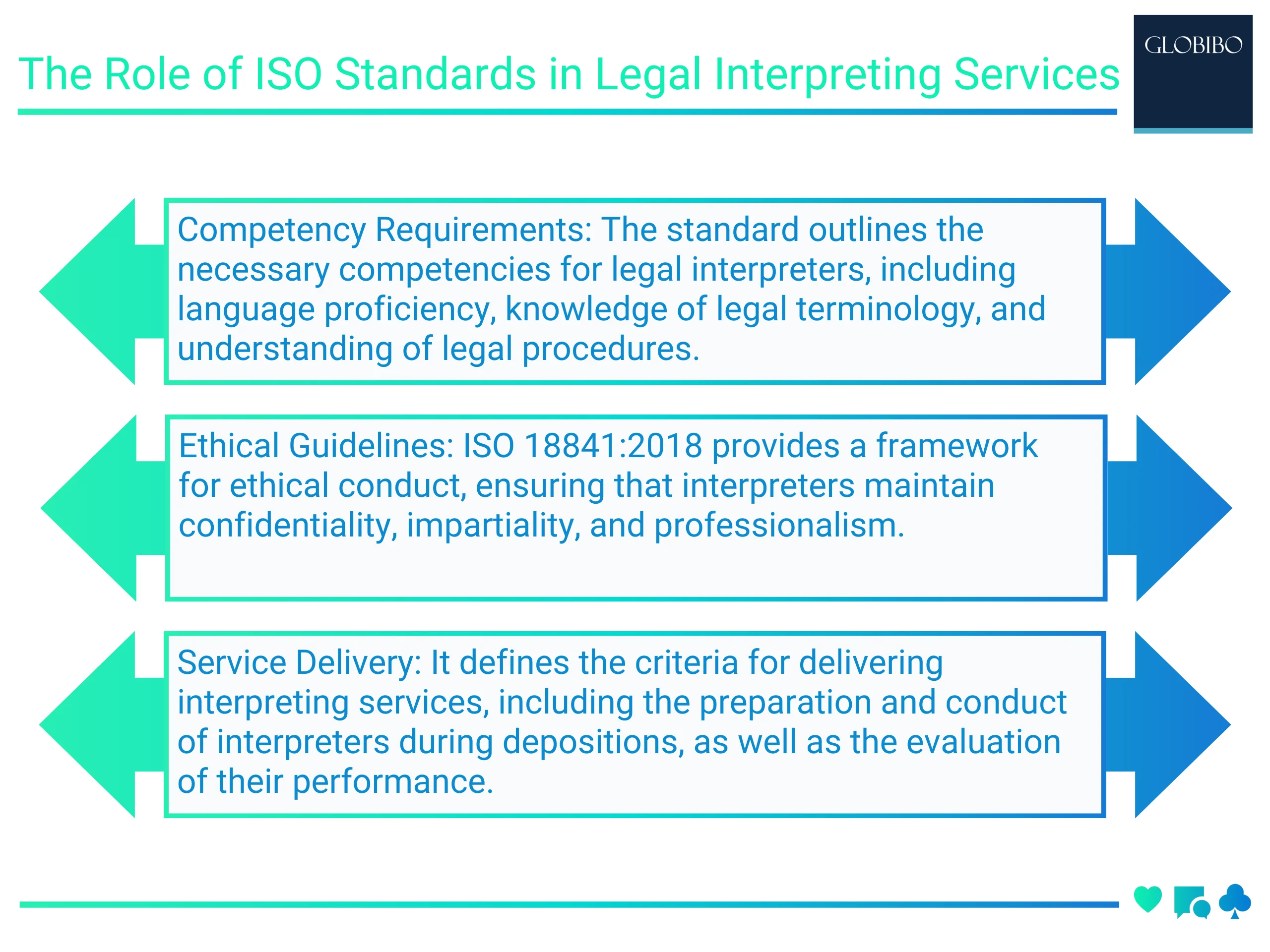
- Competency Requirements: The standard outlines the necessary competencies for legal interpreters, including language proficiency, knowledge of legal terminology, and understanding of legal procedures.
- Ethical Guidelines: ISO 18841:2018 provides a framework for ethical conduct, ensuring that interpreters maintain confidentiality, impartiality, and professionalism.
- Quality Assurance: The standard emphasizes the importance of quality assurance processes, including continuous professional development, regular assessments, and adherence to best practices in interpreting.
- Service Delivery: It defines the criteria for delivering interpreting services, including the preparation and conduct of interpreters during depositions, as well as the evaluation of their performance.
Challenges Faced by Legal Interpreters in Depositions
Legal interpreters often encounter several challenges during depositions, including:
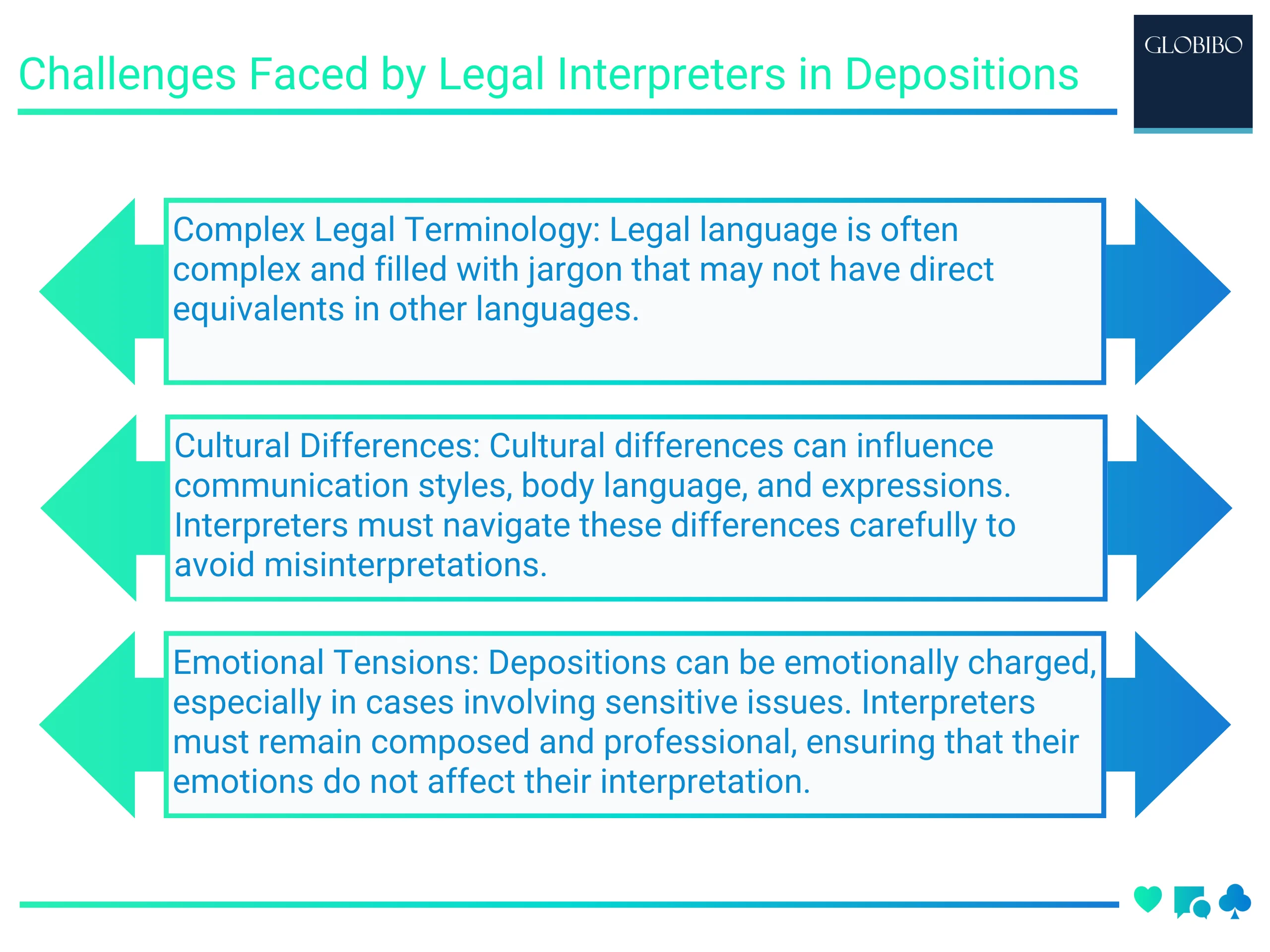
- Complex Legal Terminology: Legal language is often complex and filled with jargon that may not have direct equivalents in other languages. Interpreters must have a deep understanding of legal concepts and terminology to provide accurate interpretations.
- Cultural Differences: Cultural differences can influence communication styles, body language, and expressions. Interpreters must navigate these differences carefully to avoid misinterpretations.
- Emotional Tensions: Depositions can be emotionally charged, especially in cases involving sensitive issues. Interpreters must remain composed and professional, ensuring that their emotions do not affect their interpretation.
- Maintaining Impartiality: In highly contentious cases, maintaining impartiality can be challenging. Interpreters must be vigilant to ensure that they do not inadvertently take sides or influence the deposition process.
- Fatigue and Stress: Interpreting for extended periods can lead to fatigue and stress, which may affect the interpreter’s performance. Interpreters must manage their workload and take breaks when necessary to maintain accuracy.
Essential Skills for Legal Interpreters
Legal interpreters must possess a unique set of skills or qualifications to effectively perform their duties during depositions. The following is a list of essential skills required:
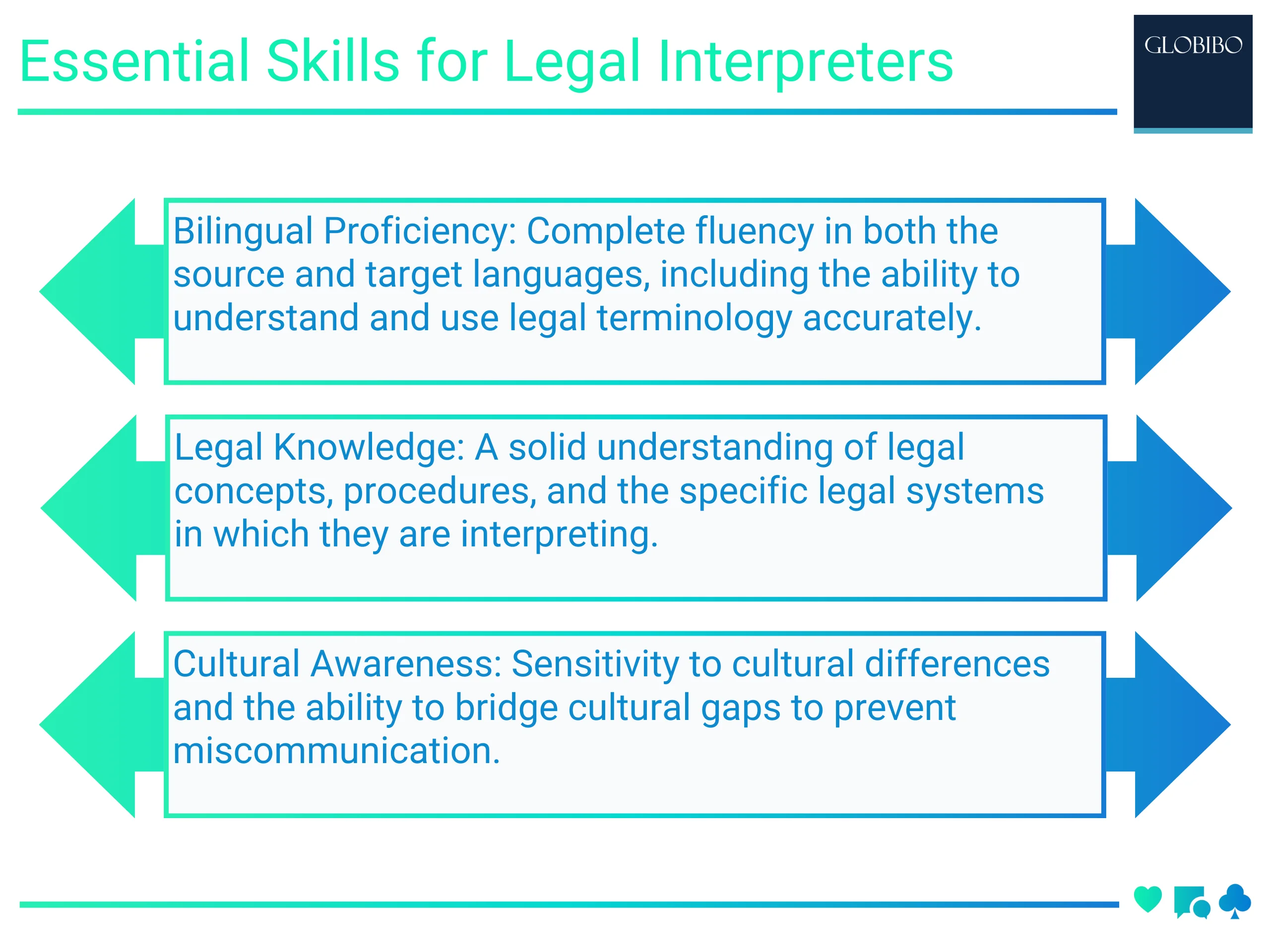
- Bilingual Proficiency: Complete fluency in both the source and target languages, including the ability to understand and use legal terminology accurately.
- Legal Knowledge: A solid understanding of legal concepts, procedures, legal interpreting, and the specific legal systems in which they are interpreting.
- Cultural Awareness: Sensitivity to cultural differences and the ability to bridge cultural gaps to prevent miscommunication.
- Active Listening: The ability to listen carefully and accurately interpret what is being said without missing any details.
- Note-Taking: Proficiency in note-taking techniques to keep track of complex information during the deposition.
- Memory Retention: Strong short-term memory to retain information long enough to provide accurate interpretations.
- Emotional Control: The ability to remain calm and professional in emotionally charged situations.
- Ethical Judgment: A strong sense of ethics and the ability to make decisions that uphold the integrity of the interpreting process.
Best Practices for Legal Interpreters During Depositions
To ensure the highest level of professionalism and accuracy, legal interpreters should follow these best practices:
- Pre-Deposition Preparation:
- Review relevant case documents and legal materials.
- Understand the specific legal context and terminology to be used.
- Discuss with the legal team to clarify any uncertainties about the deposition process.
- During the Deposition:
- Maintain a neutral and professional demeanor at all times.
- Take thorough notes to ensure accuracy in interpretation.
- Ask for clarification if a statement or term is unclear.
- Manage time effectively to avoid fatigue and maintain concentration.
- Ensure that all parties understand the interpretation process and address any concerns before proceeding.
- Post-Deposition Review:
- Review notes and recordings (if applicable) to ensure the accuracy of the interpretation.
- Provide feedback to the legal team if any issues arise during the deposition.
- Engage in continuous professional development to improve interpreting skills and stay updated on legal terminology and standards.

Comparison of Legal Interpreter Standards
| Criteria | ISO 18841:2018 | National Association of Judiciary Interpreters and Translators (NAJIT) |
|---|---|---|
| Competency Requirements | Specifies language proficiency and legal knowledge requirements | Emphasizes high proficiency in both languages and understanding of legal procedures |
| Ethical Guidelines | Comprehensive guidelines on confidentiality, impartiality, and professionalism | Strong focus on ethics, including confidentiality and impartiality |
| Quality Assurance | Emphasizes regular assessments and continuous professional development | Requires adherence to a code of ethics and ongoing training |
| Service Delivery | Detailed criteria for service preparation, conduct, and evaluation | Focuses on accuracy, impartiality, and professionalism during service delivery |
Legal Interpreting Services: Enhancing Accuracy and Fairness in Depositions
Legal interpreting services are integral to ensuring that all individuals, regardless of language barriers, have equal access to justice. In depositions, where accuracy is paramount, legal interpreters play a crucial role in ensuring that testimonies are accurately understood and recorded. By adhering to international standards such as ISO 18841:2018, legal interpreting services can maintain high levels of professionalism, accuracy, and reliability.
Role of Legal Interpreters in Depositions Summary
The role of legal interpreters in depositions cannot be overstated. They are essential in ensuring that non-English-speaking individuals can fully participate in legal proceedings, thereby upholding the principles of justice and fairness. By adhering to strict ethical standards and international guidelines, legal interpreters can provide high-quality services that facilitate accurate communication in the legal system. As the demand for legal interpreting services continues to grow, the importance of maintaining rigorous standards and continuous professional development becomes increasingly critical.
Academic References on the Role of Legal Interpreters in Depositions
-
A Report on the Deposition Interpreting Class at the Monterey Institute of International Studies
-
[PDF] The role of the Court Interpreter in the Spanish Legal System. Where we are and where we should be
-
Interpreting legal discourse on TV: Clinton’s deposition with the Grand Jury
-
[BOOK] Legal Interpreting and Questioning Techniques Explained
-
[PDF] Looking back while going forward: 15 years of legal interpreting in the EU
YouTube Video on the Role of Legal Interpreters in Depositions

Susan Tan
Leadership Development Trainer
Susan has extensive experience in document localization for governmental and legal needs. Her work with embassies and government agencies ensures that documents meet specific regional requirements, making her expertise invaluable for international clients.