When and Why to Use Whispered Interpretation
Whispered interpretation, also referred to as chuchotage, is a specialized mode of interpretation that enables a single interpreter to convey real-time translations to a small group of individuals. This form of interpretation is especially useful in situations where only a few participants require language support while the majority can follow the proceedings in the source language. This article provides a comprehensive exploration of whispered interpretation, including its definitions, contexts for use, advantages, and best practices.
Understanding Whispered Interpretation
Whispered interpretation is characterized by the following features:
Key Characteristics of Whispered Interpretation
| Characteristic | Description |
| Audience Size | Typically suitable for small groups, usually comprising 2 to 5 individuals. |
| Contextual Use | Commonly utilized in legal settings, business meetings, or conference workshops where only a few participants need interpretation. |
| Interpretation Style | The interpreter provides a simultaneous translation in a soft voice, ensuring it does not disturb the speaker or other participants. |
| Equipment Requirement | Often requires no special equipment, though a small microphone may be used in larger or noisier environments. |
| Language Proficiency | The interpreter must be proficient in both the source and target languages, with a strong grasp of context and terminology relevant to the discussion. |
Definition and Process of Whispered Interpretation


Whispered interpretation involves the interpreter sitting or standing close to the individuals who require assistance, softly delivering translations of the spoken content. The key steps in the whispered interpretation process include:
- Positioning: The interpreter positions themselves near the individuals needing translation, ensuring they can hear without disrupting the speaker.
- Listening and Interpreting: As the speaker presents their content, the whispered interpreter listens attentively and provides a real-time translation in a low voice.
- Maintaining Discretion: The interpreter keeps their voice quiet enough to ensure that only the intended recipients can hear the interpretation, allowing the overall atmosphere of the event to remain undisturbed.
When to Use Whispered Interpretation

Whispered interpretation is appropriate in various contexts. Below are some specific scenarios where this method proves particularly effective:
1. Small Group Settings
Whispered interpretation shines in small group settings where language barriers exist among a limited number of participants:
- Business Meetings: In corporate environments where only a few attendees need interpretation, whispered interpretation allows those individuals to engage fully without requiring the entire group to use headsets or other equipment.
- Legal Proceedings: In courtrooms, where confidentiality is critical, whispered interpretation can discreetly assist limited parties (such as witnesses or defendants) in understanding proceedings without disrupting the formal atmosphere.
2. Informal Gatherings
In more casual settings, whispered interpretation facilitates communication among individuals speaking different languages:
- Networking Events: At conferences or business networking functions, where mingling occurs, an interpreter can provide whispered translations to a small group, enhancing interactions and fostering connections.
- Workshops and Seminars: In educational or professional development environments, whispered interpretation enables participants who need language support to engage with the material and discussions without formal barriers.
3. Situations Requiring Discretion
Whispered interpretation is also beneficial in scenarios where discretion is essential:
- Sensitive Discussions: In negotiations or personal discussions where confidentiality is paramount, whispered interpretation can provide necessary support without broadcasting the conversation to others.
- Medical Settings: In healthcare environments, whispered interpretation allows for sensitive discussions with patients who may require language assistance, ensuring privacy is maintained.
4. Multilingual Events
Whispered interpretation is suitable for multilingual events with limited language support needs:
- Conferences with Multiple Languages: In events where only a few attendees require interpretation in a language not provided for the majority, whispered interpretation offers an efficient way to accommodate diverse language needs without extensive planning or resources.
Advantages of Whispered Interpretation
Whispered interpretation offers several significant advantages, making it a favored choice in various contexts:
1. Flexibility
- Adaptability to Various Environments: Whispered interpretation can be employed in diverse settings, from corporate meetings to casual discussions, without the need for extensive equipment.
- Rapid Response Capability: This method allows for quick arrangements, making it suitable for spontaneous needs where formal interpretation services may not be feasible.
2. Cost-Effectiveness
- Reduced Expenses: Since whispered interpretation typically requires fewer resources (both in terms of equipment and personnel) compared to simultaneous interpretation, it can be a more economical option for organizations.
- Less Preparation Time: The minimal setup involved in whispered interpretation means less time is needed for logistical arrangements.
3. Enhanced Engagement
- Direct Interaction: This form of interpretation encourages direct communication between the interpreter and the audience, fostering engagement and making participants feel more involved in the discussion.
- Maintaining Focus: By keeping the interpretation discreet, whispered interpretation minimizes distractions for other attendees, allowing the primary speaker’s message to remain clear and undisturbed.
4. Improved Comprehension
- Personalized Support: Participants receive tailored interpretation that meets their specific needs, enhancing their overall understanding of the material presented.
- Contextual Clarity: The interpreter’s proximity allows for immediate clarification of terms or concepts, improving understanding in real time, particularly when complex or technical language is used.
Best Practices for Implementing Whispered Interpretation
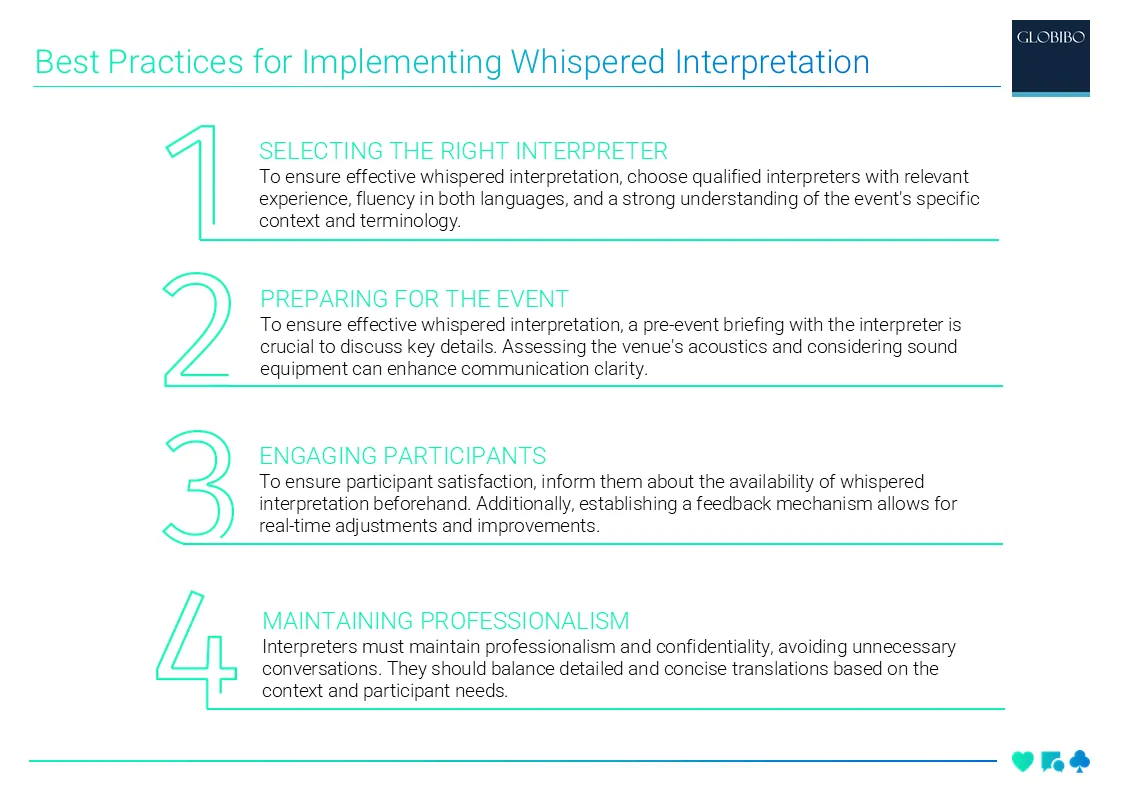
To ensure effective whispered interpretation, it is crucial to follow established best practices. The following guidelines will help maximize the effectiveness of this interpretation method:
1. Selecting the Right Interpreter
- Qualifications and Experience: Choose interpreters with professional qualifications, relevant experience, and a proven track record in whispered interpretation, particularly in the subject matter relevant to the event.
- Language Proficiency: Ensure the interpreter is fluent in both the source and target languages, with an extensive understanding of the terminology and context involved.
2. Preparing for the Event
- Pre-Event Briefing: Conduct a detailed briefing session with the interpreter to review critical terminology, context, and any sensitive topics that may arise during the event. This helps the interpreter prepare for potential challenges and facilitates a smoother interpretation process.
- Venue Assessment: Assess the venue’s acoustics to determine whether additional sound equipment (such as a small microphone) is necessary to facilitate clear communication, especially in larger or noisier environments.
3. Engaging Participants
- Inform Participants: Prior to the event, inform attendees about the availability of whispered interpretation and how it will be implemented. Clear communication helps set expectations and encourages participants to utilize the service.
- Feedback Mechanism: Establish a method for participants to provide feedback on the effectiveness of the whispered interpretation, allowing for adjustments and improvements in real time.
4. Maintaining Professionalism
- Interpreter Conduct: Ensure that interpreters maintain professionalism and confidentiality throughout the event, particularly in sensitive settings. This includes being discreet and avoiding unnecessary conversations with participants during the event.
- Discretion in Interpretation: Train interpreters to gauge when to provide more detailed translations and when to keep them brief, based on the context and the specific needs of participants. This balance is crucial for effective communication.
Click here to learn about A Beginner’s Guide to Whispered Interpreting and Essentials of Whispered Interpretation.
Challenges of Whispered Interpretation

While whispered interpretation has numerous advantages, it is essential to be aware of potential challenges:
- Interpreter Fatigue: Since whispered interpretation requires sustained vocal effort, interpreters may experience fatigue, especially during long sessions. It is advisable to schedule breaks or rotate interpreters when sessions extend beyond an hour.
- Noise Interference: In larger or noisier venues, it may be challenging for the interpreter to provide clear translations if background noise is significant. Using a microphone or finding a quieter space can help mitigate this issue.
- Limited Audience Size: Whispered interpretation is best suited for small groups. In larger settings, its effectiveness diminishes, making it less practical compared to other forms of interpretation, such as simultaneous or consecutive interpretation.
Situations Best Suited for Whispered Interpretation
- Business Contexts
- Executive meetings
- Negotiations
- Board meetings
- Training sessions
- Informal Settings
- Networking events
- Workshops
- Social gatherings
- Community discussions
- Sensitive Situations
- Legal settings
- Medical consultations
- Confidential negotiations
- Counseling sessions
- Multilingual Events
- Conferences with multiple languages
- International seminars
- Multicultural community events
- Diplomacy meetings
Advantages of Whispered Interpretation
- Flexibility
- Minimal equipment required
- Adaptable to different settings
- Quick setup and response
- Cost-Effectiveness
- Reduced expenses compared to simultaneous interpretation
- Fewer personnel needed
- Efficient use of resources
- Enhanced Engagement
- Direct communication with participants
- Maintains focus on the main speaker
- Encourages participation and interaction
- Improved Comprehension
- Personalized support for individual needs
- Contextual clarity through real-time feedback
- Immediate clarification of terminology
By leveraging the benefits of whispered interpretation, organizations can effectively bridge language gaps, enhance communication, and foster inclusive environments that cater to the needs of diverse participants.
Summary of Use Whispered Interpretation
Whispered interpretation is a valuable tool for facilitating communication in diverse settings, particularly when language barriers exist among small groups. Its flexibility, cost-effectiveness, and ability to foster direct engagement make it an ideal choice for various situations, from business meetings to legal proceedings. By following best practices for implementation and selecting qualified interpreters, organizations can enhance their communication efforts and ensure that all participants have equal access to information.

Susan has extensive experience in conference interpretation, simultaneous interpretation, and Consecutive Interpretation services, document localization for governmental and legal needs. Her work with embassies and government agencies ensures that documents meet specific regional requirements, making her expertise invaluable for international clients.
YouTube Videos on Use Whispered Interpretation
Academic References for Use Whispered Interpretation
- The significance of interpreting modes for question–answer dialogues in court interpreting
- Peculiarities of whispered interpreting or” chuchotage”
- [HTML] Communication by unvoiced speech: the role of whispering
- What’s in a whisper?
- [BOOK] Whispering the Word
- Turning whisper into real-time transcription system
- Whispered voice test for screening for hearing impairment in adults and children: systematic review
- CHAPTER FOUR BRINGING WHISPERED INTERPRETING
- [PDF] The invisible walls of the whisper network
- Whispering at the edges: engaging ephemeral phenomena