The Impact of Thai Interpreters in Legal Settings
The increasing global mobility and economic integration have heightened the need for effective communication across linguistic divides, particularly within legal systems. Thai interpreters play an indispensable role in maintaining fairness and integrity in legal proceedings, enabling non-native speakers to fully participate in judicial processes. This comprehensive analysis highlights the critical importance of professionalism among Thai interpreters, its implications for justice, the challenges faced, and recommendations for strengthening the standards of interpretation in legal settings.
1. Importance of Professionalism in Legal Interpretation
In legal settings, interpreting demands a nuanced understanding of both linguistic and procedural complexities. Unlike general translation, legal interpretation involves the instantaneous conversion of spoken language in real-time, making accuracy and clarity paramount.
Key Characteristics of Professional Thai Legal Interpreters:
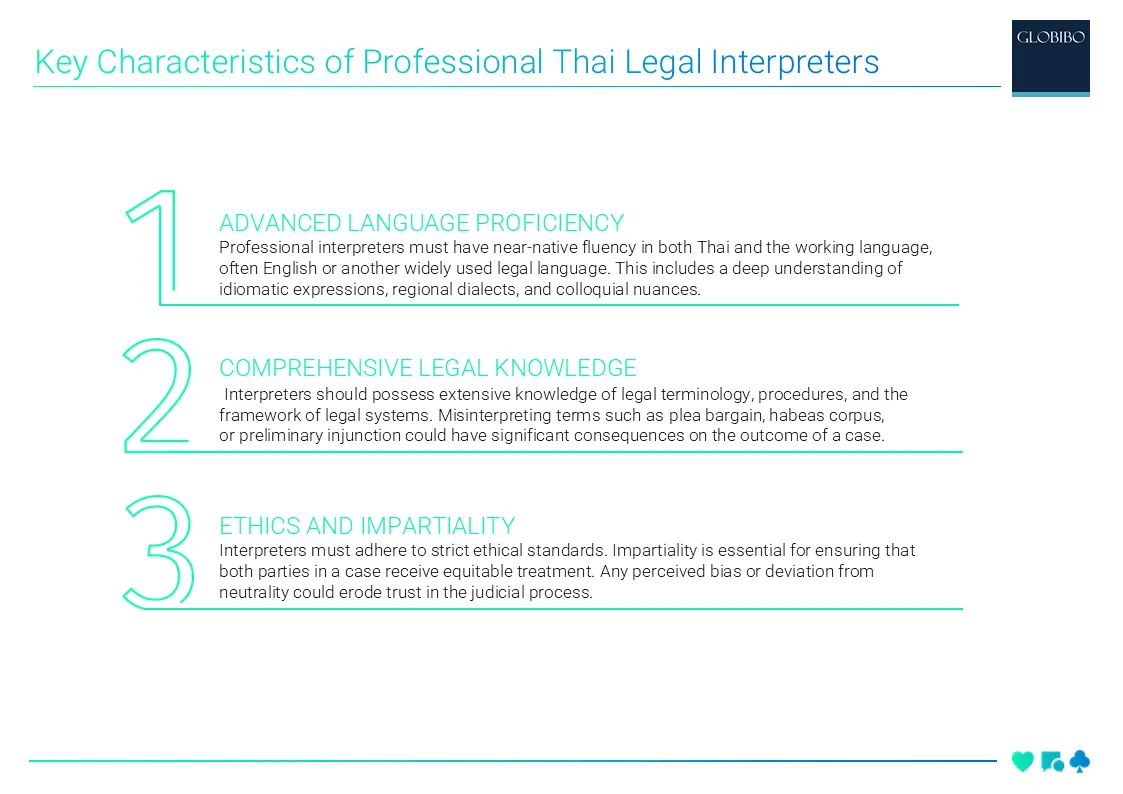
- Advanced Language Proficiency: Professional interpreters must have near-native fluency in both Thai and the working language, often English or another widely used legal language. This includes a deep understanding of idiomatic expressions, regional dialects, and colloquial nuances that could influence Thai interpretations.
- Comprehensive Legal Knowledge: Interpreters should possess extensive knowledge of legal terminology, procedures, and the framework of legal systems. Misinterpreting terms such as plea bargain, habeas corpus, or preliminary injunction could have significant consequences on the outcome of a case.
- Ethics and Impartiality: Interpreters must adhere to strict ethical standards. Impartiality is essential for ensuring that both parties in a case receive equitable treatment. Any perceived bias or deviation from neutrality could erode trust in the judicial process.
- Cultural Competence: Professionalism also extends to an interpreter’s ability to navigate cultural differences that may affect communication. Understanding these nuances can prevent misinterpretation of testimony and ensure the full context is conveyed accurately.
Click here to learn about How Thai Interpreters Bridge Language Gaps and Choosing the Right Thai Interpreter.
Key Competencies of Professional Thai Legal Interpreters
| Competency | Description |
| Language Proficiency | Advanced fluency in Thai and the relevant second language |
| Legal Terminology | Familiarity with legal jargon and courtroom procedures |
| Cultural Insight | Understanding cultural nuances that affect communication |
| Ethical Integrity | Upholding confidentiality and impartiality |
| Listening Skills | Active listening to accurately capture spoken content |
2. The Role of Thai Interpreters in Legal Proceedings

The presence of Thai interpreters is pivotal in various stages of legal processes. Their role extends beyond mere translation; they facilitate understanding, enable fair participation, and prevent potential violations of rights. The impact of their work can be seen in court trials, police interrogations, and legal consultations.
Key Contributions of Thai Interpreters:
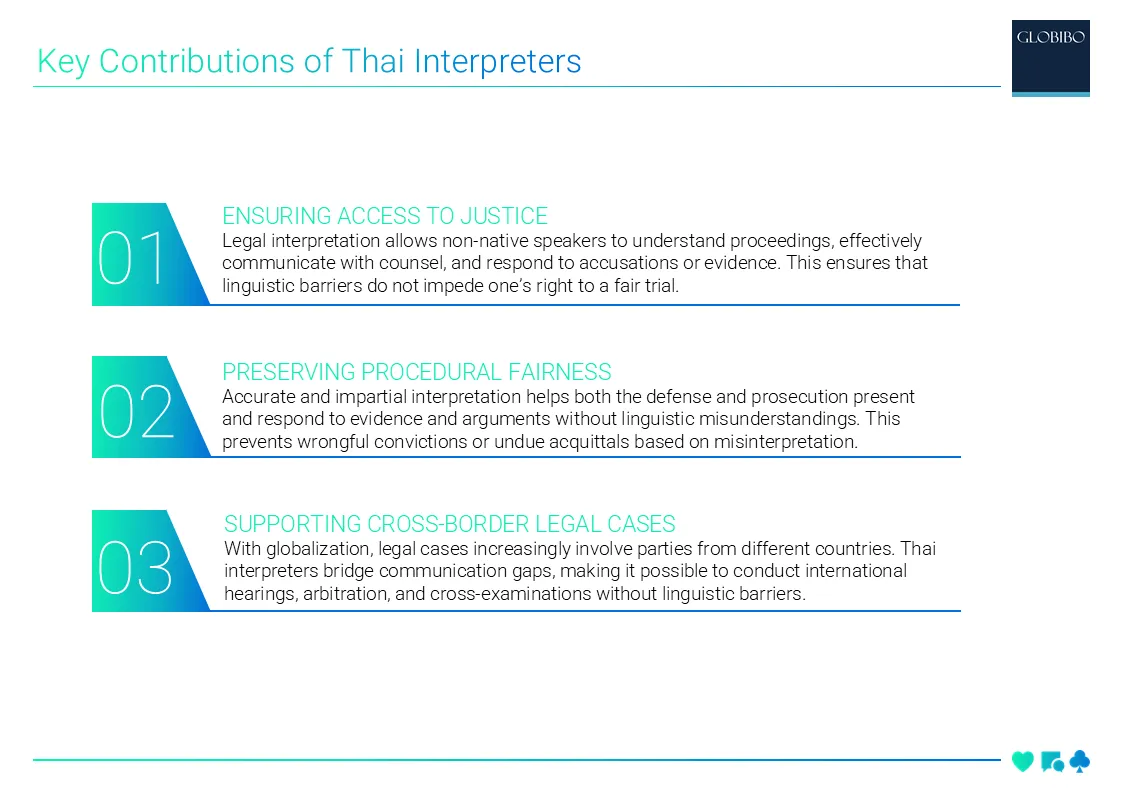
- Ensuring Access to Justice: Legal interpretation allows non-native speakers to understand proceedings, effectively communicate with counsel, and respond to accusations or evidence. This ensures that linguistic barriers do not impede one’s right to a fair trial.
- Preserving Procedural Fairness: Accurate and impartial interpretation helps both the defense and prosecution present and respond to evidence and arguments without linguistic misunderstandings. This prevents wrongful convictions or undue acquittals based on misinterpretation.
- Supporting Cross-Border Legal Cases: With globalization, legal cases increasingly involve parties from different countries. Thai interpreters bridge communication gaps, making it possible to conduct international hearings, arbitration, and cross-examinations without linguistic barriers.
Stages in Legal Processes Where Thai Interpreters Are Crucial
- Pre-Trial Hearings: Interpreters are required during initial investigations and interactions with legal counsel to ensure defendants fully understand the charges and their legal options.
- Court Trials: Accurate interpretation during witness testimony, cross-examinations, and judicial instructions is vital to uphold fairness.
- Sentencing Hearings: Interpreters communicate verdicts and sentencing decisions to ensure the affected parties comprehend the outcome and implications.
- Appeal Proceedings: Assistance during appeals is necessary for defendants seeking to challenge legal decisions, requiring precise communication of complex legal arguments.
- Administrative Procedures: Thai interpreters facilitate the translation of legal documents, procedural instructions, and other administrative communications essential for legal processes.

3. Professionalism and Its Impact on Legal Outcomes
Maintaining high standards of professionalism among Thai interpreters can mean the difference between a fair trial and a miscarriage of justice. The following points illustrate the impact of interpreter professionalism on legal outcomes:
Consequences of Inadequate Interpretation:

- Misinterpretation of Evidence: Small errors in interpretation can distort facts, leading to skewed representations of evidence. For example, misinterpreting the phrase “with intent” as “by accident” could alter the legal understanding of an individual’s actions.
- Violation of Rights: A poorly trained interpreter may fail to convey a defendant’s statement accurately, infringing on their right to be heard and understood. This can lead to appeals or the reversal of verdicts, impacting both the accused and the judicial system.
- Delays and Mistrials: Incorrect interpretations often necessitate case reviews or retrials, causing delays that affect court efficiency and increase costs.
Key Challenges and Solutions for Thai Legal Interpreters
- Certification Gaps:
- Challenge: The absence of universally recognized certification programs for legal interpretation leads to variability in the quality of interpreters.
- Solution: Implementation of standardized legal interpretation certification and mandatory training programs can ensure interpreters meet necessary competency levels.
- Terminological Complexity:
- Challenge: Legal jargon often has no direct equivalent in the Thai language, complicating accurate interpretation.
- Solution: Creating comprehensive legal glossaries and resources for Thai interpreters can aid in mastering technical terminology.
- Emotional and Psychological Strain:
- Challenge: Interpreters often work in high-pressure environments, such as criminal trials involving traumatic testimony. This stress can impact performance and accuracy.
- Solution: Providing psychological support and training to build resilience in handling emotionally taxing situations can improve interpreter well-being and effectiveness.
Click here to learn about How Thai Medical Interpreters Bridge Healthcare Communication Gap.
4. Case Studies Demonstrating the Impact of Professional Thai Interpreters
Case Study 1: The Role of an Experienced Interpreter in Contract Disputes In a notable contract dispute involving an international corporation and a Thai company, a professional Thai interpreter’s skill in conveying complex legal language allowed both parties to fully understand the terms being negotiated. The result was a mutually beneficial settlement that avoided prolonged litigation.
Case Study 2: Consequences of Inadequate Interpretation In a criminal trial involving a non-native Thai speaker, errors made by an inadequately trained interpreter led to confusion over witness statements. This resulted in a successful appeal, with the appellate court citing concerns over procedural fairness due to misinterpretation. This case emphasized the critical need for professional training and standardized qualifications.
5. Recommendations for Improving the Professional Standards of Thai Interpreters
Enhanced Certification Programs: Implementing standardized training and certification for legal interpretation specific to Thai interpreters is essential. These programs should cover legal concepts, terminology, and ethics.
Continuous Professional Development: Regular workshops, mock trials, and advanced training modules focusing on evolving legal language and courtroom technology can keep interpreters up to date.
Ethics and Confidentiality Training: Reinforcing the importance of impartiality, confidentiality, and ethical behavior is crucial for maintaining trust in legal proceedings.
Recommended Training Modules for Thai Legal Interpreters
| Training Module | Key Focus Areas |
| Legal Vocabulary Workshops | Expanding knowledge of specialized legal terminology |
| Mock Courtroom Practice | Simulating real-life court scenarios |
| Ethics and Confidentiality | Reinforcing impartiality and professional integrity |
| Advanced Listening Techniques | Improving active listening and accurate information recall |
| Cultural Sensitivity Sessions | Enhancing understanding of intercultural nuances |
6. The Future of Thai Legal Interpretation
As global interactions continue to expand, the demand for skilled Thai interpreters in legal contexts will only grow. Technological advancements such as AI-assisted interpretation tools may provide supplementary support, but the human element remains irreplaceable, especially in nuanced legal settings. Future development should focus on integrating technology to aid interpreters without compromising the critical thinking and ethical standards required for legal interpretation.
Summary of Thai Interpreters in Legal Settings
The impact of Thai interpreters in legal settings underscores the need for professionalism to ensure fair and accurate communication. Interpreters who are well-trained and uphold ethical standards contribute to maintaining justice and procedural integrity. By addressing challenges such as certification gaps, emotional pressures, and terminological complexities, legal systems can strengthen the quality of interpretation services provided. Continued investment in interpreter training, ethical reinforcement, and professional development will support the equitable treatment of all parties within legal systems and enhance public confidence in judicial outcomes.

Susan has extensive experience in conference interpretation, simultaneous interpretation, and Consecutive Interpretation services, document localization for governmental and legal needs. Her work with embassies and government agencies ensures that documents meet specific regional requirements, making her expertise invaluable for international clients.
Academic References for Thai Interpreters in Legal Settings
- User expectations of interpreters: a qualitative study of three user groups in Thailand; patent litigation, public health, and cultural heritage
- Conflicting views on court interpreting examined through surveys of legal professionals and court interpreters
- [BOOK] Intercultural communication in interpreting: Power and choices
- [PDF] Agency, activity and court interpreting
- Legal interpreting in domestic and international courts: Responsiveness in action
- Community interpreting: Asian language interpreters‘ perspectives
- A need for building an ethical and trusting partnership between police officers and interpreters: Findings from South Korea
- [HTML] Challenges in the provision of healthcare services for migrants: a systematic review through providers’ lens
- Roles, ethics and lawyers’ reactions: An ethnographic study of interpreters‘ role performance in interpreted lawyer-client interviews
- Translating and interpreting in intercultural communication: A study of public service translators and interpreters in Japan