Technology in Korean Interpretation
As globalization continues to accelerate, the demand for effective communication across languages has never been more critical. In this context, interpretation services play a pivotal role, particularly for languages such as Korean, which is spoken by millions worldwide. The evolution of technology has significantly transformed the landscape of Korean interpretation, introducing innovative tools and techniques that enhance the quality, efficiency, and accessibility of interpretation services. This article explores the technological advancements influencing Korean interpretation, highlighting essential tools and techniques, and discussing their implications for the future of the industry.
Understanding Korean Interpretation
Korean interpretation involves translating spoken language in real-time, facilitating communication between individuals who speak different languages. This process is particularly crucial in various domains, including business meetings, international conferences, educational settings, and diplomatic engagements. The main objective is to ensure that messages are conveyed accurately and effectively, minimizing the risk of miscommunication.
Types of Interpretation

- Simultaneous Interpretation: This method allows the interpreter to translate the spoken language in real-time, typically using specialized equipment. It is commonly used in large conferences and events.
- Consecutive Interpretation: In this method, the interpreter listens to the speaker and provides interpretation after the speaker has finished a segment of speech. This approach is often employed in smaller meetings and discussions.
- Whispered Interpretation: Also known as chuchotage, this method involves the interpreter whispering the translation to a small group of listeners. It is typically used in situations where only a few individuals require interpretation.
Click here to learn about The Importance of Korean Interpreters in Business and Diplomacy and Key Skills Every Korean Interpreter Should Master.
The Role of Technology in Korean Interpretation

Technology has dramatically reshaped the interpretation landscape, introducing tools and techniques that enhance the effectiveness of Korean interpretation services. Key areas where technology has made a significant impact include equipment, software, and remote interpretation platforms.
Interpretation Equipment
The right equipment is crucial for ensuring high-quality interpretation. The advancement of technology has led to the development of sophisticated devices that enhance the efficiency and accuracy of interpretation services.
Key Equipment Used in Korean Interpretation
- Interpretation Consoles: These devices allow interpreters to control audio sources, manage multiple channels, and provide a clear audio output to listeners.
- Wireless Headsets: High-quality wireless headsets ensure that both interpreters and audience members can communicate effectively without being hindered by physical connections.
- Microphones: Advanced microphones, including handheld and lapel options, are essential for capturing clear audio from speakers, minimizing background noise.
Software Solutions
In addition to hardware, various software solutions are available to support Korean interpretation. These tools streamline the interpretation process, making it easier for interpreters to manage their work efficiently.
Key Software Solutions
- Translation Management Systems (TMS): These platforms help manage translation projects by providing tools for collaboration, glossary management, and workflow automation. TMS can enhance consistency and accuracy in interpretation.
- Speech Recognition Software: This technology converts spoken language into text in real-time, aiding interpreters in capturing critical information during discussions.
- Remote Interpretation Platforms: With the rise of virtual meetings, remote interpretation platforms enable interpreters to work from various locations while providing real-time interpretation to participants around the globe.
Remote Interpretation Technologies
The COVID-19 pandemic accelerated the adoption of remote interpretation technologies, allowing interpreters to provide services virtually. This shift has changed the dynamics of interpretation, making it more flexible and accessible.
Advantages of Remote Interpretation
- Accessibility: Remote interpretation enables access to high-quality interpretation services regardless of geographical barriers, allowing businesses and organizations to connect with a global audience.
- Cost-Effectiveness: Remote interpretation can reduce costs associated with travel and accommodation for interpreters, making it a more economical option for many organizations.
- Scalability: Remote platforms can accommodate varying audience sizes, from small meetings to large international conferences.
Click here to learn about The Role of Korean Interpreters in Bridging Cultural Differences and How Korean Interpreters Support International Business Negotiations.
Artificial Intelligence and Machine Learning


The integration of artificial intelligence (AI) and machine learning (ML) into interpretation services has introduced new possibilities for enhancing accuracy and efficiency. While human interpreters remain essential, AI-driven technologies can augment the interpretation process.
Applications of AI and ML
- Automated Transcription: AI algorithms can transcribe spoken language into text quickly and accurately, providing interpreters with valuable reference materials.
- Real-Time Translation: AI-powered translation tools can assist interpreters by suggesting translations for specific terms or phrases, thereby reducing the cognitive load during interpretation.
- Data Analysis: Machine learning algorithms can analyze patterns in language use, helping interpreters refine their skills and adapt to diverse linguistic contexts.
The Future of Korean Interpretation
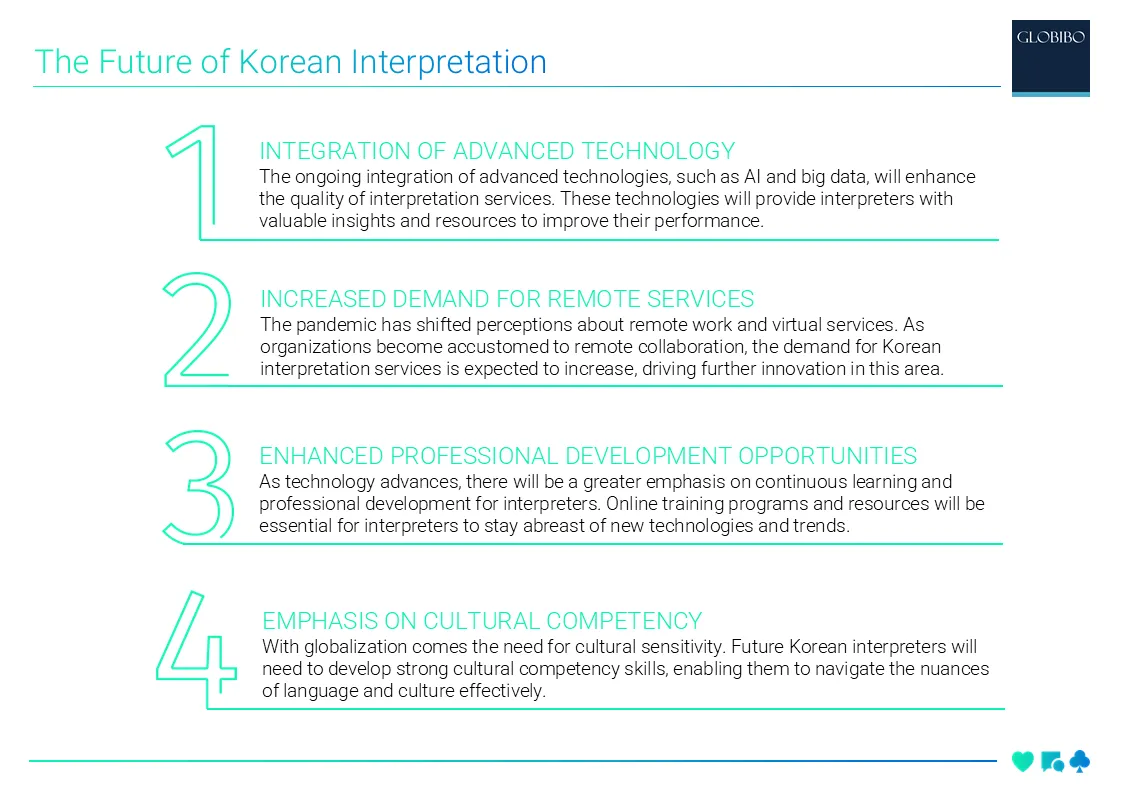
As technology continues to evolve, the future of Korean interpretation will likely be shaped by several key trends and developments.
Integration of Advanced Technology
The ongoing integration of advanced technologies, such as AI and big data, will enhance the quality of interpretation services. These technologies will provide interpreters with valuable insights and resources to improve their performance.
Increased Demand for Remote Services
The pandemic has shifted perceptions about remote work and virtual services. As organizations become accustomed to remote collaboration, the demand for Korean interpretation services is expected to increase, driving further innovation in this area.
Enhanced Professional Development Opportunities
As technology advances, there will be a greater emphasis on continuous learning and professional development for interpreters. Online training programs and resources will be essential for interpreters to stay abreast of new technologies and trends.
Emphasis on Cultural Competency
With globalization comes the need for cultural sensitivity. Future Korean interpreters will need to develop strong cultural competency skills, enabling them to navigate the nuances of language and culture effectively.
Challenges in Adopting Technology
While the advancements in technology present numerous opportunities, several challenges must be addressed to ensure the effective implementation of these tools in Korean interpretation.
Reliability of Technology
- Technical Issues: Reliance on technology can lead to interruptions and disruptions if equipment malfunctions or software fails during an event.
- Connectivity Challenges: Remote interpretation requires stable internet connections, and technical issues can hinder the effectiveness of interpretation services.
Training and Adaptation
- Learning Curve: Interpreters must adapt to new technologies, which may require additional training and time to become proficient.
- Resistance to Change: Some interpreters may resist adopting new technologies, preferring traditional methods of interpretation.
Ethical Considerations
- Confidentiality: The use of digital platforms raises concerns about data privacy and confidentiality, especially when dealing with sensitive information.
- Quality Assurance: Ensuring consistent quality across different platforms and technologies can be challenging.
Key Tools and Technologies in Korean Interpretation
| Tool/Technology | Description | Application |
| Interpretation Consoles | Devices for managing audio sources and channels | Large conferences, events |
| Wireless Headsets | High-quality headsets for clear audio communication | On-site interpretation |
| Translation Management Systems | Platforms for managing translation projects | Document translation, project management |
| Speech Recognition Software | Converts spoken language into text in real-time | Meeting transcriptions |
| Remote Interpretation Platforms | Virtual platforms for providing interpretation remotely | Online meetings, webinars |
Benefits of Technology in Korean Interpretation
- Improved Efficiency:
- Streamlines the interpretation process and reduces turnaround times.
- Automates repetitive tasks, allowing interpreters to focus on quality.
- Enhanced Accuracy:
- AI and machine learning tools improve the precision of interpretations.
- Speech recognition software provides valuable reference materials.
- Increased Accessibility:
- Remote interpretation services break geographical barriers.
- Enables organizations to connect with diverse audiences globally.
- Cost Savings:
- Reduces expenses related to travel and accommodation for interpreters.
- Cost-effective solutions for businesses and organizations.
- Scalability:
- Accommodates a wide range of audience sizes, from small meetings to large events.
- Flexibility to adapt to varying interpretation needs.
Summary of Technology in Korean Interpretation
The integration of technology into Korean interpretation is reshaping the landscape of the industry, enhancing the quality, efficiency, and accessibility of interpretation services. As organizations continue to expand their global reach, the need for skilled Korean interpreters equipped with advanced tools and techniques will only increase.
By leveraging technology, interpreters can provide accurate and effective communication that transcends language barriers, facilitating international collaboration and understanding. However, as the industry evolves, it is crucial to address the ethical challenges associated with technology adoption to ensure that interpretation services continue to meet the high standards demanded by clients and participants.
As we look to the future, the role of technology in Korean interpretation will undoubtedly play a central part in shaping the communication landscape, ensuring that interpreters remain at the forefront of facilitating cross-cultural dialogue and connection.

Susan has extensive experience in conference interpretation, simultaneous interpretation, and Consecutive Interpretation services, document localization for governmental and legal needs. Her work with embassies and government agencies ensures that documents meet specific regional requirements, making her expertise invaluable for international clients.
YouTube Videos on Technology in Korean Interpretation
Academic references for Technology in Korean Interpretation
- [BOOK] English language ideologies in Korea: Interpreting the past and present
- Introduction to Special Section Digital Korean Studies
- [BOOK] Intelligent language tutors: Theory shaping technology
- [HTML] Analyzing Trends in Digital Transformation Korean Social Media Data: A Semantic Network Analysis
- A critique of Korean National Information Strategy: Case of national information infrastructures
- [PDF] Policy Implications for Social Impact of Emerging Technologies: Next Generation Internet Application Services in South Korea
- Constructing the east–west boundary: The contested place of a modern imaging technology in South Korea’s dual medical system
- [BOOK] Introducing interpreting studies
- Korean immigrants’ social practice of heritage language acquisition and maintenance through technology
- Translation tools in multilingual Korean films: changing ideas of translation