Spanish Interpreter Services: Enhancing Communication Across Borders
In today’s interconnected world, the need for effective communication is crucial for the success of businesses, governments, and individuals. As globalization and multicultural societies continue to evolve, the importance of high-quality interpretation services has surged. Among the most widely spoken languages globally, Spanish holds a significant place. Spanish interpreter services have become indispensable for bridging communication gaps and fostering mutual understanding across borders. This article delves into the importance of Spanish interpreter services, the technological advancements driving them, and the key unique selling points (USPs) of high-quality services that stand out in the industry.
The Role of Spanish Interpreter Services in Global Communication
Spanish is one of the most widely spoken languages in the world, with over 460 million native speakers across various continents, especially in Spain, Latin America, and the United States. As business transactions, diplomatic dialogues, and cultural exchanges extend beyond geographical boundaries, the need for accurate and professional language interpretation becomes paramount. Spanish interpreter services are critical for ensuring effective communication between individuals and organizations, avoiding misunderstandings, and promoting seamless interactions in legal, medical, governmental, and corporate settings.
The Importance of Spanish Interpretation Across Sectors
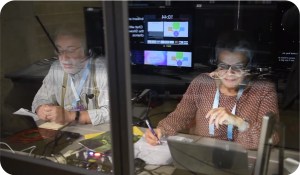
Spanish interpreter services are indispensable in various sectors, and each application requires a high level of expertise and proficiency. By understanding the specific needs of diverse sectors, Spanish interpreters can effectively address the nuances of communication in those areas.
- Business and Corporate Communication:
As businesses increasingly operate in global markets, clear and accurate communication is vital for success. Spanish interpreter services play a central role in international conferences, meetings, webinars, and business negotiations. They ensure that participants from different linguistic backgrounds can contribute to discussions, negotiate effectively, and understand one another’s needs.- For example, a multinational corporation looking to enter a new Spanish-speaking market must rely on professional interpretation services during its negotiations with local partners and government officials. This helps to avoid misunderstandings and ensure that all agreements are clear and accurately conveyed in both languages.
- Legal and Court Services:
Spanish interpreter services are also crucial in the legal sector, where accurate interpretation is essential for ensuring fairness and due process. Whether it’s during trials, depositions, or client consultations, court interpreters provide the necessary translation of legal proceedings, ensuring that Spanish-speaking individuals are properly understood and that their legal rights are upheld.- For example, in a courtroom where a Spanish-speaking defendant is being tried, the court interpreter plays a crucial role in translating the testimony of the defendant, witnesses, and lawyers, ensuring that the trial runs smoothly and fairly.
- Healthcare and Medical Services:
Healthcare providers are increasingly encountering Spanish-speaking patients. Effective communication between healthcare professionals and patients is essential for providing accurate diagnoses, treatments, and care. Medical interpreters ensure that patients understand their medical conditions, treatments, and the care they need.- For example, in a hospital setting, a Spanish interpreter can assist a healthcare provider in explaining a surgical procedure to a Spanish-speaking patient. This ensures the patient understands the risks and benefits of the surgery and gives informed consent.
- Governmental and Public Services:
Government agencies often need to communicate with Spanish-speaking citizens to ensure they have access to public services and legal information. This can include translating government documents, such as legal notices, voter information, and public health announcements. In this case, Spanish interpreters ensure that all members of the public, regardless of language, can participate equally in government processes.- For instance, during a public health crisis like the COVID-19 pandemic, governments may rely on Spanish interpreters to communicate vital health information and safety protocols to Spanish-speaking communities.
Spanish Interpretation: Challenges and Best Practices
While Spanish interpreter services are invaluable, there are several challenges associated with providing accurate and effective translation. These challenges stem from both linguistic and technical factors, and addressing them requires attention to detail, expertise, and careful planning.
Key Challenges in Spanish Interpretation
- Cultural Nuances and Regional Variations:
The Spanish language is diverse and varies significantly across different regions. European Spanish and Latin American Spanish differ in terms of vocabulary, pronunciation, and even grammar. Additionally, within Latin America, various countries or regions have their own dialects and slang. A competent Spanish interpreter must possess a deep understanding of these cultural nuances to deliver accurate interpretations.- For example, a word or phrase that is commonly used in Spain might have an entirely different meaning or connotation in Mexico, which could lead to misunderstandings if not carefully managed. This is why interpreters must be familiar with the dialectal and cultural differences between regions.
- Industry-Specific Terminology:
Many sectors—such as legal, medical, and technical industries—use specialized terminology. Interpreters must be familiar with the specific jargon used in each field to provide accurate translations. This can be a challenge in complex or technical conversations, where nuances are particularly important.- For example, in a medical context, an interpreter may need to translate complex medical terms related to anatomy, pharmacology, or surgery. A lack of familiarity with the terminology could result in incorrect interpretations that may compromise patient safety.
- Real-Time Interpretation:
Providing interpretation in real-time during conferences, meetings, or diplomatic talks is one of the most challenging aspects of interpretation services. Interpreters must listen to the speaker’s message and immediately translate it into the target language without delay. This requires quick thinking, concentration, and expertise to ensure that the message remains accurate, clear, and culturally appropriate.- In the case of simultaneous interpretation during a conference, the interpreter must not only understand the technical content but also convey it in a way that resonates with the audience in real-time. The challenge here is to keep pace with the speaker’s speech without any delay while maintaining the accuracy of the message.
Best Practices for Spanish Interpretation
- Pre-Session Preparation:
Prior to an interpretation assignment, interpreters should receive all relevant materials, such as agendas, documents, or speeches. This allows interpreters to familiarize themselves with the subject matter and terminology, increasing their confidence and accuracy during the session. - Industry-Specific Expertise:
It is essential for interpreters to specialize in certain fields, such as legal, medical, or technical interpretation. This specialization helps interpreters understand and translate the nuanced language specific to each sector. - Continuous Professional Development:
Since the linguistic landscape is always evolving, interpreters must continually update their skills to stay current with new vocabulary, idioms, and best practices. Regular training and certifications are essential to maintaining high-quality standards.
Unique Selling Points (USPs) of Spanish Interpreter Services
When selecting an interpreter service, clients often prioritize companies that offer reliable, accurate, and seamless interpretation. The following USPs define the quality of top-tier Spanish interpreter services:
1. Largest Own Equipment & Linguist Network
A well-established network of interpreters and state-of-the-art equipment is essential for delivering high-quality services. By using a vast network of interpreters, a service provider can cater to a wide range of requirements, ensuring the right expertise for any situation. Whether it’s a corporate meeting, legal proceeding, or medical consultation, these services are equipped to handle diverse needs.
- The benefit of owning the necessary interpretation equipment, such as microphones, headsets, and translation booths, guarantees that the services are well-supported by high-tech tools that enhance the clarity of communication and avoid technical disruptions.
2. Superior Selection, Preparation & Support
For interpreters to provide top-tier services, they must undergo a stringent selection process that includes proficiency assessments, industry-specific knowledge evaluations, and ongoing training. A service provider offering thorough preparation for their interpreters ensures that they are ready for even the most challenging assignments.
- Moreover, continuous support before, during, and after assignments guarantees that clients receive the best possible experience. This includes adjusting language services to meet specific industry needs and providing feedback to improve interpretation accuracy.
3. Advanced Tech for Hybrid Participant & Linguist Operations
The rise of hybrid events—where participants attend both in-person and remotely—has necessitated advanced technological solutions. These systems ensure that interpreters can efficiently cater to both on-site and virtual audiences, ensuring smooth communication. Hybrid systems allow interpreters to provide immediate translations relayed to remote participants through audio streams, subtitles, or video feeds.
- This technology ensures that all participants, regardless of their physical location, can understand and engage with the content in real-time, making hybrid events more accessible and inclusive.
Key Benefits of Spanish Interpreter Services
The strategic importance of Spanish interpreter services extends far beyond mere communication. Here are several key benefits:
- Increased Global Reach:
Spanish-speaking markets account for a significant portion of the global economy. Effective communication with Spanish-speaking clients, customers, and partners enables businesses to expand into new markets and strengthen their global presence. - Enhanced Customer Experience:
Providing Spanish-language interpretation helps businesses cater to the needs of their Spanish-speaking clients. This enhances customer satisfaction and loyalty, improving business outcomes and customer retention. - Legal and Regulatory Compliance:
In legal contexts, accurate interpretation ensures that all parties involved understand the proceedings and the legal implications of their actions. Failure to provide adequate translation can lead to legal challenges, especially in sensitive areas like immigration or criminal law. - Cultural Sensitivity:
Interpreters who are fluent in Spanish and have a deep understanding of the cultures of Spanish-speaking countries ensure that communications are not only accurate but also culturally sensitive. This fosters an environment of respect and understanding.
Click here to learn about Spanish Interpreter vs. Translator.
Types of Spanish Interpreter Services
Given the diversity of Spanish-speaking populations, various types of interpretation services are required. The most common types include:
- Simultaneous Interpretation
This type of interpretation occurs in real-time, where the interpreter translates the speaker’s message almost simultaneously. It is commonly used in large conferences, international meetings, and broadcasts. - Consecutive Interpretation
In this type, the speaker pauses after a few sentences, allowing the interpreter to translate. This method is used in smaller meetings, interviews, and legal proceedings. - Whispered Interpretation (Chuchotage)
The interpreter whispers the translation to a small group of listeners. This form is suitable for small private meetings or diplomatic sessions. - Relay Interpretation
Relay interpretation involves multiple interpreters translating a message into different languages, often used in international conferences with multiple languages involved. - Telephone & Video Remote Interpretation (VRI)
This service is conducted over the phone or through video conferencing, allowing remote interpretation for virtual meetings, healthcare consultations, and legal matters.
Comparison of Interpretation Methods
| Method | Description | Best Use Case | Advantages | Challenges |
| Simultaneous Interpretation | Real-time translation with little to no delay. | Large conferences, international meetings | Immediate translation; no interruptions. | Requires highly skilled interpreters. |
| Consecutive Interpretation | The interpreter waits for the speaker to pause before translating. | Business meetings, interviews, legal hearings | Easier for less experienced interpreters. | Delay between speech and translation. |
| Whispered Interpretation (Chuchotage) | Interpreter whispers the translation to a small group of listeners. | Small private meetings or diplomatic sessions | Discreet and real-time. | Not suitable for large groups. |
| Relay Interpretation | Multiple interpreters work in a chain to translate a message into various languages. | Multinational conferences with many languages | Efficient for multiple languages. | Can be complex and challenging. |
| Telephone & Video Remote Interpretation (VRI) | Interpretation is provided over the phone or through video conferencing. | Healthcare, legal proceedings, virtual meetings | Convenient and cost-effective. | Dependent on technology and connection quality. |
Summary of Spanish Interpreter Services
The importance of Spanish interpreter services cannot be overstated. As the world becomes increasingly globalized, the ability to communicate effectively in multiple languages—particularly Spanish—is key to success in business, diplomacy, and ensuring equitable access to services. The use of the largest equipment and linguist network, superior selection, preparation, and support, along with advanced technology for hybrid operations, are critical for providing high-quality interpretation services. These services help to bridge language barriers and foster more inclusive, effective communication across borders, ultimately paving the way for growth and success in a globalized world.

Susan has extensive experience in conference interpretation, simultaneous interpretation, and Consecutive Interpretation services, document localization for governmental and legal needs. Her work with embassies and government agencies ensures that documents meet specific regional requirements, making her expertise invaluable for international clients.
YouTube Videos on Spanish Interpreter Services
Academic References for Spanish Interpreter Services
- [BOOK] Interpreting and Translating in Public Service Settings
- Cross–border healthcare for all EU residents? Linguistic access in the European Union
- The Importance of Interpreter Training for Minority Languages: An Analytical Overview of the Co-official Languages in Spain
- [HTML] Impact of patient language proficiency and interpreter service use on the quality of psychiatric care: a systematic review
- Physician language ability and cultural competence: an exploratory study of communication with Spanish-speaking patients
- Help or hinder? The Impact of Technology on the Role of Interpreters
- [BOOK] Negotiating the frontier: Translators and intercultures in Hispanic history
- Evolution of public service interpreter training in the US
- [PDF] Relief operations across language barriers: the interpreter factor
- [PDF] Toward Culturally Sensitive Mediation: Intercultural Transcompetence in Spanish Medical Interpreting