Spanish Interpreter: Bridging Language Gaps with Precision
In today’s increasingly globalized world, effective communication is critical across borders, industries, and cultures. With Spanish being one of the most spoken languages in the world, the demand for qualified Spanish interpreters has surged across a wide array of sectors. From international business transactions and medical consultations to courtroom hearings and diplomatic summits, Spanish interpreters play a crucial role in facilitating smooth, precise communication between parties who speak different languages.
This expanded article explores the technical aspects of Spanish interpretation, the tools and technologies employed by professional interpreters, the skills needed to excel in this field, and how advanced services can bridge the language gap with exceptional accuracy. By highlighting key industry applications, we will delve deeper into the significance of Spanish interpreters in critical settings, the unique advantages of a specialized Spanish interpreter service, and how technology is transforming the landscape of interpretation services.
Understanding the Role of a Spanish Interpreter
The Spanish interpreter’s role goes beyond mere word-for-word translation. Interpreters are tasked with the delicate job of ensuring that the essence, tone, and intent of the message are accurately conveyed in real time. Their job requires quick thinking, deep language skills, and the ability to remain neutral while facilitating understanding.
Interpretation involves several modes or techniques depending on the setting and the participants involved. These methods ensure that both linguistic accuracy and the nuances of language are maintained:
1. Simultaneous Interpretation:
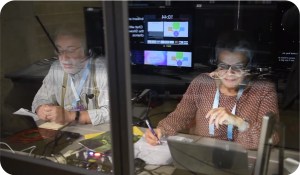
Simultaneous interpretation is commonly used in large conferences, international summits, and webinars. The interpreter listens to the speaker’s words through a headset and translates them into the target language in real time. This form of interpretation demands extraordinary concentration and the ability to process information almost instantly, which is a skill that only experienced interpreters possess. Spanish interpreters require a deep understanding of both the Spanish language and the speaker’s dialect, and the ability to interpret complex terminology on the spot.
2. Consecutive Interpretation:
In consecutive interpretation, the interpreter waits for the speaker to finish a sentence or a short passage before translating it. This method is commonly used in business meetings, legal proceedings, and medical settings. The interpreter must have a good memory to accurately relay the message coherently and fluently after the speaker pauses. The Spanish interpreter must also possess an in-depth understanding of specialized terminology in sectors like law or medicine.
3. Whispered Interpretation (Chuchotage):
Whispered interpretation is a form of simultaneous interpretation but done for only one or two individuals. The interpreter whispers the translation directly into the ear of the listener. This method is commonly used in smaller meetings where only a few participants need interpretation. In such scenarios, the Spanish interpreter must be able to convey the message clearly and with the same level of precision without disrupting the ongoing conversation.
4. Relay Interpretation:
In relay interpretation, the interpreter listens to a speaker in one language, then relays the message through an intermediary language before finally reaching the target language. This method is often used when no direct interpreter is available for certain languages. For example, a Spanish interpreter might interpret from English into Spanish via an intermediary language such as French. While this adds another layer of complexity, it enables communication across languages that might not have direct interpreter availability.
These techniques allow interpreters to navigate different communication settings and ensure that messages are transmitted accurately across linguistic and cultural boundaries.
Core Competencies of a Spanish Interpreter
A professional Spanish interpreter must possess a variety of key skills and competencies to excel in their field. Some of the most critical skills are outlined below:
1. Mastery of the Spanish Language and Target Language:
A thorough understanding of both the Spanish language and the target language(s) is the foundation of any successful interpreter. This includes fluency in speaking, writing, reading, and listening comprehension. For example, a Spanish interpreter may need to interpret from English into Spanish or vice versa. Understanding both languages at an advanced level allows interpreters to avoid misunderstandings and provide accurate translations that capture the essence of what is being said.
2. Cultural Awareness and Sensitivity:
Language and culture are intricately linked. A Spanish interpreter must not only know the vocabulary and grammar of both languages but also be attuned to cultural contexts, idiomatic expressions, and non-verbal cues. For example, a phrase that works in English may not have a direct equivalent in Spanish and might carry different connotations depending on the Spanish-speaking country. A professional Spanish interpreter will understand these nuances and adjust their interpretation accordingly, avoiding cultural faux pas.
3. Active Listening and Focus:
Interpreters must be highly skilled in active listening and focus to ensure that they comprehend the speaker’s message fully before interpreting. This is particularly challenging in simultaneous interpretation, where the interpreter must translate in real time while absorbing complex information. A strong memory is also essential for consecutive interpretation, where the interpreter may have to recall multiple statements before providing the translation.
4. Quick Thinking and Decision-Making:
Interpretation is often a fast-paced activity. Interpreters must quickly process and convert information without pausing or hesitating, all while maintaining accuracy. For instance, during a medical emergency or courtroom hearing, precision is critical, and any delay could disrupt the flow of communication or even jeopardize the success of the meeting or hearing.
5. Neutrality and Professionalism:
One of the fundamental principles of interpreting is the requirement for neutrality. A professional Spanish interpreter must not allow their personal opinions, biases, or emotions to influence the interpretation. Their job is to be an unbiased conduit, accurately conveying the speaker’s message without inserting their own viewpoint or modifying the content.
The Technological Revolution in Interpretation
The landscape of Spanish interpretation services has evolved significantly with the advent of new technologies. The integration of digital tools and hybrid systems has not only enhanced the accuracy of interpretation but also made it more accessible and efficient for a variety of industries. Let’s explore some of the ways technology has transformed interpretation services:
1. Hybrid Interpretation Systems:
Hybrid interpretation systems allow interpreters to participate in both in-person and remote events. With the rise of virtual and hybrid meetings, conferences, and webinars, the demand for remote interpretation services has soared. Using platforms that combine live audio streaming and real-time translation, interpreters can join meetings from anywhere in the world and provide accurate interpretation to remote participants.
These systems are particularly useful for multinational companies, where meetings involve participants from various countries. Hybrid systems provide a flexible, cost-effective solution for companies looking to ensure that all participants can communicate effectively, regardless of where they are located.
2. Advanced Interpretation Equipment:
High-quality interpretation equipment plays a vital role in ensuring that interpreters can perform their job efficiently. Modern interpreters use sophisticated tools such as:
- Headsets and microphones: These allow interpreters to listen and speak clearly while providing real-time translations to large audiences.
- Digital Interpretation Platforms: Online platforms and software allow interpreters to manage their work remotely, seamlessly connecting with participants during virtual meetings.
- Audio-Visual Integration: These systems ensure that the interpretation process is synchronized with video presentations, slides, and other multimedia content. This integration makes it easier for interpreters to interpret both verbal and non-verbal cues.
3. Artificial Intelligence (AI) and Machine Learning:
AI-powered translation tools and machine learning systems are beginning to assist interpreters in real-time translation. While AI cannot yet replace the nuance, tone, and context provided by human interpreters, it serves as a valuable support tool. For example, AI can assist in providing initial translations that the interpreter can then refine, saving time and enhancing accuracy.
In situations where AI-driven translation is applicable, it can be particularly useful in interpreting large amounts of data or standardized terminology. AI is increasingly being incorporated into both automated captioning and transcription services, which is helpful in settings like corporate meetings or webinars where key takeaways need to be shared instantly.
The Unique Advantages of Professional Spanish Interpreter Services
Engaging a professional Spanish interpreter service offers a range of benefits that go beyond simple translation. A high-quality interpreter service provides an array of unique advantages, including:
| Advantage | Description |
| Largest Own Equipment & Linguist Network | A professional Spanish interpreter service can provide access to an extensive network of linguists across various specialties and industries. |
| Superior Selection, Preparation & Support | Thorough interpreter selection processes, continuous training, and comprehensive support ensure the highest quality of interpretation for any event. |
| Advanced Tech for Hybrid Participant & Linguists Operation | Integration of the latest technology for virtual and hybrid meetings enables interpreters to seamlessly participate in events from anywhere globally. |
1. Largest Own Equipment & Linguist Network
Having access to the largest network of linguists and state-of-the-art equipment means that a professional Spanish interpreter service can cater to any event, regardless of its complexity or size. Whether it’s a high-stakes legal hearing or an international business conference, a reliable interpreter service can provide skilled interpreters who are familiar with the specific subject matter. The extensive network also means that even under tight deadlines or specialized needs, an interpreter can be sourced quickly.
2. Superior Selection, Preparation & Support
A reputable interpreter service conducts thorough evaluations and preparation for their interpreters, ensuring that only the most qualified professionals are chosen for each assignment. They select interpreters who not only speak the languages fluently but who also have a deep understanding of the specific industry or subject matter involved. Furthermore, interpreters are provided with adequate support, including briefings on terminology, the speakers’ backgrounds, and event context, which allows them to perform optimally.
3. Advanced Tech for Hybrid Participant & Linguists Operation
As business, legal, and healthcare operations increasingly move to hybrid and virtual models, having a service that provides both in-person and remote interpretation is invaluable. Advanced technology systems ensure that both hybrid participants and interpreters can communicate seamlessly, regardless of where they are. For Spanish interpreters, this means that they can work in a virtual environment while maintaining the same level of accuracy and professionalism they would in an in-person setting.
Industry Applications of Spanish Interpretation Services
Spanish interpreters are needed across various industries, each with unique challenges and requirements for specialized knowledge. Some key sectors where Spanish interpreters are essential include:
1. Legal and Judicial Settings:
In legal contexts, accuracy and precision are paramount. Spanish interpreters are often required in courtrooms, legal proceedings, and arbitration. They ensure that testimonies, evidence, and legal arguments are interpreted accurately and impartially, which can directly impact the outcome of a case. Common applications include:
- Court hearings (criminal, civil, family law)
- Depositions and interviews
- Document translation (contracts, agreements)
- Immigration and asylum hearings
2. Healthcare and Medical Services:
Spanish interpreters are critical in healthcare settings where miscommunication can have life-threatening consequences. From hospital visits to consultations with specialists, interpreters help ensure that patients and medical staff communicate effectively, providing clear explanations of medical diagnoses, treatment options, and instructions. Examples include:
- Medical appointments and consultations
- Hospital visits and emergency rooms
- Patient education seminars
- Medical research and trials
3. Corporate and Business Settings:
With the rise of international trade, Spanish interpreters are in high demand in the corporate sector. Interpreters facilitate negotiations, corporate presentations, and cross-border communication for multinational businesses. Accurate interpretation ensures that business deals and partnerships proceed smoothly. Common uses include:
- Business meetings and negotiations
- Financial presentations and reports
- Employee training programs
- International trade agreements
4. Government and Diplomacy:
Spanish interpreters are essential in facilitating communication between different governments and international organizations. Diplomatic meetings and summits require interpreters to provide real-time translations during sensitive discussions. Examples include:
- International summits and peace negotiations
- Policy discussions and diplomatic talks
- Cross-border cooperation initiatives
- Multinational treaty discussions
Summary of Spanish Interpreter
In an interconnected world, Spanish interpreters are crucial to ensuring that communication flows smoothly across different linguistic and cultural contexts. With the rise of advanced technology, large-scale linguistic networks, and professional preparation, interpreter services are becoming more effective, accessible, and reliable. Whether in a courtroom, healthcare setting, business meeting, or international summit, the expertise of a Spanish interpreter ensures that messages are conveyed accurately, facilitating mutual understanding and cooperation.
As the world becomes increasingly globalized, the need for skilled, professional Spanish interpreters will continue to grow. The combination of technological advancements, industry-specific knowledge, and an expansive linguist network positions Spanish interpreter services as an invaluable asset in breaking down language barriers and ensuring effective communication. Through their work, Spanish interpreters play a vital role in promoting international dialogue and understanding, making them indispensable to the modern world.

Susan has extensive experience in conference interpretation, simultaneous interpretation, and Consecutive Interpretation services, document localization for governmental and legal needs. Her work with embassies and government agencies ensures that documents meet specific regional requirements, making her expertise invaluable for international clients.
YouTube Videos on Spanish Interpreter
Academic References for Spanish Interpreter
- A survey of language barriers from the perspective of pediatric oncologists, interpreters, and parents
- 4. interpreters, interpreting, and the study of bilingualism
- NEW APPROACHES IN INTERPRETER TRAINING: ENHANCING COMPETENCE AND ADAPTATION.
- [PDF] Learning sentiment lexicons in spanish.
- [PDF] Non-standard spanish in the united states and translation norm behavior: a study of hospital and court interpreters
- [PDF] Learning sentiment lexicons in spanish.
- Artificial Intelligence in Healthcare Translation: A Contemporary Systematic Review
- Eliminating language barriers for non-English-speaking patients
- Advancing health equity: evaluating AI translations of kidney donor information for Spanish speakers
- Omnipedia: bridging the wikipedia language gap