
Why Interpreting Booths are essential for Multilingual Conferences
In today’s globalized world, multilingual conferences have become a cornerstone of international collaboration. These events bring together diverse audiences, each with their own languages and cultural contexts. The success of such gatherings hinges on clear and effective communication. This is where interpreting booths become indispensable.
An interpreting booth is more than just a physical enclosure for interpreters. It’s a key facilitator of seamless communication, ensuring that all participants can engage fully, regardless of language barriers. In this article, we’ll explore why interpreting booths are essential for multilingual conferences, examining their features, benefits, and role in ensuring the success of these events.
The role of interpreting booths in Multilingual Conferences
Multilingual conferences often involve complex discussions, technical terminology, and cultural nuances. Interpreting booths provide interpreters with the environment and tools they need to deliver precise translations in real time. Without them, ensuring effective communication across languages would be nearly impossible.
Key functions of interpreting booths include:

- Enabling real-time interpretation: Booths allow interpreters to translate speech simultaneously, ensuring participants don’t miss key points.
- Maintaining focus and accuracy: Soundproofing prevents distractions, helping interpreters work with maximum concentration.
- Facilitating inclusivity: Interpreting booths ensure that all attendees, regardless of language, can actively participate in the event.
By integrating interpreting booths into multilingual conferences, organizers can guarantee that every voice is heard and understood.
Benefits of using Interpreting Booths in Multilingual Conferences

The advantages of interpreting booths extend beyond providing a space for interpreters. They contribute to the overall success and professionalism of the event.
1. Enhanced communication clarity
Interpreting booths are equipped with soundproofing and advanced audio systems, ensuring that interpreters can hear the speaker clearly and deliver accurate translations.
How this benefits conferences:
- Eliminates background noise that could interfere with interpretation.
- Ensures participants receive clear and precise translations.
- Reduces the risk of miscommunication, which is especially critical in high-stakes discussions.
2. Improved interpreter performance
Interpretation booths are a demanding task requiring intense focus and quick thinking. Interpreting booths provide interpreters with a controlled environment optimized for performance.
Features that support interpreters include:
- Comfortable seating and ergonomic workstations.
- Access to monitors and visual aids for following presentations.
- Proper ventilation and climate control to ensure comfort during long sessions.
By prioritizing interpreter well-being, booths ensure consistent and high-quality translations throughout the event.
3. Professionalism and credibility
Multilingual conferences are often attended by international delegations, corporate leaders, or subject matter experts. The presence of interpreting booths signals a commitment to professionalism and inclusivity.
Why this matters:
- Enhances the event’s reputation by demonstrating attention to detail.
- Shows respect for diverse linguistic and cultural backgrounds.
- Reflects positively on the organizers’ ability to cater to global audiences.
4. Inclusivity and accessibility
Interpreting booths enable conferences to be truly inclusive, allowing attendees from different linguistic backgrounds to engage without barriers.
Impact on the audience:
- Ensures equal participation, regardless of language proficiency.
- Fosters collaboration by breaking down communication barriers.
- Creates a welcoming environment where all attendees feel valued.
Features of interpreting booths that make them essential

To fully appreciate the importance of interpreting booths, it’s important to understand the features that set them apart.
1. Soundproofing for focused interpretation
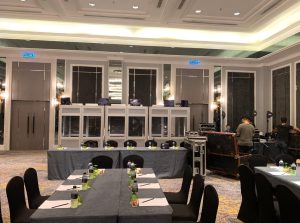 One of the most critical features of an interpreting booth is its soundproofing. This ensures that interpreters are not distracted by external noises and can focus entirely on their work.
How soundproofing enhances conferences:
- Prevents ambient noise from interfering with interpretations.
- Maintains a quiet environment for interpreters to concentrate.
- Improves the clarity of audio output for participants.
2. Integration with audiovisual systems
Modern interpreting booths are equipped to seamlessly connect with the conference’s AV systems, ensuring smooth and efficient communication.
Key AV features include:
- High-quality microphones and headsets for clear audio input and output.
- Monitors for following presentations, slides, or video content.
- Compatibility with translation consoles for accurate transmission.
3. Ergonomic and spacious design
Interpreter comfort is essential for maintaining high performance during long events. Booths are designed with ergonomics in mind to support interpreters’ physical and mental well-being.
Design elements include:
- Adjustable seating and work surfaces.
- Spacious interiors to accommodate multiple interpreters.
- Adequate lighting and ventilation for a pleasant working environment.
4. Portability and modularity
For conferences held in temporary venues, portable interpreting booths offer a flexible solution. They can be easily transported, assembled, and customized to suit different event layouts.
Advantages of portable booths:
- Quick and easy installation.
- Adaptability to varying room sizes and configurations.
- Cost-effectiveness for one-time or traveling events.
Compliance with international standards
Interpreting booths used in multilingual conferences often comply with strict international standards to ensure quality and consistency.
Relevant standards include:
- ISO 4043: Mobile booths for simultaneous interpreting.
- ISO 2603: Permanent interpreting booth requirements.
- ISO 20108: Guidelines for sound and image quality.
Compliance with these standards ensures booths meet the highest industry benchmarks for performance and reliability.
Challenges in Multilingual Conferences and how Interpreting Booths address them
Organizing multilingual conferences presents unique challenges, many of which interpreting booths are specifically designed to solve.
1. Noise & distractions
Large events are often accompanied by significant background noise, making it difficult for interpreters to concentrate.
Solution:
Soundproof interpreting booths eliminate ambient noise, allowing interpreters to focus fully on the speaker’s message.
2. Complex technical setups
Multilingual conferences often involve a range of technical requirements, from AV integration to real-time translation systems.
Solution:
Interpreting booths are equipped with features that simplify these setups, including connectivity ports and compatibility with advanced AV equipment.
3. Fatigue and interpreter well-being
Simultaneous interpretation is mentally and physically taxing. Without proper facilities, interpreters may experience fatigue, affecting their performance.
Solution:
Ergonomically designed interpreting booths provide comfort and support, ensuring interpreters remain alert and effective throughout the event.
Best practices for using interpreting booths in multilingual conferences

To maximize the benefits of interpreting booths, organizers should follow these best practices:
- Early planning:
Identify the number and type of interpreting booths needed during the initial planning stages. - Strategic placement:
Position booths near the stage or speaker to ensure interpreters have a clear line of sight and access to non-verbal cues. - Equipment testing:
Conduct thorough tests of all AV systems and booth equipment before the event to avoid technical issues. - Collaboration with interpreters:
Engage interpreters early to understand their preferences and requirements, ensuring the booths are tailored to their needs. - Provide technical support:
Assign on-site technicians to assist with booth setup, troubleshooting, and maintenance during the event.
Future trends in Interpreting Booths for Multilingual Conferences
As technology continues to advance, interpreting booths are evolving to meet the changing needs of multilingual conferences.
Emerging trends include:
- AI-enhanced booths: Incorporating AI tools for real-time speech recognition and terminology support.
- Hybrid event integration: Features designed for seamless interpretation in both in-person and virtual settings.
- Sustainable materials: Eco-friendly booths made from recyclable or renewable resources.
- Enhanced user interfaces: Intuitive controls for interpreters to manage audio and visual settings effortlessly.
These innovations promise to further enhance the role of interpreting booths in facilitating effective communication.
Summary of Interpreting Booths for Multilingual Conferences
The importance of interpreting booths in multilingual conferences cannot be overstated. They are the backbone of seamless communication, providing interpreters with the tools and environment needed to deliver accurate translations.
From soundproofing and ergonomic designs to AV integration and compliance with international standards, interpreting booths enhance both interpreter performance and participant experience. By investing in high-quality booths and following best practices, organizers can ensure the success of their multilingual events, fostering collaboration and understanding among global audiences.
Academic References for Interpreting Booths for Multilingual Conferences
- https://www.torrossa.com/gs/resourceProxy?an=5000997&publisher=FZ4850#page=77
- https://www.openstarts.units.it/entities/publication/2d1be3ab-aa06-428b-9301-fe5a69314805
- https://www.jbe-platform.com/docserver/fulltext/9789027249456.pdf?expires=1699532863&id=id&accname=jbid113972&checksum=56C5CE787B96663E5A21A9904422EB6C#page=226
- https://www.taylorfrancis.com/books/mono/10.4324/9781315760322/conference-interpreting-explained-roderick-jones-anthony-pym
- https://www2.uibk.ac.at/downloads/trans/publik/fluctuat.pdf#page=136
- https://eric.ed.gov/?id=ED246696
- https://pdfs.semanticscholar.org/1045/7246d2bf619ebd7b4d4adca1376f8cc1b524.pdf
- https://books.google.com/books?hl=en&lr=&id=HKAJcgdxfdsC&oi=fnd&pg=PA79&dq=Why+Interpreting+Booths+Are+Essential+for+Multilingual+Conferences&ots=RfTXxRCPCe&sig=BzHWAR6Fc-O_362JiDvGAB9N6c4
- https://books.google.com/books?hl=en&lr=&id=k_cqEAAAQBAJ&oi=fnd&pg=PA226&dq=Why+Interpreting+Booths+Are+Essential+for+Multilingual+Conferences&ots=uQUWriMwyM&sig=aQhyLexK9KnWBXjrCdinx02bq0E
- https://otik.uk.zcu.cz/handle/11025/19200