


Setting Up Conference Interpretation Equipment
The success of global conferences heavily relies on the effective communication between participants speaking different languages. Conference interpretation plays a vital role in ensuring that ideas, discussions, and information flow seamlessly across language barriers. The proper setup of conference interpretation equipment is essential to facilitate accurate and uninterrupted interpreting services. In this article, we will delve into the best practices for setting up conference interpretation equipment, focusing on technical aspects, configurations, testing protocols, and equipment management.
We will also provide two structured lists detailing essential pre-event and post-event activities, along with a table outlining critical technical considerations. This guide will help conference organizers ensure smooth, high-quality interpretation services for events of any scale.
Key Components of Conference Interpretation Systems
 Conference interpreting systems require several essential components working together to ensure clear, real-time communication between participants. A typical interpretation setup consists of:
- Interpreter Booths: These soundproofed cabins allow interpreters to focus without interference from external noise.
- Interpreter Console: A device through which interpreters can control incoming and outgoing audio, select channels, and adjust volumes.
- Microphones and Headsets: Interpreters use these to hear the speaker’s voice and to speak the translated message.
- Transmission System: Technologies like infrared, FM, or digital transmission systems broadcast the interpreter’s feed to the audience.
- Wireless Receivers and Headsets: These are distributed to the audience, allowing them to listen to the interpreted audio in their preferred language.
The success of the interpretation relies heavily on the proper configuration of this equipment and ensuring that the technical setup matches the event’s requirements.
Learn here Role of a Conference Interpreter.
Common Conference Interpretation Modes
There are two primary modes of interpretation commonly used in conferences:
- Simultaneous Interpretation: The interpreter listens to the speaker and translates simultaneously. This requires soundproof booths and the interpreter delivering the translation in near real-time. It is ideal for large, formal conferences with international participants.
- Consecutive Interpretation: The interpreter listens to a portion of the speech, waits for the speaker to pause, and then translates. This mode requires less equipment but takes longer. It is typically used in smaller meetings or one-on-one discussions.
Best Practices for Pre-Event Planning
The foundation of a successful conference interpreter setup is laid during the pre-event planning phase. This stage involves assessing equipment needs, conducting technical venue surveys, and organizing interpreters and technical support teams.
1. Determining Equipment Requirements
The following considerations are crucial for determining what equipment will be needed for the event:
- Language Pairs: Each language pair (source and target languages) requires a minimum of one interpreter, their equipment (booth, console, headset, etc.), and a transmission channel. More language pairs increase the complexity of the system.
- Audience Size and Language Diversity: The number of participants listening to interpreted languages determines how many wireless receivers and headsets you need. A multilingual audience will require receivers that support multiple language channels.
- Venue Size and Layout: Larger venues may necessitate more powerful transmission systems, as well as carefully placed equipment to prevent signal dead spots or interference. Infrared systems are ideal for confined areas, while FM systems cover larger spaces.
- Remote Interpretation: If remote interpretation is part of the event (interpreters working remotely), ensure that high-quality video conferencing platforms are integrated with the interpretation system, supported by reliable high-speed internet connections.
2. Conducting a Technical Survey of the Venue
A thorough technical survey of the venue must be performed well in advance of the event. The following factors should be carefully evaluated:
- Acoustics: Ensure the venue supports clear sound transmission without excessive echo, reverberation, or noise. Poor acoustics can disrupt interpretation quality, making it difficult for interpreters to hear the speaker or for the audience to hear the interpreter.
- Signal Interference: Identify any sources of potential signal interference, such as Wi-Fi routers, cell phones, or other wireless devices. Testing and frequency allocation must be performed to avoid interference with the interpretation transmission system.
- Power and Cable Management: Ensure that the venue has enough power outlets and suitable cable routes to avoid accidental disconnections. Use redundant power supplies, such as UPS (uninterrupted power supply) systems, to avoid equipment failure due to power outages.
Read more about Key Skills Every Professional Conference Interpreter.
Key Pre-Event Setup Activities
| Activity | Description |
| Technical Survey | Evaluate venue acoustics, lighting, and layout. Identify sources of interference. |
| Power & Signal Infrastructure Setup | Ensure ample power outlets, clear cable routing, and redundant systems for uninterrupted operation. |
| Receiver Distribution Strategy | Plan how to distribute wireless receivers and headsets efficiently to attendees. |
| Interpreter Booth Placement | Position booths with clear line of sight to speakers, and test visual aids such as video feeds if necessary. |
| Equipment Testing | Conduct a complete equipment test, including interpreters’ consoles, wireless receivers, and transmission systems. |
| Interpreters Briefing | Provide interpreters with all event details, and test the booth and equipment with them prior to the event. |
Pre-Event Technical Considerations
| Consideration | Key Factor | Notes |
| Transmission System | Type of system (Infrared, FM, Digital) | Larger venues may need FM or digital systems |
| Interpreter Booths | Booths should be soundproofed | Ensure good ventilation and visibility |
| Audio Feed Quality | Check audio clarity from speaker | Avoid distortion, delays, or echo |
| Audience Size | More participants need more receivers | Prepare multi-channel receivers for different languages |
| Backup Systems | Power and receiver backups | Ensure redundancy in case of failure |
Interpreter Booth Setup
Interpreter booths serve as the workstations for the interpreters and are a critical component of the overall system. The booths must be strategically placed to give interpreters a clear view of the speakers and any presentation materials. Best practices for setting up interpreter booths include:
1. Booth Placement
Interpreter booths should be positioned at the back of the room or in an elevated position where interpreters can see the stage or screen without obstruction. If a clear line of sight is not possible, provide interpreters with high-quality video feeds.
- Booth Standards: Adhere to ISO 2603 standards for permanent booths and ISO 4043 standards for mobile booths. These standards ensure that the booths are soundproof, well-ventilated, and large enough to accommodate interpreters comfortably.
- Accessibility: Make sure booths are accessible to all interpreters, including those with mobility issues.
2. Audio Equipment Setup Inside the Booth
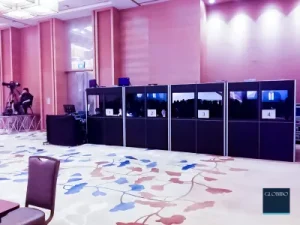 Each interpreter booth will have a console through which interpreters receive the audio from the floor (speaker) and transmit their interpretation to the audience. Proper setup includes:
- Interpreter Console Configuration: Set the console to the correct input/output channels, allowing interpreters to easily switch between languages. Ensure that relay interpretation is possible if required.
- Headset and Microphone Setup: Test all headsets and microphones to ensure interpreters can clearly hear the speaker and transmit their interpretation with no audio lag or distortion.
- Volume Control and Audio Testing: Ensure that interpreters can adjust the volume of the source audio and their output audio independently. Perform a test with interpreters in advance to verify comfort and clarity.
Setting Up Wireless Transmission Systems
1. Choosing the Right Transmission System
The type of transmission system you select depends on the size of the venue and the desired audio quality. Below are the three main types of transmission systems:
- Infrared (IR): Ideal for secure, localized environments where you need to limit signal transmission within a confined space. Infrared systems require direct line of sight between the transmitter and receivers, making them suitable for indoor conferences where the room layout allows for it.
- FM Radio: FM systems are preferred for larger venues or outdoor events, as they can cover greater distances without requiring line of sight. However, FM systems are more susceptible to interference from other wireless devices, so care should be taken to allocate frequencies.
- Digital Systems: Digital transmission systems offer high-fidelity audio and are less prone to interference. They are ideal for large-scale events where signal integrity and security are paramount.
2. Testing Wireless Receivers and Headsets
Proper testing of wireless receivers and headsets is crucial to ensure that participants receive the interpreted audio clearly. Key aspects of testing include:
- Signal Coverage: Test the range of the transmission system and ensure there are no dead spots in the venue where participants might lose the signal.
- Channel Switching: For multilingual events, test how easily participants can switch between language channels on their receivers.
- Audio Clarity: Check for any distortions, echo, or lag in the audio feed. Adjust the frequency or transmission settings if necessary.
How to Choose the Right Conference Interpreter for Your Event.
Best Practices for Wireless System Setup
| Activity | Description |
| Signal Interference Check | Test for potential interference from other wireless devices in the venue |
| Frequency Allocation | Assign specific frequencies to different language channels to avoid overlap |
| Multi-Channel Receiver Testing | Ensure receivers can switch between language channels without audio delays |
| Audio Quality Tests | Perform sound tests to check for clarity, volume consistency, and distortion |
| Spare Equipment on Hand | Keep spare receivers and headsets available to quickly replace faulty units |
Event-Day Monitoring and Support
1. On-Site Technical Support
Having a technical team available on-site during the event is essential for monitoring equipment and troubleshooting any issues. This team should:
- Monitor Transmission Systems: Continuously monitor the wireless transmission system for any interference or signal drops.
- Assist Attendees: Provide support for participants facing issues with their wireless receivers or headsets.
- Troubleshoot Interpreter Consoles: If interpreters report problems with their equipment, the technical team should be able to resolve these issues quickly.
2. Audio Feedback Management
Ensuring that interpreters and attendees do not experience audio feedback or disruptions is crucial for smooth operations. Technical teams should:
- Monitor Audio Levels: Continuously check audio levels to prevent distortion or background noise from impacting the interpretation.
- Ensure Interpreter Comfort: Provide interpreters with water, comfortable seating, and a quiet environment to maintain focus during the event.
Learn here about The Role of Technology in Modern Conference Interpreting.
Post-Event Equipment Handling and Feedback
After the event, there are several important steps to ensure that all equipment is properly handled and future events can benefit from the lessons learned:
1. Equipment Breakdown and Maintenance
- Proper Dismantling: Follow proper procedures for dismantling equipment to avoid damage. Each piece of equipment, from booths to receivers, should be carefully packed and stored for future use.
- Equipment Testing and Maintenance: Before storing, test each component for damage or malfunction. Headsets, receivers, and microphones should be cleaned and inspected for wear and tear.
2. Post-Event Feedback and Evaluation
Gather feedback from interpreters, technical staff, and attendees to identify any issues that arose during the event. This feedback can help improve the setup for future conferences.
- Interpreter Feedback: Ask interpreters about their experience with the equipment, booth setup, and audio quality. Their input is valuable for making adjustments in future setups.
- Technical Staff Debriefing: Conduct a debrief with the technical staff to document any issues they encountered and suggest improvements for the next event.
Summary of Conference Interpretation Equipment
Setting up conference interpretation equipment involves meticulous planning, careful technical setup, and continuous monitoring throughout the event. By adhering to these best practices and ensuring that every component is tested and optimized, you can provide a seamless experience for both interpreters and participants.
Conference interpretation equipment requires constant coordination between technical teams and interpreters to ensure the highest quality of service. By following the pre-event planning strategies, technical setup protocols, and post-event maintenance activities outlined in this guide, event organizers can create an environment that fosters effective multilingual challenges in international conferences and communication in any setting.
YouTube Videos on Conference Interpretation Equipment
Academic References for Conference Interpretation Equipment
- Computer-assisted preparation in conference interpreting
- [PDF] Present? Remote? Remotely present! New technological approaches to remote simultaneous conference interpreting
- Selection and training of conference interpreters
- A review of conference interpretation: Practice and training
- Technology and interpreting
- [BOOK] Information and communication technologies in conference interpreting
- [BOOK] Experience and expertise in conference interpreting: an investigation of Swedish conference interpreters
- Interpreting in the 21st century: challenges and opportunities: selected papers from the 1st Forlì Conference on Interpreting Studies, 9-11 November 2000
- Terminology preparation for simultaneous interpreters
- [HTML] An international effort towards developing standards for best practices in analysis, interpretation and reporting of clinical genome sequencing results in the …

Susan has extensive experience in conference interpretation, simultaneous interpretation services, document localization for governmental and legal needs. Her work with embassies and government agencies ensures that documents meet specific regional requirements, making her expertise invaluable for international clients.


