The Impact of Remote Interpretation on Global Business Communication
In an era where businesses operate on a global scale, effective communication across languages and cultures has become paramount. Remote interpretation has emerged as a critical solution, allowing organizations to navigate linguistic barriers efficiently. This article reviews the nuances of remote interpretation, examining its benefits, challenges, and best practices for integration within the framework of global business communication.
Understanding Remote Interpretation
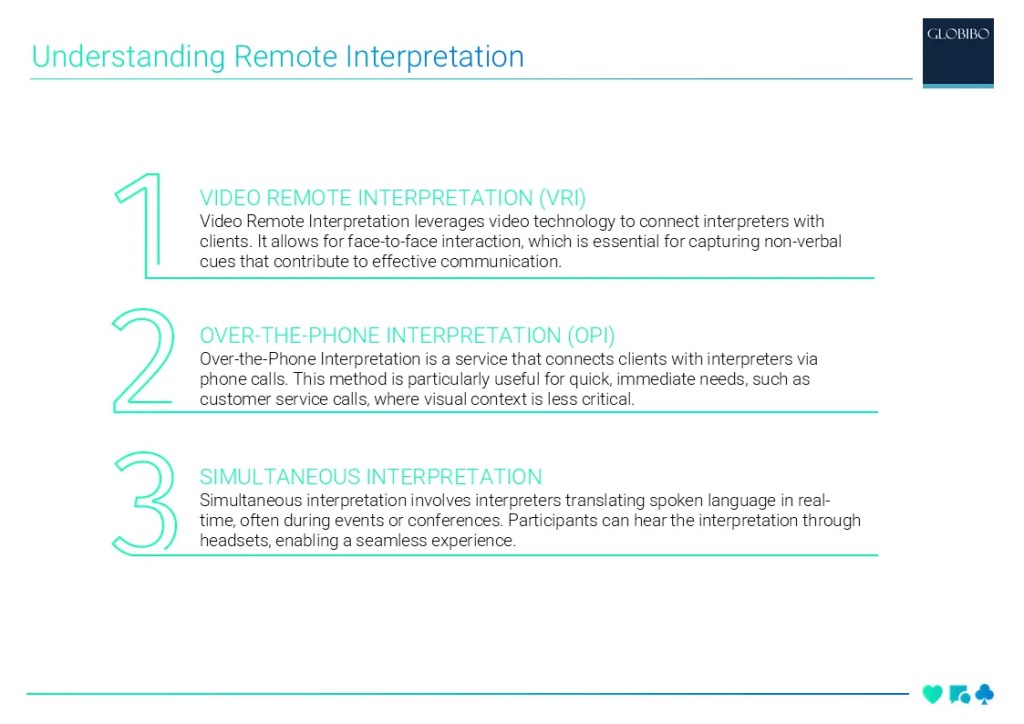
Remote interpretation refers to the provision of interpretation services through digital platforms, enabling real-time communication between individuals or groups who speak different languages. This service is pivotal in contexts such as international conferences, webinars, business negotiations, and customer support. The two primary forms of remote interpretation include:
1. Video Remote Interpretation (VRI)
Video remote interpretation leverages video technology to connect interpreters with clients. It allows for face-to-face interaction, which is essential for capturing nonverbal cues that contribute to effective communication.
2. Over-the-Phone Interpretation (OPI)
Over-the-phone interpretation is a service that connects clients with interpreters via phone calls. This method is particularly useful for quick, immediate needs, such as customer service calls, where visual context is less critical.
3. Simultaneous Interpretation
Simultaneous interpretation involves interpreters translating spoken language in real-time, often during events or conferences. Participants can hear the interpretation through headsets, enabling a seamless experience.
Key Features of Remote Interpretation
| Feature | Description |
| Accessibility | Services are available anytime and anywhere, overcoming geographical barriers. |
| Cost-Effectiveness | Reduces travel expenses and venue costs associated with in-person interpretation. |
| Scalability | Easily accommodates varying audience sizes, from small meetings to large conferences. |
| Technology Integration | Seamlessly integrates with various digital communication platforms (e.g., Zoom, Teams). |
Benefits of Remote Interpretation

1. Enhanced Communication and Collaboration
Remote interpretation fosters clearer communication and greater collaboration between global stakeholders. The ability to engage with multilingual audiences without delay is a game-changer for businesses.
- Clarity in Messaging: By utilizing skilled interpreters, organizations can ensure their messages are conveyed accurately, reducing the risk of miscommunication during critical negotiations or presentations.
- Cultural Sensitivity: The cultural knowledge that interpreters often possess enhances communication by ensuring messages resonate appropriately across cultural contexts.
2. Cost Efficiency
The financial implications of implementing remote interpretation services are significant, especially for companies involved in international dealings.
- Reduced Travel Costs: Remote interpretation eliminates the need for interpreters to travel, thereby significantly reducing costs related to transportation, lodging, and meals.
- Lower Venue Expenses: By removing the requirement for physical meeting spaces dedicated to interpretation, businesses can further save on overhead costs.
3. Flexibility and Scalability
Remote interpretation is characterized by its flexibility, accommodating various business needs and situations.
- Adaptability to Different Formats: Organizations can choose the mode of interpretation that best fits their scenario, whether it be a small internal meeting or a large public conference.
- Rapid Scalability: Remote interpretation services can be quickly scaled up or down, allowing businesses to respond dynamically to changing demands, such as increased audience size.
4. Improved Accessibility
Remote interpretation democratizes access to language services, making it easier for organizations to engage with diverse audiences.
- Wider Reach: Companies can communicate effectively with clients and stakeholders worldwide, thus broadening their market presence and fostering better relationships.
- Support for Multilingual Teams: Multilingual remote interpretation facilitates smooth collaboration, enhancing team dynamics and productivity.
5. Technology-Driven Solutions
The integration of advanced technology enhances the experience of remote interpretation for both interpreters and participants.
- Increased Engagement: Features such as chat functions and real-time captioning allow for active participation and feedback, enriching the communication experience.
- Data Security: Many remote interpretation platforms provide high levels of encryption and security, ensuring that sensitive information shared during discussions remains confidential.
Challenges of Remote Interpretation

Despite its advantages, there are challenges in remote interpretation that organizations must address.
1. Technical Difficulties
Technical issues such as poor internet connectivity, software compatibility problems, and hardware failures can disrupt remote interpretation services.
- Connection Reliability: Businesses need to ensure that all participants have stable internet connections to avoid interruptions during important discussions.
- Platform Compatibility: Organizations should assess whether the platforms being used for interpretation are compatible with their existing systems and are accessible to all participants.
2. Dependence on Technology
The reliance on technology for communication poses challenges, especially in organizations where not all participants are tech-savvy.
- User Training: Ensuring all participants are comfortable with the technology used for remote interpretation is essential. This may involve training sessions or guides on how to navigate the platforms.
- Backup Plans: Businesses should develop contingency plans for technical failures, including alternative communication methods in case of disruptions.
3. Quality Control
Maintaining consistent quality in interpretation services can be difficult, particularly when collaborating with multiple interpreters or using various platforms.
- Establishing Standards: Organizations should set clear standards for interpreter qualifications, performance, and feedback mechanisms to ensure quality.
- Regular Evaluations: Continuous assessments of interpretation quality can help organizations identify areas for improvement and maintain high standards.
4. Limited Non-Verbal Communication
Remote settings may restrict interpreters’ ability to perceive nonverbal cues, which can impact the effectiveness of communication.
- Increased Awareness: Businesses should recognize the limitations of remote communication and encourage participants to articulate their messages clearly and explicitly.
- Utilizing Visual Aids: Incorporating visual aids such as slides or shared documents can help convey information more effectively in remote settings.
5. Time Zone Differences
Global businesses often navigate various time zones, complicating the scheduling of remote interpretation services.
- Proactive Planning: Organizations should account for time zone differences when scheduling meetings, ensuring that all participants can attend without inconvenience.
- Flexible Scheduling: Offering multiple time slots for meetings can accommodate participants from different regions.
Strategies for Effective Implementation of Remote Interpretation
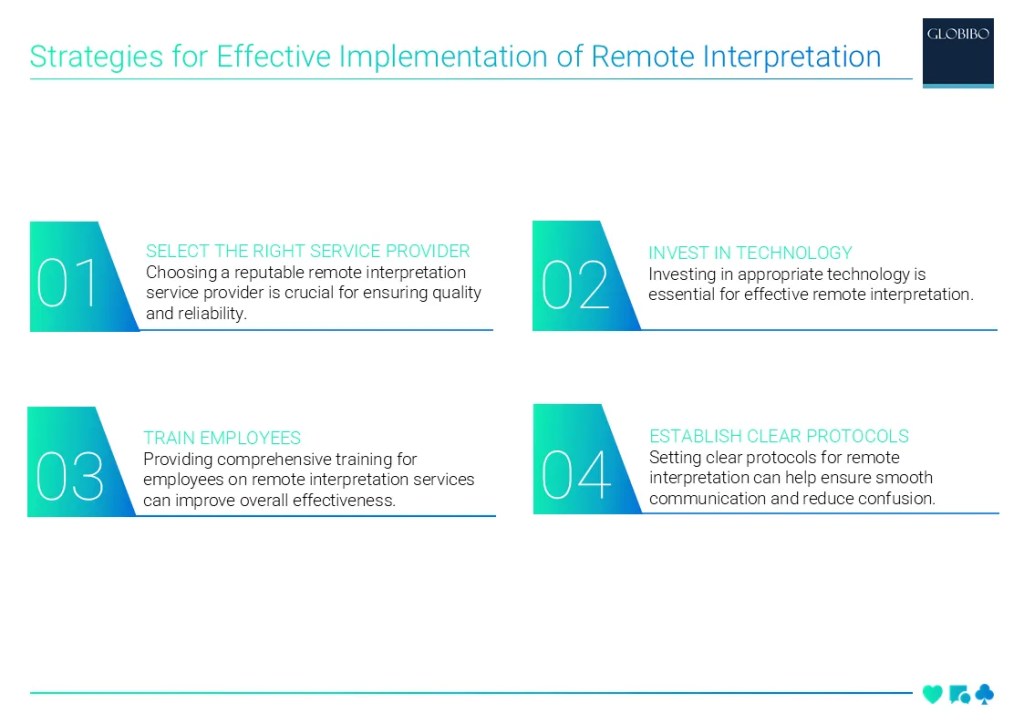
To harness the advantages of remote interpretation while addressing potential challenges, businesses should adopt strategic approaches. Here are key strategies for effective implementation:
1. Select the Right Service Provider
Choosing a reputable remote interpretation service provider is critical for guaranteeing quality and reliability. Consider the following factors:
- Experience and Expertise: Look for providers with a proven track record in remote interpretation across relevant industries. Evaluate their understanding of specific business contexts.
- Technological Capability: Ensure the provider utilizes advanced technology to facilitate seamless communication. This includes familiarity with platforms commonly used in remote settings.
- Language Proficiency: Confirm that the provider offers interpreters fluent in the required languages, with specialization in the subject matter relevant to your business.
2. Invest in Technology
Investing in appropriate technology is essential for effective remote interpretation. Consider the following components:
- High-Quality Audio and Video Equipment: Utilize reliable microphones, cameras, and headphones to enhance audio and visual quality. Poor quality can hinder communication and engagement.
- Stable Internet Connection: Ensure all participants have access to high-speed internet to minimize disruptions. This may involve testing connections before important meetings.
- User-Friendly Platforms: Choose digital platforms that are intuitive and easy to navigate for both interpreters and participants. This can enhance user experience and reduce technical difficulties.
3. Train Employees
Providing comprehensive training for employees on remote interpretation services can improve overall effectiveness. Training should cover:
- Familiarization with Technology: Ensure all users understand how to operate the chosen platform, including accessing interpretation services and utilizing interactive features.
- Best Practices for Communication: Teach participants effective communication strategies in remote settings, such as how to articulate questions and provide constructive feedback to interpreters.
4. Establish Clear Protocols
Setting clear protocols for remote interpretation can help ensure smooth communication and reduce confusion. Consider the following:
- Scheduling Guidelines: Develop guidelines for scheduling meetings and interpretation sessions to accommodate different time zones and participant availability.
- Preparation Requirements: Ensure that interpreters are aware of the materials and information they should share in advance. This aids them in preparing and delivering interpretations that are more effective.
5. Monitor and Evaluate
Continuous monitoring and evaluation of remote interpretation services can identify areas for improvement. Businesses should:
- Collect Feedback: Regularly solicit feedback from participants and interpreters to gauge the effectiveness of services. This can provide information about user experiences and satisfaction levels.
- Assess Performance Metrics: Track metrics such as engagement levels, communication effectiveness, and participant satisfaction to evaluate the success of remote interpretation initiatives.
Summary of Impact of Remote Interpretation
Remote interpretation has fundamentally transformed global business communication, enabling organizations to overcome linguistic barriers and engage effectively with diverse audiences. By leveraging technology and implementing strategic approaches to remote interpretation, businesses can enhance communication, foster collaboration, and expand their reach in an increasingly interconnected world.

Susan has extensive experience in conference interpretation, simultaneous interpretation, consecutive interpretation services, and document localization for governmental and legal needs. Her work with embassies and government agencies ensures that documents meet specific regional requirements, making her expertise invaluable for international clients.
YouTube Videos on Impact of Remote Interpretation
Academic References for Impact of Remote Interpretation
- Basic tenets and features characterizing telephone- and video-based remote communication in dialogue interpreting
- [PDF] Handbook of remote interpreting
- Remote interpreting: Potential solutions to communication needs in the refugee crisis and beyond
- The Consequences of Fully Remote Interpretation on Interpreter Interaction and Cooperation: A threat to professional cohesion?
- The impact of remote working on communication
- [PDF] Bridging Communication Gaps in Crisis: A Case Study of Remote Interpreting in the Middle East During the COVID-19 Pandemic
- Analysing interactional phenomena in video remote interpreting in collaborative settings: Implications for interpreter education
- Global and remote communication
- Remote interpreting: A technical perspective on recent experiments
- Keep your distance? Remote interpreting in legal proceedings: A critical assessment of a growing practice1