Challenges and Techniques in Mandarin Interpretation
Mandarin interpretation plays a crucial role in facilitating communication in various contexts, including business negotiations, diplomatic discussions, and international conferences. As the world becomes increasingly interconnected, the demand for proficient Mandarin interpreters has surged, highlighting the need to understand the challenges they face and the techniques they employ to ensure effective communication. This article explores the multifaceted challenges encountered by Mandarin interpreters and the strategies they utilize to overcome these obstacles.
The Importance of Mandarin Interpretation
Mandarin interpretation is essential for bridging language barriers between Chinese speakers and those who communicate in other languages. With Mandarin being the most widely spoken language in the world, effective interpretation is vital in contexts such as:
- Business: Facilitating negotiations, contracts, and meetings.
- Diplomacy: Enabling discussions between government officials and diplomats.
- Healthcare: Assisting medical professionals in understanding patient needs.
- Education: Helping students and educators communicate effectively.
Understanding the challenges faced by Mandarin interpreters can enhance the quality of interpretation and ensure that messages are conveyed accurately, preserving the intended meaning and context.
Read more about Importance of Mandarin Interpreters in Global Business and Diplomacy.
Challenges in Mandarin Interpretation

1. Linguistic Complexity
Mandarin Chinese is a language with a unique structure and a rich array of idioms and cultural references. This complexity can present several challenges for interpreters:

- Tonal Language: Mandarin is a tonal language, where the meaning of a word can change based on its tone. Interpreters must have a deep understanding of tones to ensure accurate interpretation.
- Homophones: The presence of homophones (words that sound the same but have different meanings) can lead to confusion. For instance, the words “ma” (妈, mother) and “mā” (麻, hemp) sound similar yet convey entirely different meanings.
- Cultural Nuances: Many expressions and idioms in Mandarin carry cultural significance that may not have direct equivalents in other languages. This requires interpreters to not only translate words but also convey underlying meanings.
2. Subject Matter Expertise
Interpretation often occurs in specialized fields such as finance, technology, and law. The following challenges arise when interpreters lack expertise in a specific subject matter:
- Technical Terminology: Different industries utilize specialized jargon and acronyms that can be difficult for interpreters unfamiliar with the field. For example, terms like “blockchain” or “quantitative easing” require precise understanding to ensure accurate translation.
- Contextual Understanding: Interpreters must grasp the context in which the language is used. Without a solid understanding of the subject matter, interpreters may misinterpret critical information, leading to potentially costly misunderstandings.
3. Pressure and Stress
Mandarin interpreters often work in high-pressure environments where they must perform in real-time. This can lead to several challenges:
- Mental Fatigue: The cognitive load of interpreting, particularly in simultaneous interpretation, can lead to exhaustion. Interpreters need to listen, comprehend, and translate simultaneously, which demands intense focus and mental agility.
- Time Constraints: Interpreters must work within tight timeframes, which can create stress and hinder their ability to provide accurate interpretations. This is particularly relevant in negotiations where timing is crucial.
4. Ethical Considerations
Interpreters must adhere to a strict code of ethics that governs their conduct in professional settings. The challenges related to ethical considerations include:
- Confidentiality: Interpreters are often privy to sensitive information, and maintaining confidentiality is paramount. Breaching confidentiality can lead to legal ramifications and damage professional reputations.
- Impartiality: Interpreters must remain neutral and avoid expressing personal opinions. This can be challenging in emotionally charged discussions where the stakes are high.
5. Variations in Dialect
Mandarin is not uniform; it has regional variations that can affect interpretation:
- Dialects: Different regions in China have distinct dialects, which can influence pronunciation, vocabulary, and even grammatical structures. For instance, the Beijing dialect may differ significantly from the Cantonese dialect, potentially causing confusion for interpreters.
- Regional Expressions: Local expressions and slang may not be universally understood, requiring interpreters to possess a keen awareness of regional differences.
Techniques for Effective Mandarin Interpretation
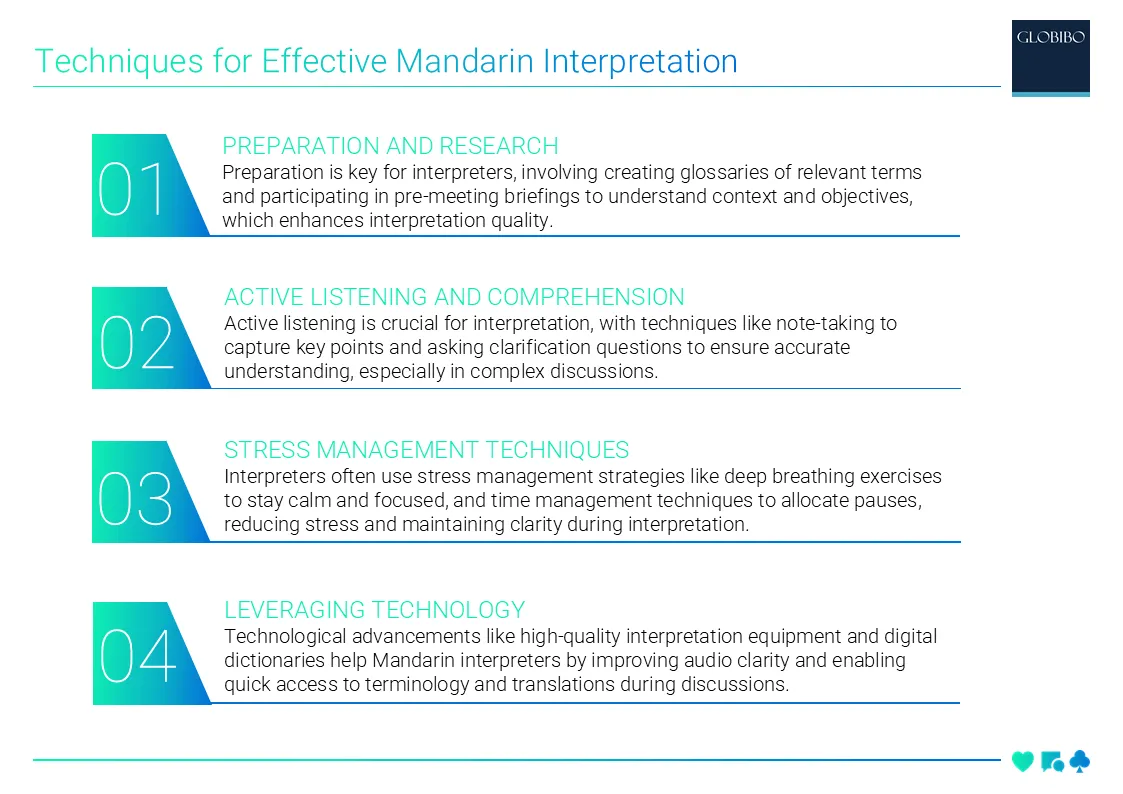
Mandarin interpreters employ a variety of techniques to address the challenges they encounter. These techniques enhance their effectiveness and ensure accurate communication.
Preparation and Research
Preparation is a critical step for interpreters to deliver high-quality interpretations. Techniques include:
- Glossaries and Terminology Lists: Interpreters often create glossaries of key terms and phrases relevant to specific fields or topics. This aids in quickly recalling terminology during interpretation.
- Pre-Meeting Briefings: Engaging in briefings with clients or speakers helps interpreters understand the context and objectives of the discussions. This preparation can significantly enhance the quality of interpretation.
Active Listening and Comprehension
Active listening is essential for effective interpretation. Techniques include:
- Note-Taking: While interpreting, some interpreters use note-taking strategies to capture essential points and keywords. This helps in retaining information and providing accurate interpretations.
- Clarification Questions: If an interpreter encounters ambiguity or uncertainty, asking clarifying questions can ensure accurate understanding. This technique is particularly useful in complex discussions.
Stress Management Techniques
Given the high-pressure nature of interpretation, interpreters must employ stress management strategies:
- Breathing Exercises: Practicing deep breathing techniques before and during assignments can help calm nerves and enhance focus.
- Time Management: Effective time management during interpretation can reduce stress. Interpreters should allocate time for pauses to process information and maintain clarity.
Leveraging Technology
Technological advancements have introduced new tools that can assist Mandarin interpreters:
- Interpretation Equipment: Utilizing high-quality interpretation equipment, such as headsets and microphones, can improve audio clarity and facilitate better communication.
- Digital Dictionaries: Access to digital dictionaries and translation apps can aid interpreters in quickly verifying terminology or finding equivalents during discussions.
Continuous Learning and Professional Development
Interpreters must engage in lifelong learning to remain proficient in their field:
- Workshops and Training Programs: Participating in workshops and training programs focused on interpretation techniques and subject matter expertise can enhance skills and knowledge.
- Networking with Peers: Building a network of fellow interpreters can provide valuable insights and resources for improving interpretation practices.
Key Skills Required for Mandarin Interpreters

- Fluency in Mandarin and Target Language: Proficiency in both languages is essential for accurate interpretation.
- Cultural Competence: Understanding cultural contexts and nuances to convey meanings appropriately.
- Subject Matter Knowledge: Familiarity with specialized terminology in relevant fields (e.g., finance, law).
- Listening Skills: The ability to actively listen and process information quickly.
- Ethical Awareness: Understanding and adhering to professional ethical standards.
Effective Techniques for Mandarin Interpretation
- Preparation: Conducting research and creating glossaries for relevant terminology.
- Active Listening: Employing note-taking and asking clarifying questions during discussions.
- Stress Management: Utilizing breathing exercises and effective time management strategies.
- Technology Use: Leveraging interpretation equipment and digital resources for enhanced clarity.
- Professional Development: Engaging in continuous learning through workshops and networking.
Summary of Techniques in Mandarin Interpretation
Mandarin interpretation is a complex and demanding field that requires a unique blend of linguistic skills, cultural understanding, and subject matter expertise. As global interactions continue to increase, the challenges faced by Mandarin interpreters are likely to evolve. By employing effective techniques and maintaining a commitment to professional development, interpreters can navigate these challenges successfully.
Understanding the intricacies of Mandarin interpretation is vital for organizations seeking to engage in effective communication with Mandarin-speaking counterparts. Investing in skilled Mandarin interpreters can significantly enhance the quality of interactions, foster better relationships, and promote successful outcomes in various contexts. In a world where effective communication is paramount, the role of the Mandarin interpreter is more critical than ever.

Susan has extensive experience in conference interpretation, simultaneous interpretation, and Consecutive Interpretation services, document localization for governmental and legal needs. Her work with embassies and government agencies ensures that documents meet specific regional requirements, making her expertise invaluable for international clients.
Academic references for Techniques in Mandarin Interpretation
- [HTML] Psycho-linguistic and educational challenges in Teaching Chinese (Mandarin) Language: voices from None-Chinese teachers of Mandarin language
- [HTML] Language and rigour in qualitative research: problems and principles in analyzing data collected in Mandarin
- Interpreting between Mandarin and English
- Interpreting Questions in Courtroom Examinations: A Study of English-Mandarin Chinese Interpretations of Question Types in Remote Settings
- Challenges and Solutions for Native Mandarin-Chinese Speakers in Singing German Lieder
- Analytic methods’ considerations for the translation of sensitive qualitative data from Mandarin into English
- Anglicized numerical denominations as a coping tactic for simultaneous interpreting from English into Mandarin Chinese: An experimental study
- The impact of grammatical differences on Mandarin Chinese-English simultaneous interpreting
- Exploring the Challenges and Problems of Learning and Teaching Chinese/Mandarin language to Undergraduate Students: Voices from Non-Chinese Speaker …
- Interpreting testing and assessment: A state-of-the-art review